Benzeneruthenium(II) Chloride Dimer is a chemical compound widely used in catalytic reactions, particularly in C-H activation processes. As a transition metal complex, it plays a crucial role in modern organic synthesis by acting as a catalyst that accelerates chemical reactions without being consumed in the process. Its unique structure allows it to interact efficiently with organic substrates, making it an essential tool in laboratory settings where precise and efficient catalytic activity is required. This compound is highly valued for its stability and reactivity, contributing to its popularity among researchers in various chemical disciplines.
The compound’s strong catalytic properties and structural complexity make it a preferred choice in laboratory applications. Its ability to activate C-H bonds enables it to participate in a wide range of reactions, including substitution, oxidation, and reduction. The dimer form of Benzeneruthenium(II) Chloride offers advantages in handling and storage, making it suitable for use in both small-scale and larger laboratory experiments. Its chemical stability under specific conditions ensures consistent performance, which is vital for reliable and reproducible results in scientific research.
In Indonesian laboratories, Benzeneruthenium(II) Chloride Dimer is commonly used in organic chemistry research, especially in catalysis and the synthesis of complex molecules. It is a key component in studies focused on improving reaction efficiency and selectivity. Many research institutions and universities in Indonesia rely on this compound for its effectiveness in advancing chemical processes and supporting innovation in the field of catalytic chemistry.
TCI brochures (PDF)
- Bidentate Phosphine Ligands for Asymmetric Synthesis QuinoxP 2025-02-21 · p. 1
- C-H Bond Activation Reaction 2025-06-20 · p. 6
- Transition Metal Catalysts 2026-04-10 · p. 8
Related TCI products
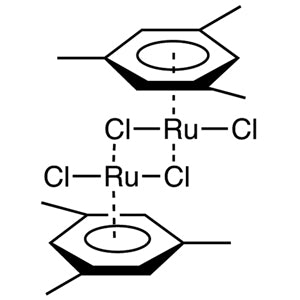
- TCI D5524 52462-31-4 Mesityleneruthenium(II) Chloride Dimer
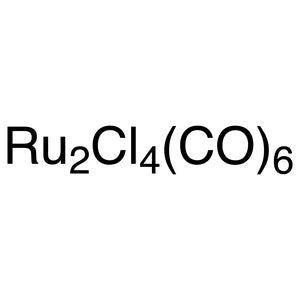
- TCI T3812 22594-69-0 Tricarbonyldichlororuthenium(II) Dimer
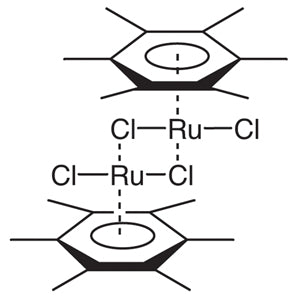
- TCI H1010 67421-02-7 (Hexamethylbenzene)ruthenium(II) Dichloride Dimer
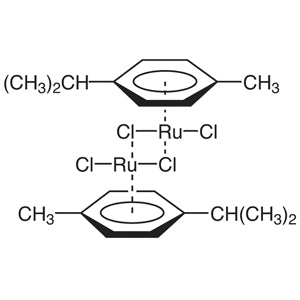
- TCI D2751 52462-29-0 Dichloro(p-cymene)ruthenium(II) Dimer
- TCI R0074 14898-67-0 Ruthenium(III) Chloride Hydrate
- TCI C2201 32993-05-8 Cyclopentadienylbis(triphenylphosphine)ruthenium(II) Chloride
- C-H Activation Reactions: This compound is ideal for C-H activation due to its ability to efficiently activate carbon-hydrogen bonds, enabling selective transformations in complex organic molecules.
- Organic Synthesis: It is widely used in the synthesis of various organic compounds, particularly in reactions that require precise control over reaction pathways and product formation.
- Catalytic Oxidation and Reduction: Its catalytic properties make it suitable for oxidation and reduction reactions, where it facilitates electron transfer processes without being consumed.
- Molecular Complex Synthesis: The compound's structural complexity allows it to participate in the synthesis of intricate molecular structures, supporting advanced research in organic chemistry.
- Industrial Catalytic Processes: It is applied in industrial settings where high catalytic efficiency and stability are required for large-scale chemical transformations.
| Brand | TCI |
|---|---|
| CAS number | 37366-09-9 |
| Molecular formula | — |
| Purity | — |
| Category | Chemistry > Catalysis and Inorganic Chemistry > C-H Activation [Catalysis] |
| Pack sizes | Available in various quantities suitable for laboratory use |
| Physical form | Solid, typically in powder or crystalline form |
| Storage | — |
This compound should be stored in a cool, dry place away from moisture and direct sunlight to maintain its chemical stability. It is recommended to use airtight containers to prevent exposure to air and humidity, which could affect its catalytic properties. Due to its chemical nature, it should be handled with appropriate personal protective equipment, such as gloves and safety goggles, to ensure laboratory safety. Proper labeling of storage containers is essential for safe handling and to prevent accidental exposure. Regular monitoring of storage conditions ensures the compound remains effective for its intended applications in research and development.
—
Produk Terkait
-
Mesityleneruthenium(II)ChlorideDimer TCI D5524
Regular price From Rp 2.518.950,00Regular priceRp 1.776.600,00Sale price From Rp 2.518.950,00 -
Tricarbonyldichlororuthenium(II)Dimer TCI T3812
Regular price Rp 4.636.800,00Regular priceRp 3.258.150,00Sale price Rp 4.636.800,00 -
(Hexamethylbenzene)ruthenium(II)DichlorideDimer TCI H1010
Regular price Rp 8.003.100,00Regular priceRp 5.612.250,00Sale price Rp 8.003.100,00 -
Dichloro(p-cymene)ruthenium(II)Dimer TCI D2751
Regular price Rp 1.618.050,00Regular priceRp 1.146.600,00Sale price Rp 1.618.050,00 -
Ruthenium(III)ChlorideHydrate TCI R0074
Regular price From Rp 1.670.550,00Regular priceRp 1.183.350,00Sale price From Rp 1.670.550,00 -
Cyclopentadienylbis(triphenylphosphine)ruthenium(II)Chloride TCI C2201
Regular price From Rp 2.942.100,00Regular priceRp 2.072.700,00Sale price From Rp 2.942.100,00 -
Allylpalladium(II)ChlorideDimer TCI A1479
Regular price From Rp 2.359.350,00Regular priceRp 1.665.300,00Sale price From Rp 2.359.350,00 -
Palladium(II)(pi-cinnamyl)ChlorideDimer TCI P2017
Regular price Rp 1.483.650,00Regular priceRp 1.053.150,00Sale price Rp 1.483.650,00