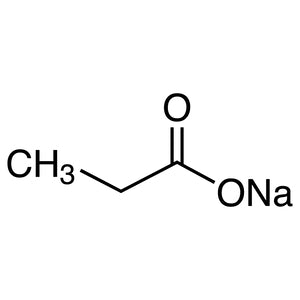
Tert-Butyl Propionate is a chemical compound widely used in laboratory settings as a building block in organic synthesis. It serves as a precursor or auxiliary material in various chemical reactions, enabling the creation of more complex compounds such as esters and aromatic substances. This compound is essential for researchers and chemists who are working on the development of new chemical products or conducting fundamental research in organic chemistry. Its role in the laboratory is to provide a stable and versatile starting point for the synthesis of a wide range of chemical structures.
The chemical properties of Tert-Butyl Propionate make it a preferred choice for laboratory use. It exhibits good solubility in organic solvents and maintains stability under specific conditions, which simplifies its handling and application. These characteristics allow it to be used in a variety of experimental setups without significant degradation. Additionally, its molecular structure is relatively simple yet highly reactive, making it suitable for multiple chemical transformations. This combination of stability and reactivity ensures that it remains a reliable material for both academic and industrial research.
In Indonesian laboratories, Tert-Butyl Propionate is commonly used in chemical research and pharmaceutical development. It plays a vital role in the synthesis of new chemical compounds and is also utilized in educational institutions for teaching and research purposes. Its availability and versatility make it a valuable resource for scientists and students alike, supporting both basic and applied research in the field of chemistry.
- Organic synthesis applications benefit from Tert-Butyl Propionate due to its reactivity and stability, allowing for the creation of complex ester and aromatic compounds.
- Pharmaceutical research utilizes this compound as a building block for developing new drug molecules and chemical intermediates.
- Educational institutions use Tert-Butyl Propionate in teaching organic chemistry, providing students with hands-on experience in synthetic reactions.
- Industrial laboratories incorporate it into processes for producing specialty chemicals and fine chemicals with specific functional groups.
- Analytical chemistry experiments use Tert-Butyl Propionate as a reference standard for testing and calibration of analytical instruments.
| Brand | TCI |
|---|---|
| CAS number | 20487-40-5 |
| Molecular formula | — |
| Purity | — |
| Category | Chemistry > Building Blocks > Non-Heterocyclic Building Blocks |
| Pack sizes | Available in various quantities as per supplier specifications |
| Physical form | Liquid |
| Storage | Store in a cool, dry place away from direct sunlight |
Tert-Butyl Propionate should be stored in a cool, dry place, away from direct sunlight and sources of heat. It is recommended to use airtight containers made of glass or polyethylene to prevent contamination and evaporation. Due to its chemical nature, it should be handled with care, using appropriate personal protective equipment such as gloves and safety goggles. It is important to ensure proper ventilation in the laboratory when working with this compound to minimize exposure. Avoid contact with incompatible materials and keep it away from oxidizing agents. Regular inspection of storage conditions and containers is advised to maintain the integrity and safety of the material during long-term use.
—
Produk Terkait
-
2-PhenylethylPropionate TCI P1823
Regular price Rp 742.350,00Regular priceRp 534.450,00Sale price Rp 742.350,00 -
SodiumPropionate TCI P0512
Regular price From Rp 662.550,00Regular priceRp 478.800,00Sale price From Rp 662.550,00 -
PropylPropionate TCI P0511
Regular price From Rp 557.550,00Regular priceRp 405.300,00Sale price From Rp 557.550,00 -
PotassiumPropionate TCI P0510
Regular price From Rp 822.150,00Regular priceRp 590.100,00Sale price From Rp 822.150,00 -
PhenylPropionate TCI P0509
Regular price From Rp 1.801.800,00Regular priceRp 1.275.750,00Sale price From Rp 1.801.800,00 -
MethylPropionate TCI P0508
Regular price From Rp 557.550,00Regular priceRp 405.300,00Sale price From Rp 557.550,00 -
IsopropylPropionate TCI P0507
Regular price From Rp 742.350,00Regular priceRp 534.450,00Sale price From Rp 742.350,00 -
IsobutylPropionate TCI P0506
Regular price From Rp 557.550,00Regular priceRp 405.300,00Sale price From Rp 557.550,00