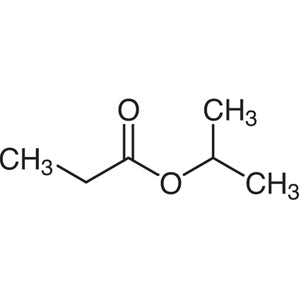
Isopropyl Propionate is a chemical compound widely used in laboratory settings, particularly in organic synthesis reactions. It serves as a building block in the creation of more complex carbon chain compounds, playing a crucial role in the development of esters and other functional groups. Its presence in chemical reactions helps facilitate the formation of aromatic and aliphatic compounds, making it a versatile reagent in synthetic chemistry. This compound is essential for researchers aiming to explore molecular structures and functional group transformations in a controlled environment.
The chemical properties of Isopropyl Propionate make it a preferred choice for laboratory use. It exhibits stability under specific conditions, which ensures consistent performance in various synthetic processes. Its distinct aroma aids in visual identification, reducing the risk of misidentification during handling. Additionally, its relatively high boiling point allows it to be suitable for reactions requiring elevated temperatures. These characteristics contribute to its reliability and safety in laboratory applications, making it a trusted material among chemists.
In Indonesian laboratories, Isopropyl Propionate is commonly used in chemical research, especially in academic institutions and research centers. It is an integral part of chemistry, pharmacy, and food technology programs, where it is employed in the synthesis and analysis of various compounds. Its relevance in these fields underscores its importance as a fundamental reagent in both educational and research contexts.
- Organic synthesis reactions benefit from Isopropyl Propionate due to its role in forming ester groups, which are essential in creating complex organic molecules.
- It is ideal for the preparation of esters, as its chemical stability ensures predictable and reproducible results in synthetic processes.
- In pharmaceutical research, Isopropyl Propionate supports the development of new compounds by contributing to the structural diversity of drug molecules.
- It is used in food technology for the synthesis of flavor compounds, enhancing the development of natural and synthetic food additives.
- Educational institutions utilize Isopropyl Propionate to teach fundamental concepts in organic chemistry and molecular synthesis techniques.
| Brand | TCI |
|---|---|
| CAS number | 637-78-5 |
| Molecular formula | — |
| Purity | — |
| Category | Chemistry > Building Blocks > Non-Heterocyclic Building Blocks |
| Pack sizes | Available in various quantities as per standard laboratory supply |
| Physical form | Liquid |
| Storage | Store in a cool, dry place away from direct sunlight |
Isopropyl Propionate should be stored in a cool, dry environment, away from direct sunlight and sources of heat. It is recommended to use airtight containers made of glass or high-density polyethylene to prevent contamination and evaporation. Due to its volatile nature, it should be handled in a well-ventilated area to minimize exposure. Laboratory personnel should wear appropriate personal protective equipment, such as gloves and safety goggles, when handling this compound. It is important to ensure that the storage area is secure and inaccessible to unauthorized individuals. Proper labeling of containers is essential to avoid confusion and ensure safe handling practices.
—
Produk Terkait
-
tert-ButylPropionate TCI B3327
Regular price From Rp 2.094.750,00Regular price -
2-PhenylethylPropionate TCI P1823
Regular price Rp 689.850,00Regular price -
SodiumPropionate TCI P0512
Regular price From Rp 610.050,00Regular price -
PropylPropionate TCI P0511
Regular price From Rp 505.050,00Regular price -
PotassiumPropionate TCI P0510
Regular price From Rp 769.650,00Regular price -
PhenylPropionate TCI P0509
Regular price From Rp 1.749.300,00Regular price -
MethylPropionate TCI P0508
Regular price From Rp 505.050,00Regular price -
IsobutylPropionate TCI P0506
Regular price From Rp 505.050,00Regular price