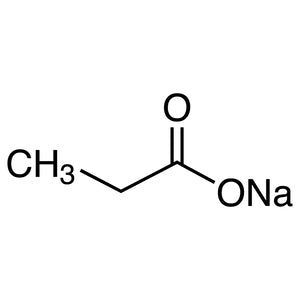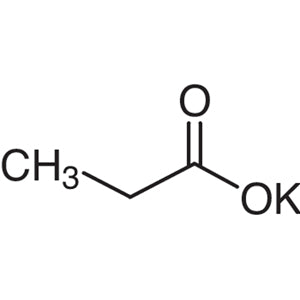
Potassium propionate (KPr) is a chemical compound widely used in various laboratory reactions. As a salt of propionic acid, it is chemically stable and highly soluble in water, making it a versatile reagent in chemical synthesis. It plays a crucial role in organic chemistry, particularly in esterification reactions and the formation of heterocyclic compounds. Its ability to act as a proton donor and pH regulator makes it suitable for reactions requiring acidic or neutral environments.
The properties of potassium propionate that make it a preferred choice include its high water solubility and chemical stability. It remains stable under normal conditions and does not decompose easily, ensuring consistent performance in laboratory settings. Additionally, it does not produce harmful gases when stored properly, enhancing its safety profile. These characteristics make it a reliable and efficient reagent for a wide range of chemical applications.
In Indonesian laboratories, potassium propionate is commonly used in scientific research, particularly in the field of organic chemistry. It is a key component in the synthesis of various organic compounds and is valued for its reactivity and compatibility with different reaction conditions. Its availability and reliability make it a popular choice among researchers and chemists in Indonesia.
TCI brochures (PDF)
- Lipids 2025-12-17 · p. 6
- Organic synthesis reactions benefit from potassium propionate due to its role as a proton donor and pH regulator, enhancing reaction efficiency.
- Esterification processes utilize potassium propionate as a catalyst, promoting the formation of ester compounds under controlled conditions.
- Heterocyclic compound formation relies on potassium propionate for its ability to participate in nucleophilic and electrophilic reactions.
- pH adjustment in chemical reactions is effectively managed using potassium propionate, ensuring optimal reaction environments.
- Research in chemical stability and decomposition studies uses potassium propionate to analyze its behavior under different conditions.
| Brand | TCI |
|---|---|
| CAS number | 327-62-8 |
| Molecular formula | — |
| Purity | — |
| Category | Chemistry > Building Blocks > Non-Heterocyclic Building Blocks |
| Pack sizes | Available in various quantities as per standard laboratory requirements |
| Physical form | Solid powder |
| Storage | Store in a cool, dry place away from moisture and direct sunlight |
Potassium propionate should be stored in a cool, dry place, away from moisture and direct sunlight to maintain its chemical stability. It is recommended to use airtight containers to prevent exposure to humidity, which could affect its solubility and reactivity. As a solid powder, it should be handled with care to avoid inhalation or contact with skin. Laboratory personnel should wear appropriate personal protective equipment, such as gloves and safety goggles, when handling this compound. Proper storage and handling ensure the compound remains effective and safe for use in various chemical applications.
—
Produk Terkait
-
tert-ButylPropionate TCI B3327
Regular price From Rp 2.094.750,00Regular price -
2-PhenylethylPropionate TCI P1823
Regular price Rp 689.850,00Regular price -
SodiumPropionate TCI P0512
Regular price From Rp 610.050,00Regular price -
PropylPropionate TCI P0511
Regular price From Rp 505.050,00Regular price -
PhenylPropionate TCI P0509
Regular price From Rp 1.749.300,00Regular price -
MethylPropionate TCI P0508
Regular price From Rp 505.050,00Regular price -
IsopropylPropionate TCI P0507
Regular price From Rp 689.850,00Regular price -
IsobutylPropionate TCI P0506
Regular price From Rp 505.050,00Regular price