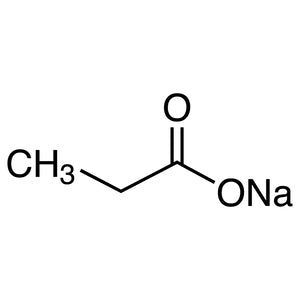
Phenyl Propionate is a chemical compound widely used as a foundational material in various laboratory reactions. It serves as a key building block in organic synthesis, enabling the creation of more complex molecules. Its simple molecular structure makes it highly versatile, allowing chemists to manipulate it in different chemical environments to produce a wide range of compounds. In the laboratory, Phenyl Propionate plays a crucial role in both research and development, supporting the exploration of new chemical pathways and applications.
The compound is valued for its reactivity and stability, which make it suitable for a variety of synthetic processes. Its ability to participate in both heterocyclic and non-heterocyclic reactions enhances its utility in organic chemistry. Phenyl Propionate is also known for its solubility in organic solvents, which simplifies its handling and integration into reaction mixtures. These properties make it a preferred choice for researchers working in diverse fields, including pharmaceuticals and industrial chemistry.
In Indonesian laboratories, Phenyl Propionate is commonly used in organic chemistry research, drug development, and industrial chemical production. Its availability in international markets ensures that it meets the demand for high-quality chemical reagents. Researchers in Indonesia rely on this compound for its reliability and effectiveness in creating new compounds and improving existing chemical processes.
- Organic synthesis applications benefit from Phenyl Propionate's ability to participate in a wide range of chemical reactions, making it ideal for building complex molecular structures.
- Pharmaceutical research utilizes this compound due to its role in the synthesis of various drug-related compounds, supporting the development of new therapeutic agents.
- Industrial chemical production relies on Phenyl Propionate for its versatility in creating intermediates used in the manufacture of diverse chemical products.
- Academic research in chemistry laboratories often incorporates Phenyl Propionate to explore new synthetic methods and chemical transformations.
- Analytical chemistry applications use Phenyl Propionate as a reference standard for testing and characterizing other chemical compounds.
| Brand | TCI |
|---|---|
| CAS number | 637-27-4 |
| Molecular formula | — |
| Purity | — |
| Category | Chemistry > Building Blocks > Non-Heterocyclic Building Blocks |
| Pack sizes | Available in various quantities as per standard chemical supply specifications |
| Physical form | Liquid |
| Storage | Store in a cool, dry place away from direct sunlight and incompatible substances |
Phenyl Propionate should be stored in a cool, dry place, away from direct sunlight and sources of heat. It is recommended to keep the compound in a tightly sealed container to prevent contamination and evaporation. Due to its reactivity, it should be stored separately from strong oxidizing agents and incompatible chemicals. Proper ventilation is essential when handling this compound to minimize exposure. Laboratory personnel should wear appropriate personal protective equipment, including gloves and safety goggles, to ensure safe handling. Regular monitoring of storage conditions is advised to maintain the integrity and stability of the compound.
—
Produk Terkait
-
tert-ButylPropionate TCI B3327
Regular price From Rp 2.094.750,00Regular price -
2-PhenylethylPropionate TCI P1823
Regular price Rp 689.850,00Regular price -
SodiumPropionate TCI P0512
Regular price From Rp 610.050,00Regular price -
PropylPropionate TCI P0511
Regular price From Rp 505.050,00Regular price -
PotassiumPropionate TCI P0510
Regular price From Rp 769.650,00Regular price -
MethylPropionate TCI P0508
Regular price From Rp 505.050,00Regular price -
IsopropylPropionate TCI P0507
Regular price From Rp 689.850,00Regular price -
IsobutylPropionate TCI P0506
Regular price From Rp 505.050,00Regular price