BSTFA-TMCS (99:1) is a derivatizing reagent widely used in gas chromatography (GC) analysis to enhance the detection of organic compounds. This chemical is specifically designed to modify the molecular structure of compounds that are difficult to detect, transforming them into more detectable forms. Its role in the laboratory is critical for improving the sensitivity and accuracy of GC analysis, particularly in complex sample matrices. By facilitating the conversion of analytes into more volatile and stable derivatives, BSTFA-TMCS enables efficient separation and identification of components within a sample.
The properties of BSTFA-TMCS make it a preferred choice in analytical chemistry. Its stable chemical nature and high reactivity towards a wide range of organic compounds ensure consistent performance across various applications. The 99:1 ratio of BSTFA to TMCS provides an optimal balance between reactivity and efficiency, ensuring reliable results without excessive side reactions. This reagent is also resistant to typical laboratory conditions, including dry and cold environments, which enhances its stability and usability over extended periods.
In Indonesian laboratories, BSTFA-TMCS is commonly used in both qualitative and quantitative analysis of various chemical compounds. It is particularly favored in environmental, pharmaceutical, and food safety testing due to its effectiveness in simplifying complex sample analysis. Its reliability and consistency make it an essential tool for researchers and analysts seeking accurate and reproducible results in GC-based workflows.
TCI brochures (PDF)
- Protecting Agents 2025-03-25 · p. 5
Related TCI products
- TCI T1204 32974-36-0 Pentafluorobenzyl p-Toluenesulfonate [Derivatizing Reagent for GC of Inorganic Anions]
- TCI T0693 18156-74-6 N-Trimethylsilylimidazole Kit SIM 1 mL * 8 / Reaction vial, capacity 2 mL * 8 [Trimethylsilylating Reagent]
- TCI T0585 18156-74-6 N-Trimethylsilylimidazole [Trimethylsilylating Reagent]
- TCI B1043 54925-64-3 1-(tert-Butyldimethylsilyl)imidazole [tert-Butyldimethylsilylating Agent]
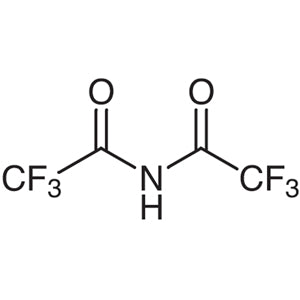
- TCI B0986 407-24-9 Bistrifluoroacetamide
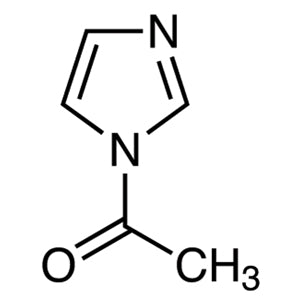
- TCI A0694 2466-76-4 N-Acetylimidazole
- Gas Chromatography Analysis – BSTFA-TMCS enhances the detection of organic compounds by converting them into more volatile derivatives, improving separation efficiency and detection limits.
- Environmental Sample Testing – This reagent is ideal for analyzing pollutants in air, water, and soil samples, as it enables the identification of trace organic contaminants.
- Pharmaceutical Quality Control – BSTFA-TMCS supports the analysis of drug compounds, ensuring accurate quantification and purity assessment in pharmaceutical formulations.
- Food Safety Testing – It is used to detect harmful substances in food products, such as pesticides and mycotoxins, ensuring compliance with safety standards.
- Forensic and Toxicological Analysis – The reagent aids in the identification of organic compounds in forensic samples, supporting toxicological and criminal investigations.
| Brand | TCI |
|---|---|
| CAS number | 25561-30-2 |
| Molecular formula | — |
| Purity | — |
| Category | Chemistry > Synthetic Reagents > Protection, Deprotection, Derivatization |
| Pack sizes | Available in standard laboratory quantities |
| Physical form | Liquid |
| Storage | — |
BSTFA-TMCS should be stored in a cool, dry place away from direct sunlight and sources of heat. It is recommended to keep the reagent in a tightly sealed container to prevent evaporation and contamination. Due to its chemical stability, it does not require refrigeration but should be protected from moisture and incompatible substances. In a laboratory setting, it is important to handle the reagent with appropriate personal protective equipment, such as gloves and safety goggles, to ensure safe usage. Regular monitoring of storage conditions is advised to maintain the reagent's effectiveness and safety over time.
—
Product Categories
Produk Terkait
-
Pentafluorobenzylp-Toluenesulfonate[DerivatizingReagentforGCofInorganicAnions] TCI T1204
Regular price Rp 6.042.750,00Regular priceRp 4.225.200,00Sale price Rp 6.042.750,00 -
N-TrimethylsilylimidazoleKitSIM1mL*8/Reactionvial,capacity2mL*8[TrimethylsilylatingReagent] TCI T0693
Regular price Rp 4.161.150,00Regular priceRp 2.925.300,00Sale price Rp 4.161.150,00 -
N-Trimethylsilylimidazole[TrimethylsilylatingReagent] TCI T0585
Regular price From Rp 1.670.550,00Regular priceRp 1.183.350,00Sale price From Rp 1.670.550,00 -
1-(tert-Butyldimethylsilyl)imidazole[tert-ButyldimethylsilylatingAgent] TCI B1043
Regular price From Rp 2.491.650,00Regular priceRp 1.757.700,00Sale price From Rp 2.491.650,00 -
Bistrifluoroacetamide TCI B0986
Regular price From Rp 3.285.450,00Regular priceRp 2.313.150,00Sale price From Rp 3.285.450,00 -
N-Acetylimidazole TCI A0694
Regular price Rp 1.087.800,00Regular priceRp 775.950,00Sale price Rp 1.087.800,00 -
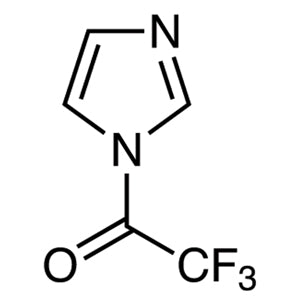
1-(Trifluoroacetyl)imidazole TCI T0670
Regular price From Rp 1.351.350,00Regular priceRp 960.750,00Sale price From Rp 1.351.350,00 -
TrifluoroaceticAnhydride TCI T0433
Regular price From Rp 822.150,00Regular priceRp 590.100,00Sale price From Rp 822.150,00