Bromobimane is a chemical compound widely used in laboratory settings, particularly in biochemical and molecular biology research. It functions as a highly effective fluorescent label, enabling the identification and visualization of specific molecules within biological samples. This compound is essential for researchers aiming to track molecular interactions or monitor cellular processes with high precision. Its utility spans across various experimental techniques, making it a versatile tool in modern laboratory workflows.
The compound is prized for its strong fluorescence properties and chemical stability, which allow it to maintain its integrity under diverse experimental conditions. Bromobimane's ability to bind to proteins and other biomolecules further enhances its applicability in structural and functional studies. This makes it an ideal choice for applications requiring high sensitivity and specificity. Its reliability and consistent performance contribute to its popularity among scientists working in life sciences.
In Indonesian laboratories, Bromobimane is commonly used in molecular biology, organic chemistry, and biomedical research. It plays a crucial role in protein labeling, cell analysis, and fluorescence-based assays. Its availability supports a wide range of research activities, ensuring that scientists can conduct experiments with confidence and accuracy. The compound's relevance in these fields underscores its importance in the scientific community.
Advantages (TCI brochure)
- Blue fluorescence only when bonded to a thiol group
- Specifically labeled to thiol groups
TCI brochures (PDF)
- Fluorescent Labeling Dyes 2025-11-18 · p. 3
Related TCI products
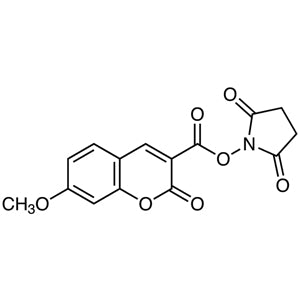
- TCI S0867 150321-92-9 N-Succinimidyl 7-Methoxycoumarin-3-carboxylate
- TCI S0866 134471-24-2 N-Succinimidyl 7-Hydroxycoumarin-3-carboxylate
- TCI S0503 1858255-08-9 Succinimidyl 6-[[7-(N,N-Dimethylaminosulfonyl)-2,1,3-benzoxadiazol-4-yl]amino]hexanoate
- TCI P1214 42189-56-0 N-(1-Pyrenyl)maleimide
- TCI F0810 75350-46-8 Fluorescein-5-maleimide (contains 2% N,N-Dimethylformamide at maximum)
- TCI F0783 18861-78-4 Fluorescein 6-Isothiocyanate (isomer II)
- Molecular Biology Research: Bromobimane is used for protein labeling and structural analysis due to its strong fluorescence and binding properties.
- Fluorescence Microscopy: The compound enables visualization of cellular components and molecular interactions under a microscope.
- Biochemical Assays: It serves as a fluorescent probe in assays that require detection of specific biomolecules or reactions.
- Cell Imaging Studies: Bromobimane aids in tracking cellular processes and identifying specific molecules within living cells.
- Biomedical Research: It is utilized in studies involving biological systems and molecular interactions relevant to disease mechanisms.
From the TCI brochure
- Specific labeling of thiol groups
| Brand | TCI |
|---|---|
| CAS number | 71418-44-5 |
| Molecular formula | — |
| Purity | — |
| Category | Life Science > Biochemicals and Reagents > Fluorescent Probes, Fluorescent Labels, Fluorescent Stains |
| Pack sizes | Available in various quantities as per standard laboratory requirements |
| Physical form | Solid or liquid, depending on the specific formulation |
| Storage | Store in a cool, dry place away from light and moisture |
Data from the TCI brochure
| λex,max | 390 nm (saat terikat pada tiol) |
|---|---|
| λem,max | 480 nm (saat terikat pada tiol) |
Source: TCI brochure LL039 (2025-11-18)
Bromobimane should be stored in a cool, dry environment, away from direct light and moisture to maintain its stability and effectiveness. It is recommended to use airtight containers to prevent exposure to air and humidity, which could degrade the compound. Laboratory personnel should handle the material with care, using appropriate personal protective equipment such as gloves and safety goggles. Proper ventilation should be maintained in the workspace to minimize inhalation risks. The compound should be kept in a secure location, away from incompatible substances to ensure safety. Regular inspection of storage conditions is advised to ensure the integrity of the material remains uncompromised.
—
Produk Terkait
-
N-Succinimidyl7-Methoxycoumarin-3-carboxylate TCI S0867
Regular price From Rp 2.730.000,00Regular priceRp 1.924.650,00Sale price From Rp 2.730.000,00 -
N-Succinimidyl7-Hydroxycoumarin-3-carboxylate TCI S0866
Regular price From Rp 5.777.100,00Regular priceRp 4.055.100,00Sale price From Rp 5.777.100,00 -
Succinimidyl6-[[7-(N,N-Dimethylaminosulfonyl)-2,1,3-benzoxadiazol-4-yl]amino]hexanoate TCI S0503
Regular price Rp 9.804.900,00Regular priceRp 6.872.250,00Sale price Rp 9.804.900,00 -
N-(1-Pyrenyl)maleimide TCI P1214
Regular price Rp 2.862.300,00Regular priceRp 2.017.050,00Sale price Rp 2.862.300,00 -
Fluorescein-5-maleimide(contains2%N,N-Dimethylformamideatmaximum) TCI F0810
Regular price Rp 5.565.000,00Regular priceRp 3.907.050,00Sale price Rp 5.565.000,00 -
Fluorescein6-Isothiocyanate(isomerII) TCI F0783
Regular price Rp 8.613.150,00Regular priceRp 6.022.800,00Sale price Rp 8.613.150,00 -
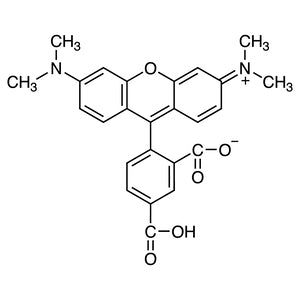
5-TAMRA TCI C2686
Regular price Rp 4.957.050,00Regular priceRp 3.466.050,00Sale price Rp 4.957.050,00