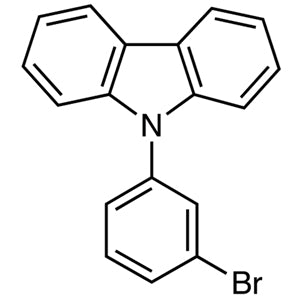
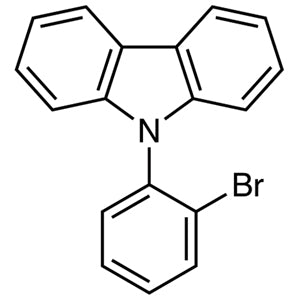
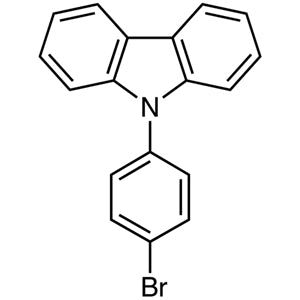
2-(3-Bromophenyl)-9-phenyl-9H-carbazole is an organic compound widely used in materials science research. It serves as a key building block for developing advanced electronic and optical materials. This compound is particularly valuable in the synthesis of complex molecules with conductive or luminescent properties. Its unique chemical structure enables it to interact effectively with various reagents during chemical reactions, making it a versatile tool in modern laboratory settings.
The compound is preferred due to its excellent chemical stability and its ability to participate in substitution and coupling reactions. These properties make it ideal for the creation of semiconductor materials and optical components. Its solubility in organic solvents further enhances its usability in a wide range of experimental processes. This makes it a go-to material for researchers aiming to innovate in the field of electronic and optoelectronic devices.
In Indonesian laboratories, this compound is commonly used in material technology and organic chemistry research. It plays a vital role in the development of new materials with potential applications in modern electronic and optical devices. Its presence in academic and industrial research settings highlights its importance in advancing scientific innovation in the region.
TCI brochures (PDF)
- Building Blocks for Organic Semiconductor 2026-03-24 · p. 18
Related TCI products
- TCI B5465 1190100-35-6 3-(2-Bromophenyl)-9-phenyl-9H-carbazole
- TCI B5437 1616607-88-5 2-(2-Bromophenyl)-9-phenyl-9H-carbazole
- TCI B5111 1028648-25-0 9-(4-Biphenylyl)-3-(4-bromophenyl)carbazole
- TCI B5107 1226860-66-7 3-Bromo-9-(4-bromophenyl)-9H-carbazole
- TCI B4427 185112-61-2 9-(3-Bromophenyl)carbazole
- TCI B4109 902518-11-0 9-(2-Bromophenyl)-9H-carbazole
- Organic semiconductor synthesis: This compound is ideal for creating organic semiconductors due to its molecular structure and chemical reactivity.
- Optoelectronic material development: Its luminescent properties make it suitable for developing materials used in light-emitting diodes and photovoltaic cells.
- Conductive polymer research: It is frequently used in the synthesis of conductive polymers, which are essential for flexible electronics and sensors.
- Chemical coupling reactions: Its ability to participate in coupling reactions makes it a valuable reagent in the synthesis of complex organic molecules.
- Material characterization studies: It is used in studies that analyze the physical and chemical properties of new materials for industrial applications.
| Brand | TCI |
|---|---|
| CAS number | 1365118-41-7 |
| Molecular formula | — |
| Purity | — |
| Category | Materials Science > Material Building Blocks > Small Molecule Semiconductor Building Blocks |
| Pack sizes | Available in various quantities as per supplier specifications |
| Physical form | Solid, crystalline appearance |
| Storage | Store in a cool, dry place away from light and moisture |
This compound should be stored in a cool, dry environment, away from direct light and moisture. It is recommended to use airtight containers to prevent exposure to air and humidity. Due to its chemical stability, it does not require refrigeration but should be kept in a controlled laboratory setting. General laboratory precautions include wearing appropriate personal protective equipment when handling. It is important to ensure that the compound is stored separately from incompatible substances to maintain safety. Proper labeling and storage conditions help in maintaining the integrity and usability of the material over time.
—
Produk Terkait
-
3-(2-Bromophenyl)-9-phenyl-9H-carbazole TCI B5465
Regular price From Rp 4.266.150,00Regular priceRp 2.998.800,00Sale price From Rp 4.266.150,00 -
2-(2-Bromophenyl)-9-phenyl-9H-carbazole TCI B5437
Regular price From Rp 1.246.350,00Regular priceRp 887.250,00Sale price From Rp 1.246.350,00 -
9-(4-Biphenylyl)-3-(4-bromophenyl)carbazole TCI B5111
Regular price From Rp 1.192.800,00Regular priceRp 849.450,00Sale price From Rp 1.192.800,00 -
3-Bromo-9-(4-bromophenyl)-9H-carbazole TCI B5107
Regular price From Rp 2.623.950,00Regular priceRp 1.850.100,00Sale price From Rp 2.623.950,00 -
9-(3-Bromophenyl)carbazole TCI B4427
Regular price From Rp 1.351.350,00Regular priceRp 960.750,00Sale price From Rp 1.351.350,00 -
9-(2-Bromophenyl)-9H-carbazole TCI B4109
Regular price From Rp 875.700,00Regular priceRp 627.900,00Sale price From Rp 875.700,00 -
9-(4-Bromophenyl)carbazole TCI B3554
Regular price From Rp 1.405.950,00Regular priceRp 998.550,00Sale price From Rp 1.405.950,00 -
2,7-Dibromo-9-(4-bromophenyl)-9H-carbazole TCI D5270
Regular price From Rp 822.150,00Regular priceRp 590.100,00Sale price From Rp 822.150,00