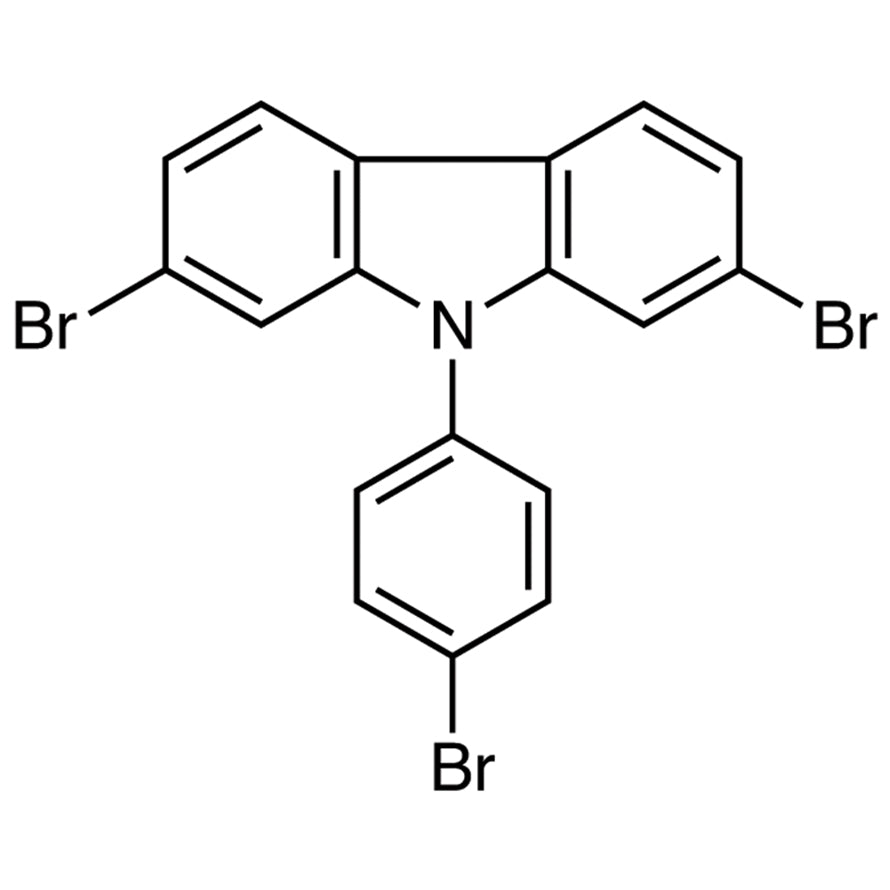
2,7-Dibromo-9-(4-bromophenyl)-9H-carbazole is an organic compound widely used in semiconductor material research. This compound plays a crucial role in the development of advanced materials with unique electronic properties. It is a key building block in the synthesis of complex molecules, particularly in the field of organic electronics. Its structural complexity and functional groups make it a valuable resource for scientists working on cutting-edge material innovations.
The compound's high reactivity and complex molecular structure make it a preferred choice for researchers. Its multiple bromo groups allow for versatile chemical modifications, enabling the creation of tailored materials with specific electronic behaviors. The compound exhibits stability under controlled conditions, though it is sensitive to temperature and humidity. These properties make it ideal for applications requiring precise chemical manipulation and synthesis.
In Indonesian laboratories, this compound is commonly used in research related to optoelectronic devices and energy technologies. It is a fundamental component in the development of organic light-emitting diodes (OLEDs) and solar cells. Its presence in material science research underscores its importance in advancing sustainable and efficient electronic technologies.
TCI brochures (PDF)
- Building Blocks for Organic Semiconductor 2026-03-24 · p. 20
Related TCI products
- TCI B5465 1190100-35-6 3-(2-Bromophenyl)-9-phenyl-9H-carbazole
- TCI B5437 1616607-88-5 2-(2-Bromophenyl)-9-phenyl-9H-carbazole
- TCI B5111 1028648-25-0 9-(4-Biphenylyl)-3-(4-bromophenyl)carbazole
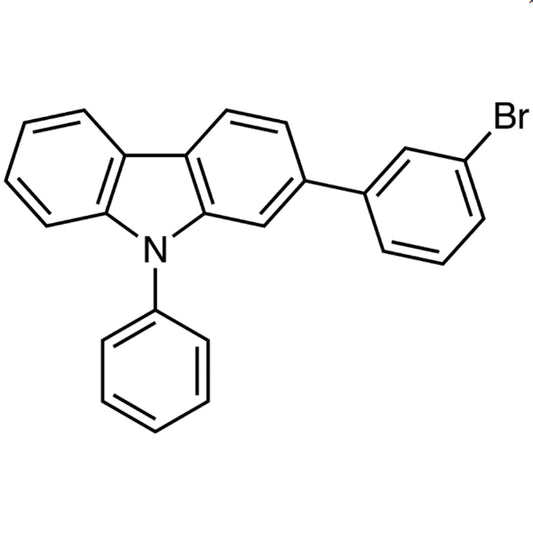
- TCI B5108 1365118-41-7 2-(3-Bromophenyl)-9-phenyl-9H-carbazole
- TCI B5107 1226860-66-7 3-Bromo-9-(4-bromophenyl)-9H-carbazole
- TCI B4427 185112-61-2 9-(3-Bromophenyl)carbazole
- Organic semiconductor synthesis: This compound is ideal for creating novel semiconductor materials due to its complex structure and reactivity.
- OLED material development: Its electronic properties make it suitable for use in organic light-emitting diodes, enhancing device performance.
- Solar cell research: It contributes to the development of efficient photovoltaic materials by providing a base for functional group modifications.
- Chemical modification studies: The multiple bromo groups allow for extensive substitution reactions, making it valuable in synthetic chemistry.
- Material characterization experiments: Its unique molecular structure is useful for studying electronic and optical properties of new materials.
| Brand | TCI |
|---|---|
| CAS number | 1313900-20-7 |
| Molecular formula | — |
| Purity | — |
| Category | Materials Science > Material Building Blocks > Small Molecule Semiconductor Building Blocks |
| Pack sizes | — |
| Physical form | — |
| Storage | Store in a cool, dry place away from light and moisture |
This compound should be stored in a cool, dry environment, away from direct light and moisture to maintain its stability. It is recommended to use airtight containers to prevent exposure to humidity and air. Due to its reactivity, it should be handled with appropriate personal protective equipment, including gloves and safety goggles. Avoid contact with incompatible substances to ensure safety. Proper ventilation is essential when working with this material in a laboratory setting. Always follow standard chemical handling procedures to minimize risks and ensure safe experimentation.
—
Produk Terkait
-
3-(2-Bromophenyl)-9-phenyl-9H-carbazole TCI B5465
Regular price From Rp 4.213.650,00Regular price -
2-(2-Bromophenyl)-9-phenyl-9H-carbazole TCI B5437
Regular price From Rp 1.193.850,00Regular price -
9-(4-Biphenylyl)-3-(4-bromophenyl)carbazole TCI B5111
Regular price From Rp 1.140.300,00Regular price -
2-(3-Bromophenyl)-9-phenyl-9H-carbazole TCI B5108
Regular price From Rp 1.220.100,00Regular price -
3-Bromo-9-(4-bromophenyl)-9H-carbazole TCI B5107
Regular price From Rp 2.571.450,00Regular price -
9-(3-Bromophenyl)carbazole TCI B4427
Regular price From Rp 1.298.850,00Regular price -
9-(2-Bromophenyl)-9H-carbazole TCI B4109
Regular price From Rp 823.200,00Regular price -
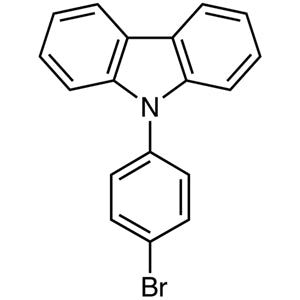
9-(4-Bromophenyl)carbazole TCI B3554
Regular price From Rp 1.353.450,00Regular price