1,4-Cyclohexanedione Mono-2,2-dimethyltrimethylene Ketal is a chemical compound widely used as a building block in organic synthesis. Its unique molecular structure features a cyclohexane ring connected to two carbon groups linked via a ketal functional group. This compound plays a crucial role in laboratory settings by enabling the creation of complex organic molecules, including heterocyclic compounds and other intricate structures. Due to its stability and controlled reactivity, it is a valuable tool for chemists working on synthetic pathways that require precision and reproducibility.
The compound's chemical properties, such as its stability against hydrolysis and its ability to undergo substitution and coupling reactions, make it a preferred choice for synthetic chemists. The ketal group provides additional stability, which simplifies the synthesis process in laboratory environments. Its high purity and consistency ensure reliable results, making it suitable for research applications that demand accuracy and precision. These characteristics make it an essential component in various chemical processes within the laboratory.
In Indonesian laboratories, this compound is commonly used in pharmaceutical research, polymer synthesis, and industrial chemical production. Its availability in multiple packaging options allows for flexible use in different experimental setups. The compound's versatility and reliability make it a go-to material for researchers seeking to develop new compounds with specific structural and functional properties.
Related TCI products
- TCI H1546 172611-72-2 2-(1-Hydroxy-3-methylbutylidene)-5,5-dimethyl-1,3-cyclohexanedione
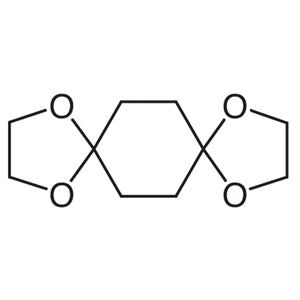
- TCI C1544 183-97-1 1,4-Cyclohexanedione Bis(ethyleneketal)
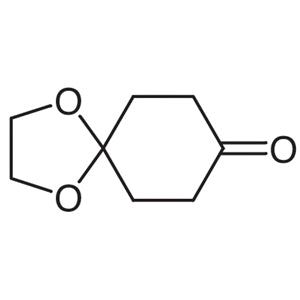
- TCI C1292 4746-97-8 1,4-Cyclohexanedione Monoethyleneketal
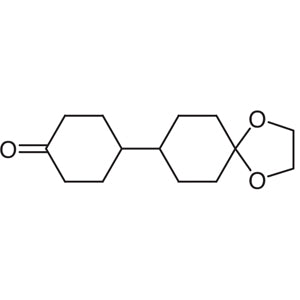
- TCI B3405 56309-94-5 Bicyclohexane-4,4'-dione Monoethylene Ketal
- TCI T0474 287-27-4 Trimethylene Sulfide
- TCI M1133 1193-55-1 2-Methyl-1,3-cyclohexanedione
- Pharmaceutical research: This compound is ideal for synthesizing pharmacological agents due to its structural versatility and reactivity.
- Polymer synthesis: It serves as a key building block in creating advanced polymers with tailored properties and molecular architectures.
- Organic chemistry experiments: Its controlled reactivity and stability make it suitable for a wide range of synthetic reactions in academic and industrial settings.
- Industrial chemical production: It is used in the development of specialty chemicals and materials requiring precise molecular design.
- Analytical chemistry: Its well-defined structure allows it to be used as a reference standard in analytical and spectroscopic studies.
| Brand | TCI |
|---|---|
| CAS number | 69225-59-8 |
| Molecular formula | — |
| Purity | — |
| Category | Chemistry > Building Blocks > Non-Heterocyclic Building Blocks |
| Pack sizes | Available in various sizes to suit different laboratory needs |
| Physical form | Solid |
| Storage | Store in a cool, dry place away from moisture and direct sunlight |
This compound should be stored in a cool, dry place, away from moisture and direct sunlight to maintain its chemical integrity. It is recommended to use airtight containers made of glass or high-density polyethylene to prevent contamination and degradation. Due to its chemical nature, it should be handled in a well-ventilated area to minimize exposure. Avoid contact with incompatible materials such as strong acids or bases. Proper personal protective equipment, including gloves and safety goggles, should be worn when handling the compound. Regular monitoring of storage conditions ensures the compound remains stable and suitable for use in laboratory applications.
—
Produk Terkait
-
2-(1-Hydroxy-3-methylbutylidene)-5,5-dimethyl-1,3-cyclohexanedione TCI H1546
Regular price From Rp 2.121.000,00Regular price -
1,4-CyclohexanedioneBis(ethyleneketal) TCI C1544
Regular price Rp 3.683.400,00Regular price -
1,4-CyclohexanedioneMonoethyleneketal TCI C1292
Regular price From Rp 769.650,00Regular price -
Bicyclohexane-4,4'-dioneMonoethyleneKetal TCI B3405
Regular price From Rp 717.150,00Regular price -
TrimethyleneSulfide TCI T0474
Regular price From Rp 3.127.950,00Regular price -
2-Methyl-1,3-cyclohexanedione TCI M1133
Regular price From Rp 1.618.050,00Regular price -
5-Methyl-1,3-cyclohexanedione TCI M0945
Regular price From Rp 955.500,00Regular price -
5-Methyl-2,3-hexanedione TCI M0752
Regular price Rp 3.155.250,00Regular price