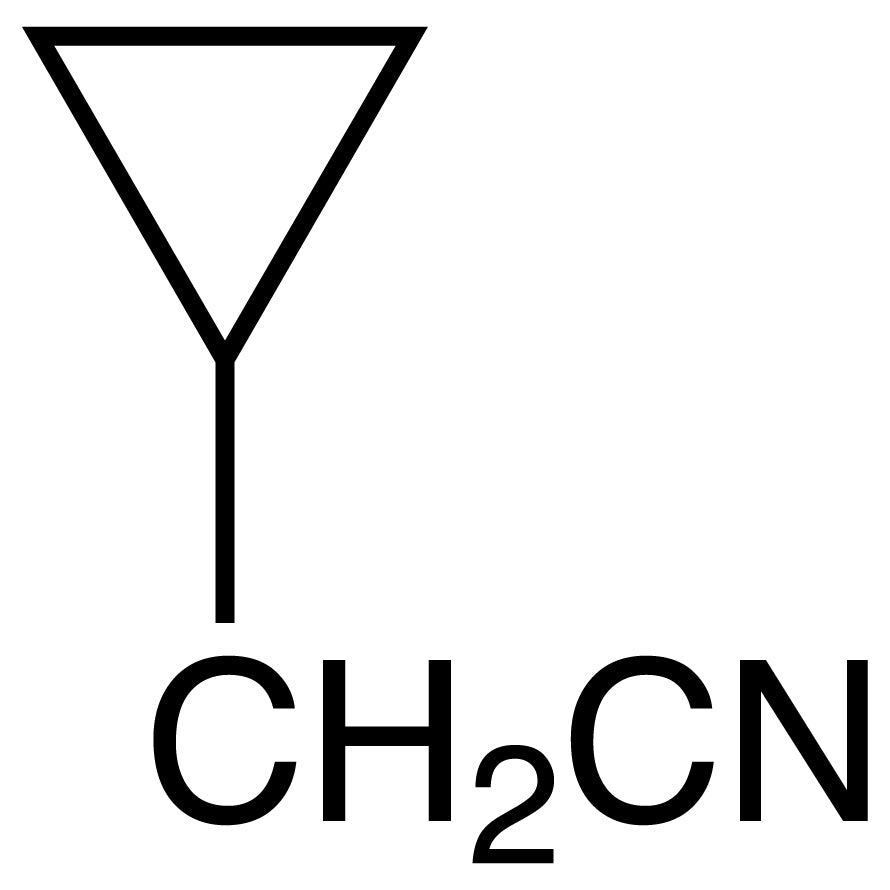
Cyclopropylacetonitrile (CAS 6542-60-5) is a chemical compound belonging to the building block category and serves as an essential starting material in organic synthesis within the laboratory. The molecule consists of a cyclopropyl ring attached to an acetonitrile group, making it a highly valuable intermediate for constructing more complex structures. In the laboratory, its primary role is as a precursor in the preparation of pharmaceutical intermediates, agrochemicals, and various fine chemicals. Researchers use it whenever they need to introduce a cyclopropyl motif into a target molecular structure, a step commonly encountered in modern drug discovery because the cyclopropyl group can improve the pharmacokinetic properties of a compound. As such, this product is an important component of the synthetic toolkit in research laboratories.
The main advantage of cyclopropylacetonitrile lies in the high reactivity of its nitrile group combined with the stability of its cyclopropyl ring, a combination rarely possessed by other compounds. The nitrile group can be transformed through various reaction pathways, such as hydrolysis to yield carboxylic acids, reduction to produce amines, and addition reactions that build new carbon–carbon bonds. At the same time, the strained cyclopropyl ring remains stable under a wide range of reaction conditions while imparting valuable conformational and metabolic characteristics to the final molecules. This dual character makes the compound a preferred choice for chemists who require a reliable, versatile building block that behaves predictably yet enables diverse synthetic transformations.
In Indonesian research laboratories, this product is typically used in synthetic chemistry workflows, particularly in medicinal chemistry projects and academic research programs developing new pharmaceutical candidates. It is commonly handled inside fume hoods, weighed with standard laboratory balances, and charged into reactions such as alkylation, cyanation, and other nitrile derivatization steps. Given the growing interest in pharmaceutical and agrochemical development in Indonesia, cyclopropylacetonitrile is regarded as one of the important components in the synthetic toolkit of local research teams, supporting both routine synthesis and more advanced investigative work.
- Synthesis of pharmaceutical intermediates: serves as a precursor for introducing cyclopropyl groups into drug-like molecules, a transformation frequently needed when building intermediates for medicinal chemistry programs.
- Preparation of agrochemicals: used as a starting building block in the construction of cyclopropyl-containing active ingredients, which are valued in crop protection chemistry for their biological properties.
- Nitrile derivatization studies: its reactive nitrile group supports hydrolysis to carboxylic acids, reduction to amines, and other conversions used to explore new reaction pathways.
- Medicinal chemistry scaffold modification: enables insertion of the cyclopropyl motif into target structures, a common step in modern drug discovery aimed at improving pharmacokinetic properties.
- Fine chemical and specialty synthesis: functions as a dependable building unit in multi-step organic synthesis, allowing researchers to assemble complex molecules with predictable reactivity.
| Brand | TCI |
|---|---|
| CAS number | 6542-60-5 |
| Molecular formula | — |
| Purity | — |
| Category | Chemistry > Building Blocks > Non-Heterocyclic Building Blocks |
| Pack sizes | — |
| Physical form | — |
| Storage | keep in a cool, dry, well-ventilated area under the conditions recommended by the manufacturer |
- Product code: C3877
Store cyclopropylacetonitrile in a tightly sealed container in a cool, dry, and well-ventilated area, protected from heat, ignition sources, and direct sunlight. Keep the container closed when not in use and store it away from incompatible substances such as strong oxidizing agents and strong acids or bases. When handling the compound, wear appropriate personal protective equipment, including laboratory gloves, safety goggles, and a laboratory coat, and work inside a fume hood to avoid inhalation of vapors. Follow standard laboratory hygiene practices, avoid skin and eye contact, and consult the safety data sheet provided by the supplier before first use.
—
Produk Terkait
-
CyclopropylCyanide TCI C0997
Regular price From Rp 743.400,00Regular price -
Phenylacetonitrile TCI P0128
Regular price From Rp 477.750,00Regular price -
4-BromophenylCyclopropylKetone TCI B4076
Regular price Rp 1.298.850,00Regular price -
4-Biphenylacetonitrile TCI B1545
Regular price From Rp 3.446.100,00Regular price -
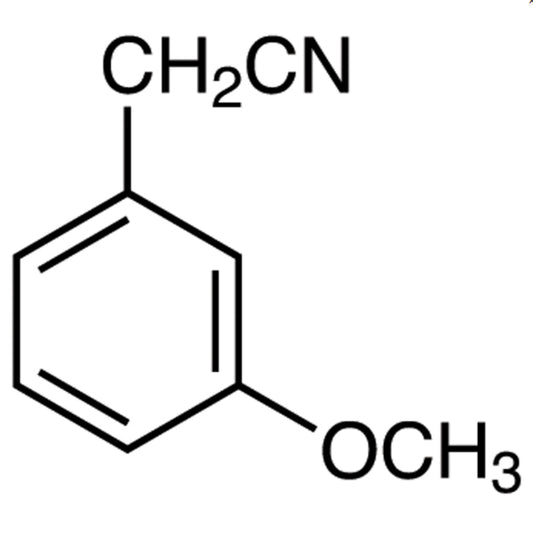
3-Methoxyphenylacetonitrile TCI M2331
Regular price From Rp 717.150,00Regular price -
4-Methoxyphenylacetonitrile TCI M0856
Regular price From Rp 823.200,00Regular price -
2-Methoxyphenylacetonitrile TCI M0855
Regular price Rp 875.700,00Regular price -
3,5-Dimethoxyphenylacetonitrile TCI D5186
Regular price From Rp 1.193.850,00Regular price