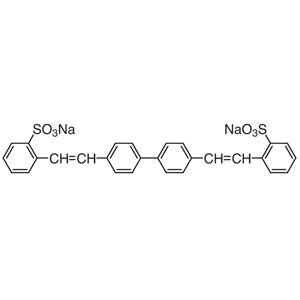
Disodium 4,4'-Bis(2-sulfonatostyryl)biphenyl is a chemical compound widely used in laboratory settings for the synthesis of complex organic molecules. As a building block in organic chemistry, it serves as a versatile intermediate that can undergo various chemical reactions, such as substitution or coupling reactions, to form more complex structures. This compound is particularly valuable in the development of materials with specific functional groups, due to its unique molecular architecture. Its presence in the laboratory enables chemists to explore new synthetic pathways and design compounds with tailored properties.
The compound's key characteristics include the presence of sulfonate groups, which enhance its solubility in aqueous solutions and contribute to its reactivity. The biphenyl core provides structural stability and allows for the attachment of diverse functional groups, making it a flexible starting material. These properties make it a preferred choice for researchers aiming to create compounds with specific optical, electronic, or chemical properties. Its reactivity and compatibility with a wide range of synthetic methods further support its use in both academic and industrial research.
In Indonesian laboratories, this compound is commonly used in organic synthesis and materials science research. It is a staple in chemical and pharmaceutical laboratories, where it is employed in the development of new compounds and the study of molecular interactions. Its role in the creation of complex structures makes it essential for both fundamental and applied research in the chemical sciences.
Related TCI products
- TCI A0308 853-68-9 Disodium Anthraquinone-2,6-disulfonate
- TCI V0037 330581-20-9 Disodium 1-Naphthol-3,6-disulfonate Hydrate
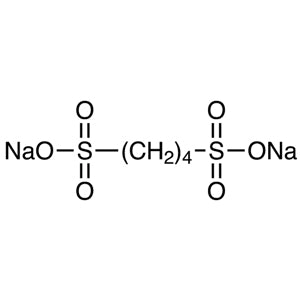
- TCI B0676 36589-61-4 Disodium 1,4-Butanedisulfonate
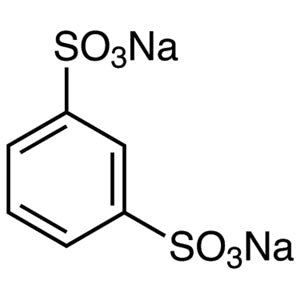
- TCI B0023 831-59-4 Disodium 1,3-Benzenedisulfonate
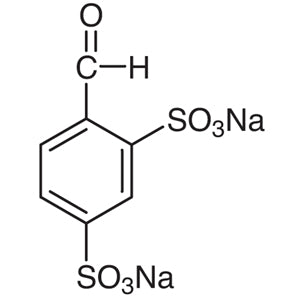
- TCI B0008 33513-44-9 Disodium 4-Formylbenzene-1,3-disulfonate
- TCI A0506 853-35-0 Anthraquinone-1,5-disulfonic Acid Disodium Salt
- Organic Synthesis: This compound is ideal for creating complex organic molecules due to its reactivity and structural versatility.
- Materials Science Research: Its biphenyl structure and sulfonate groups make it suitable for developing new materials with specific functional properties.
- Pharmaceutical Development: It is used in the synthesis of compounds that may have therapeutic applications, supporting drug discovery efforts.
- Chemical Education: It serves as a valuable teaching tool for students learning about organic reactions and molecular design.
- Industrial Chemistry: It is applied in the production of specialty chemicals that require precise molecular structures and functional groups.
| Brand | TCI |
|---|---|
| CAS number | 27344-41-8 |
| Molecular formula | — |
| Purity | — |
| Category | Chemistry > Building Blocks > Non-Heterocyclic Building Blocks |
| Pack sizes | Available in various quantities as per standard laboratory supply |
| Physical form | Solid (exact form may vary depending on supplier) |
| Storage | Store in a cool, dry place away from moisture and direct sunlight |
This compound should be stored in a cool, dry environment, away from moisture and direct sunlight to maintain its chemical integrity. It is recommended to use airtight containers made of materials such as glass or polyethylene to prevent contamination and degradation. As a reactive chemical, it should be handled with appropriate personal protective equipment, including gloves and safety goggles, to ensure laboratory safety. Proper ventilation should be maintained when working with this compound to minimize exposure. It is important to keep it away from incompatible substances to prevent any potential chemical reactions. Regular monitoring of storage conditions ensures the compound remains stable and suitable for use in laboratory applications.
—
Produk Terkait
-
DisodiumAnthraquinone-2,6-disulfonate TCI A0308
Regular price From Rp 5.247.900,00Regular price -
Disodium1-Naphthol-3,6-disulfonateHydrate TCI V0037
Regular price Rp 584.850,00Regular price -
Disodium1,4-Butanedisulfonate TCI B0676
Regular price Rp 4.691.400,00Regular price -
Disodium1,3-Benzenedisulfonate TCI B0023
Regular price From Rp 505.050,00Regular price -
Disodium4-Formylbenzene-1,3-disulfonate TCI B0008
Regular price Rp 1.431.150,00Regular price -
Anthraquinone-1,5-disulfonicAcidDisodiumSalt TCI A0506
Regular price Rp 2.306.850,00Regular price -
SuccinaldehydeDisodiumBisulfite TCI S0216
Regular price From Rp 955.500,00Regular price -
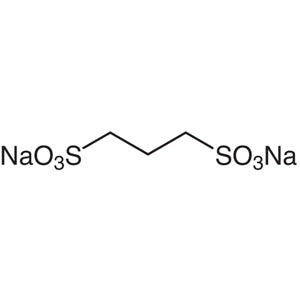
Disodium1,3-Propanedisulfonate TCI P1205
Regular price Rp 1.246.350,00Regular price