


TCI D3895 Di(N-succinimidyl) Suberate, better known by the abbreviation DSS, is a homobifunctional crosslinking reagent that carries two N-hydroxysuccinimide (NHS) ester groups at both ends of an eight-carbon suberate chain. This reagent is one of the most established tools in chemical biology for covalently joining two amine groups that lie close to one another, particularly the lysine side-chain amines and the N-terminus of proteins. In routine laboratory practice, DSS is used to freeze transient protein–protein interactions so that the resulting complexes can be analysed by electrophoresis, western blot, or mass spectrometry.
The characteristic that makes DSS a first-choice reagent is the efficient reactivity of its NHS esters toward primary amines under slightly basic conditions, forming stable amide bonds that are irreversible. The suberate spacer arm provides a fixed and known reach, so the distance between the linked residues can be treated as a geometric distance constraint in protein structure modelling. DSS is also water-insoluble but dissolves in organic solvents such as DMSO or DMF, which allows it to cross cell membranes and makes intracellular crosslinking work possible. This combination of defined spacer length, predictable amine chemistry, and membrane permeability gives researchers reproducible results across repeated experiments.
In Indonesian laboratories, DSS from TCI is typically used in university research groups, biotechnology institutes, and protein chemistry facilities working on interaction mapping and structural studies. It supports work in which a protein complex must be stabilised before downstream separation or identification, and it fits laboratories that already run electrophoresis, western blotting, or mass spectrometry workflows. Because the reagent is supplied by TCI, it suits groups that require a consistent, catalogue-listed chemical biology reagent for repeated use across projects.
TCI brochures (PDF)
- Cross-linkers 2026-04-14 · p. 2
- Drug Delivery System (DDS) Research Reagents 2025-01-29 · p. 3
- Bioconjugation Reagents 2026-07-07 · p. 8
- Reagents for Biological Research 2025-03-11 · p. 29
Related TCI products
- TCI D4019 23024-29-5 Di(N-succinimidyl) Sebacate
- TCI S0968 55750-61-3 N-Succinimidyl Maleimidoacetate
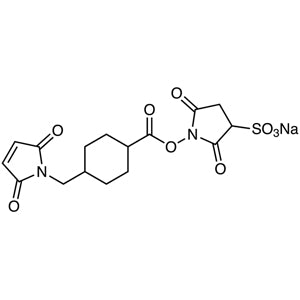
- TCI S0883 92921-24-9 3-Sulfo-N-succinimidyl 4-(N-Maleimidomethyl)cyclohexane-1-carboxylate Sodium Salt
- TCI S0863 91990-88-4 N-Succinimidyl 4-Benzoylbenzoate
- TCI S0853 64987-85-5 N-Succinimidyl 4-(N-Maleimidomethyl)cyclohexanecarboxylate
- TCI S0852 42014-51-7 N-Succinimidyl Bromoacetate
- Protein–protein interaction capture: DSS covalently locks transient or weak binding partners together, so complexes that would otherwise dissociate during handling survive downstream separation and detection steps.
- Crosslinking mass spectrometry (XL-MS): the fixed suberate spacer length converts each identified crosslink into a measurable distance constraint, supporting structural modelling of proteins and protein assemblies.
- Complex stabilisation before electrophoresis: crosslinked assemblies remain intact under denaturing gel conditions, allowing subunit composition and stoichiometry to be assessed by band pattern analysis.
- Western blot analysis of oligomeric states: irreversible amide bonds preserve the crosslinked species through transfer and immunodetection, so oligomers can be distinguished from monomeric forms.
- Intracellular crosslinking studies: solubility in DMSO or DMF combined with membrane permeability allows DSS to be introduced into living cells to capture interactions in their native cellular environment.
| Brand | TCI |
|---|---|
| CAS number | 68528-80-3 |
| Molecular formula | — |
| Purity | — |
| Category | Chemistry > Chemical Biology > Linkers and Crosslinkers |
| Pack sizes | available in standard TCI catalogue pack sizes; please confirm the required size when ordering |
| Physical form | — |
| Storage | store as indicated on the manufacturer label, protected from moisture |
- Product code: D3895
- Chemical name: Di(N-succinimidyl) Suberate (DSS), a homobifunctional NHS-ester crosslinker
Store the container tightly closed in a dry place, following the storage conditions stated on the manufacturer's label, and keep the reagent protected from moisture because NHS esters are susceptible to hydrolysis. Use dry, sealed glass or compatible plastic containers, and allow the container to reach room temperature before opening to prevent condensation. Prepare stock solutions freshly in anhydrous DMSO or DMF immediately before use rather than storing aqueous dilutions. Handle in a fume hood with a laboratory coat, safety glasses, and chemically resistant gloves, avoid contact with skin and eyes, and dispose of residues in accordance with institutional chemical waste procedures. Consult the manufacturer's safety data sheet before first use.
—
Product Categories
- Chemical BiologyLinkers and CrosslinkersHomobifunctional Cross-Linkers
- Chemical BiologyLinkers and Crosslinkers
- Chemical BiologyBioconjugationHomobifunctional Cross-Linkers
- Pharmaceutical Development and Drug Discovery Research ReagentsLinkers and CrosslinkersHomobifunctional Cross-Linkers
- Pharmaceutical Development and Drug Discovery Research ReagentsLinkers and Crosslinkers
- Biochemicals and ReagentsBioconjugationHomobifunctional Cross-Linkers
- Pharmaceutical Development and Drug Discovery ResearchBioconjugationHomobifunctional Cross-Linkers
- Pharmaceutical Development and Drug Discovery ResearchLinkers and CrosslinkersHomobifunctional Cross-Linkers
- Pharmaceutical Development and Drug Discovery ResearchLinkers and Crosslinkers
Produk Terkait
-
Di(N-succinimidyl)Sebacate TCI D4019
Regular price From Rp 1.618.050,00Regular price -
N-SuccinimidylMaleimidoacetate TCI S0968
Regular price Rp 6.253.800,00Regular price -
3-Sulfo-N-succinimidyl4-(N-Maleimidomethyl)cyclohexane-1-carboxylateSodiumSalt TCI S0883
Regular price From Rp 2.068.500,00Regular price -
N-Succinimidyl4-Benzoylbenzoate TCI S0863
Regular price From Rp 3.738.000,00Regular price -
N-Succinimidyl4-(N-Maleimidomethyl)cyclohexanecarboxylate TCI S0853
Regular price From Rp 1.644.300,00Regular price -
N-SuccinimidylBromoacetate TCI S0852
Regular price Rp 3.605.700,00Regular price -
N-SuccinimidylIodoacetate TCI S0844
Regular price Rp 2.571.450,00Regular price -
N-Succinimidyl3-Maleimidopropionate[Cross-linkingReagent] TCI S0427
Regular price From Rp 1.458.450,00Regular price




![55750-62-4 N-Succinimidyl 3-Maleimidopropionate [Cross-linking Reagent] - AMI Scientific](http://amiscientific.com/cdn/shop/files/TCI2510S0427.jpg?v=1767138756&width=533)