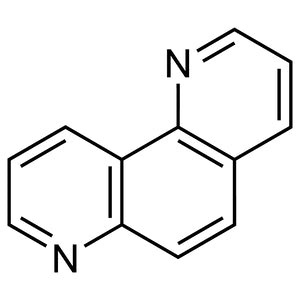
4,7-Dibromo-1,10-phenanthroline is a chemical compound widely used in laboratory settings, particularly in catalysis and inorganic chemistry. It functions as a nitrogen-donor ligand, playing a crucial role in the formation of metal complexes that enhance catalytic activity. This compound is essential in various chemical reactions where the stabilization of transition metal centers is required. Its versatility makes it a valuable tool for researchers aiming to optimize reaction pathways and improve the efficiency of catalytic processes.
The compound's stability and ability to form strong coordination bonds with transition metals make it a preferred choice in laboratory applications. Its molecular structure, featuring two bromine atoms replacing positions on the phenanthroline ring, contributes to its reactivity and effectiveness in creating metal complexes. These properties ensure that it remains a reliable component in both academic and industrial research environments. Additionally, its availability in various packaging sizes allows for flexibility in experimental design and scale.
In Indonesian laboratories, 4,7-Dibromo-1,10-phenanthroline is commonly used in chemical research, especially in educational institutions and research centers. Its role in catalytic processes and metal complex formation makes it an essential reagent for students and scientists working on inorganic chemistry projects. Its stability and reactivity ensure consistent results across different experimental conditions, supporting both teaching and research activities.
TCI brochures (PDF)
- Ligands 2025-12-01 · p. 15
Related TCI products
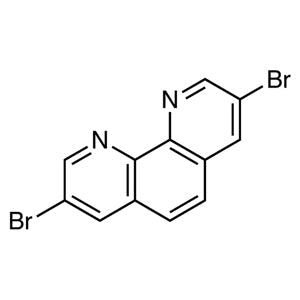
- TCI D3209 100125-12-0 3,8-Dibromo-1,10-phenanthroline
- TCI B4456 22426-14-8 2-Bromo-1,10-phenanthroline
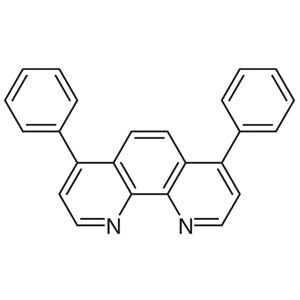
- TCI B2695 1662-01-7 Bathophenanthroline (purified by sublimation)
- TCI B2632 66127-01-3 3-Bromo-1,10-phenanthroline
- TCI B0989 53744-42-6 Bathophenanthrolinedisulfonic Acid Disodium Salt Hydrate [for Determination of Ferrous Ion]
- TCI A2977 54258-41-2 5-Amino-1,10-phenanthroline
- Catalytic Reaction Optimization: This compound is ideal for enhancing catalytic efficiency by forming stable metal complexes that facilitate reaction pathways.
- Metal Complex Synthesis: Its nitrogen-donor properties make it suitable for the synthesis of transition metal complexes used in various chemical applications.
- Inorganic Chemistry Research: It is frequently used in studies involving coordination chemistry and the behavior of transition metals in different environments.
- Analytical Chemistry Applications: Due to its stability and reactivity, it is used in analytical techniques requiring precise metal coordination.
- Teaching and Research in Academic Institutions: It supports both undergraduate and graduate-level experiments in inorganic and catalytic chemistry.
| Brand | TCI |
|---|---|
| CAS number | 156492-30-7 |
| Molecular formula | — |
| Purity | — |
| Category | Chemistry > Catalysis and Inorganic Chemistry > Nitrogen-Donor Ligands [Catalysis] |
| Pack sizes | Available in various sizes to suit different experimental needs |
| Physical form | Solid (exact form may vary depending on supplier) |
| Storage | Store in a cool, dry place away from light and moisture |
This compound should be stored in a cool, dry place, away from direct light and moisture to maintain its stability and reactivity. It is recommended to use airtight containers to prevent exposure to air and humidity, which may affect its chemical integrity. Due to its bromine content, it is important to handle it with care, ensuring proper ventilation in the laboratory. Avoid contact with skin and eyes, and use appropriate personal protective equipment when handling. It should not be stored near incompatible substances such as flammable materials or strong oxidizers. Regular inspection of storage conditions is advised to ensure the compound remains in optimal condition for use.
—
Produk Terkait
-
3,8-Dibromo-1,10-phenanthroline TCI D3209
Regular price From Rp 1.749.300,00Regular price -
2-Bromo-1,10-phenanthroline TCI B4456
Regular price From Rp 3.312.750,00Regular price -
Bathophenanthroline(purifiedbysublimation) TCI B2695
Regular price Rp 5.432.700,00Regular price -
3-Bromo-1,10-phenanthroline TCI B2632
Regular price Rp 3.683.400,00Regular price -
BathophenanthrolinedisulfonicAcidDisodiumSaltHydrate[forDeterminationofFerrousIon] TCI B0989
Regular price Rp 5.672.100,00Regular price -
5-Amino-1,10-phenanthroline TCI A2977
Regular price Rp 3.738.000,00Regular price -
3,4,7,8-Tetramethyl-1,10-phenanthroline TCI T0847
Regular price From Rp 2.094.750,00Regular price -
1,7-Phenanthroline TCI P3288
Regular price From Rp 1.565.550,00Regular price


![53744-42-6 Bathophenanthrolinedisulfonic Acid Disodium Salt Hydrate [for Determination of Ferrous Ion] - AMI Scientific](http://amiscientific.com/cdn/shop/files/TCI2510B0989.jpg?v=1768193262&width=533)