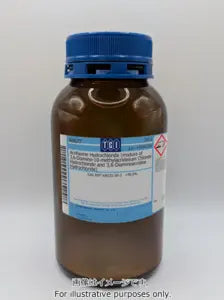
9,10-Dihydro-9,9-dimethylacridine is an organic compound widely used in scientific research, particularly in the fields of materials science and chemistry. This compound plays a crucial role in laboratory settings where the development of advanced materials and chemical components is required. Its complex molecular structure makes it a valuable tool for researchers aiming to create new materials or modify existing ones. As a small molecule semiconductor building block, it is essential in the synthesis of various functional materials.
The compound is favored for its stable molecular structure and specific chemical properties that enable it to react effectively with a wide range of reagents. Its high reactivity allows it to participate in numerous chemical reactions, making it a versatile component in synthetic processes. These characteristics make it particularly useful in molecular modification studies and the development of new semiconductor materials. The compound's ability to interact with different reagents enhances its applicability in a variety of experimental setups.
In Indonesian laboratories, 9,10-Dihydro-9,9-dimethylacridine is commonly used in research related to semiconductor materials, organic chemistry, and advanced material technologies. Many research institutions and universities rely on this compound for experiments that require reactive and stable chemical building blocks. Its presence in laboratory workflows highlights its importance in both academic and industrial research settings.
TCI brochures (PDF)
- Building Blocks for Organic Semiconductor 2026-03-24 · p. 30
Related TCI products
- TCI D5945 2197167-50-1 (5,6-Dichloro-3-oxo-2,3-dihydro-1H-inden-1-ylidene)malononitrile
- TCI D5815 2083617-82-5 (5,6-Difluoro-3-oxo-2,3-dihydro-1H-inden-1-ylidene)malononitrile
- TCI A0677 69235-50-3 Acriflavine Hydrochloride (mixture of 3,6-Diamino-10-methylacridinium Chloride Hydrochloride and 3,6-Diaminoacridine Hydrochloride)
- TCI A0134 8048-52-0 Acriflavine (mixture of 3,6-Diamino-10-methylacridinium Chloride and 3,6-Diaminoacridine)
- TCI M1237 611-64-3 9-Methylacridine
- TCI B2897 2743539-91-3 9-(2-Biphenylyl)-10-methylacridinium Perchlorate
- Semiconductor material development: This compound is ideal for synthesizing advanced semiconductor materials due to its molecular structure and reactivity.
- Organic chemistry research: It serves as a key reagent in the synthesis of complex organic compounds, supporting various chemical reactions.
- Molecular modification studies: Its high reactivity makes it suitable for experiments involving molecular structure alteration and functional group introduction.
- Material construction formulations: It is used as a building block in the development of new material formulations with specific chemical properties.
- Advanced material innovation: Researchers use it to explore new material properties and applications in emerging technologies.
| Brand | TCI |
|---|---|
| CAS number | 6267-02-3 |
| Molecular formula | — |
| Purity | — |
| Category | Materials Science > Material Building Blocks > Small Molecule Semiconductor Building Blocks |
| Pack sizes | Available in standard laboratory quantities |
| Physical form | Solid |
| Storage | Store in a cool, dry place away from light and moisture |
This compound should be stored in a cool, dry environment, away from direct light and moisture to maintain its stability and reactivity. It is recommended to use airtight containers to prevent exposure to air and humidity, which could affect its chemical properties. Laboratory personnel should handle it with care, using appropriate personal protective equipment such as gloves and safety goggles. Due to its reactivity, it should be stored separately from incompatible substances to avoid unwanted chemical interactions. Proper labeling and storage conditions are essential to ensure safe handling and long-term usability in research applications.
—
Produk Terkait
-
(5,6-Dichloro-3-oxo-2,3-dihydro-1H-inden-1-ylidene)malononitrile TCI D5945
Regular price Rp 6.996.150,00Regular price -
(5,6-Difluoro-3-oxo-2,3-dihydro-1H-inden-1-ylidene)malononitrile TCI D5815
Regular price Rp 9.539.250,00Regular price -
AcriflavineHydrochloride(mixtureof3,6-Diamino-10-methylacridiniumChlorideHydrochlorideand3,6-DiaminoacridineHydrochloride) TCI A0677
Regular price From Rp 1.803.900,00Regular price -
Acriflavine(mixtureof3,6-Diamino-10-methylacridiniumChlorideand3,6-Diaminoacridine) TCI A0134
Regular price Rp 2.121.000,00Regular price -
9-Methylacridine TCI M1237
Regular price From Rp 2.094.750,00Regular price -
9-(2-Biphenylyl)-10-methylacridiniumPerchlorate TCI B2897
Regular price Rp 4.240.950,00Regular price -
9-Mesityl-2,7,10-trimethylacridiniumPerchlorate TCI M2072
Regular price Rp 9.063.600,00Regular price -
10-MethylacridiniumPerchlorate TCI M1787
Regular price From Rp 1.326.150,00Regular price