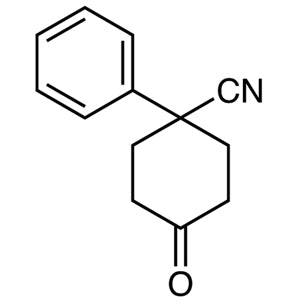
2,3-Diphenylcycloprop-2-en-1-one is a chemical compound widely used in organic reactions for the synthesis of complex molecules. Its unique structure and reactivity make it a valuable tool in laboratory settings, particularly in the development of new chemical compounds and pharmaceutical research. This compound plays a crucial role in various synthetic pathways, contributing to the formation of aromatic and heterocyclic structures. Due to its versatility, it is frequently employed in both academic and industrial laboratories for its ability to participate in a wide range of chemical transformations.
The compound is known for its high reactivity, especially in photochemical and radical reactions. Its stability under specific conditions and its ability to undergo rapid and selective reactions make it a preferred choice for applications requiring precise control over reaction outcomes. The presence of a three-membered ring structure enhances its utility in forming complex molecular architectures. These properties make it an essential component in the synthesis of compounds with specific structural requirements.
In Indonesian laboratories, 2,3-Diphenylcycloprop-2-en-1-one is commonly used in organic chemistry research, particularly in the synthesis of complex aromatic and heterocyclic compounds. It is also utilized in pharmacological studies and industrial chemical processes where precise molecular structures are required. Its role in both academic and industrial settings underscores its importance in modern chemical research.
Related TCI products
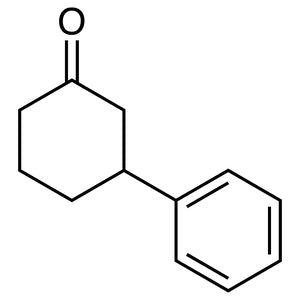
- TCI P3085 20795-53-3 3-Phenylcyclohexan-1-one
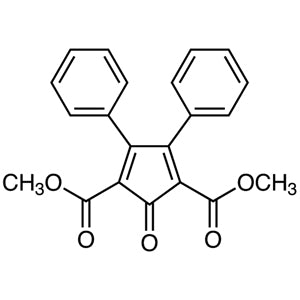
- TCI B1962 16691-79-5 2,5-Bis(methoxycarbonyl)-3,4-diphenylcyclopentadienone
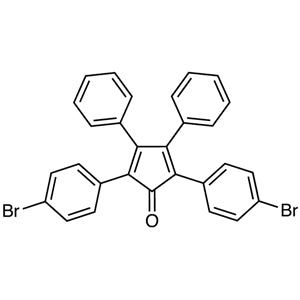
- TCI B5987 54523-24-9 2,5-Bis(4-bromophenyl)-3,4-diphenylcyclopenta-2,4-dienone
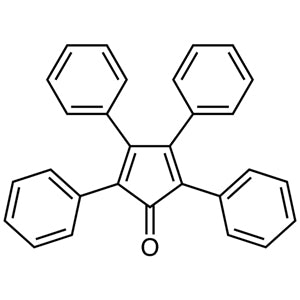
- TCI T1062 479-33-4 Tetraphenylcyclopentadienone
- TCI P1311 1444-65-1 2-Phenylcyclohexanone
- TCI P0975 4894-75-1 4-Phenylcyclohexanone
- Synthesis of complex aromatic compounds due to its unique cyclopropenone structure and reactivity.
- Photocycloaddition reactions where its photochemical properties enable efficient and selective bond formation.
- Radical-based synthetic pathways benefiting from its ability to participate in free radical chemistry.
- Pharmaceutical research for the development of new drug molecules with specific structural features.
- Industrial chemical processes requiring high reactivity and structural specificity in compound synthesis.
| Brand | TCI |
|---|---|
| CAS number | 886-38-4 |
| Molecular formula | — |
| Purity | — |
| Category | Chemistry > Building Blocks > Non-Heterocyclic Building Blocks |
| Pack sizes | Available in various quantities as per standard laboratory supply |
| Physical form | Solid or liquid, depending on the specific product variant |
| Storage | Store in a cool, dry, and well-ventilated area away from light and incompatible substances |
This compound should be stored in a cool, dry, and well-ventilated area, away from direct sunlight and sources of heat. It is recommended to use airtight containers made of materials that are chemically inert to the substance, such as glass or high-density polyethylene. Due to its reactivity, it should be handled with care, using appropriate personal protective equipment like gloves and safety goggles. Avoid contact with incompatible materials, such as strong oxidizers or reducing agents. Ensure proper ventilation when working with this compound to minimize exposure risks. Always follow standard laboratory safety protocols to ensure safe handling and storage.
—
Produk Terkait
-
3-Phenylcyclohexan-1-one TCI P3085
Regular price Rp 6.333.600,00Regular price -
2,5-Bis(methoxycarbonyl)-3,4-diphenylcyclopentadienone TCI B1962
Regular price From Rp 2.625.000,00Regular price -
2,5-Bis(4-bromophenyl)-3,4-diphenylcyclopenta-2,4-dienone TCI B5987
Regular price From Rp 1.803.900,00Regular price -
Tetraphenylcyclopentadienone TCI T1062
Regular price From Rp 823.200,00Regular price -
2-Phenylcyclohexanone TCI P1311
Regular price From Rp 1.565.550,00Regular price -
4-Phenylcyclohexanone TCI P0975
Regular price From Rp 2.650.200,00Regular price -
4-Oxo-1-phenylcyclohexanecarbonitrile TCI O0470
Regular price Rp 2.174.550,00Regular price -
1-(1-Methylcyclopropyl)ethan-1-one TCI M3979
Regular price From Rp 1.035.300,00Regular price