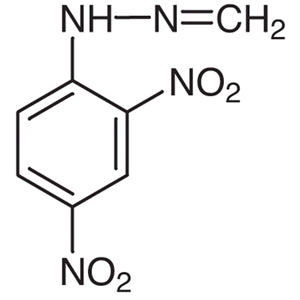
TCI F0323 1081-15-8 Formaldehyde 2,4-Dinitrophenylhydrazone is a chemical compound widely used in laboratory settings for organic synthesis. This reagent plays a crucial role in various chemical reactions, particularly in the formation of new molecular bonds. It is commonly employed in condensation reactions and is valued for its ability to participate in complex synthetic pathways. Its chemical structure makes it a versatile tool for researchers aiming to construct intricate organic molecules.
The compound is known for its chemical stability under controlled conditions, which makes it a reliable choice for precise chemical experiments. However, it is sensitive to moisture and air exposure, requiring careful handling and storage. These properties make it ideal for applications that demand high accuracy and reproducibility. Its solid form and reactivity with a wide range of substrates further enhance its utility in laboratory environments.
In Indonesian laboratories, this compound is extensively used in chemical research, especially in academic and research institutions. Its availability and reliability make it a preferred reagent for experiments requiring specific reactivity and high precision. Researchers often rely on it for studies involving heterocyclic compounds and complex molecular structures. Its role in analytical and synthetic processes underscores its importance in modern chemical research.
Related TCI products
- TCI F0713 2035-89-4 Formaldehyde Dimethylhydrazone
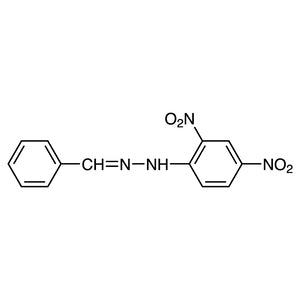
- TCI B1593 1157-84-2 Benzaldehyde 2,4-Dinitrophenylhydrazone
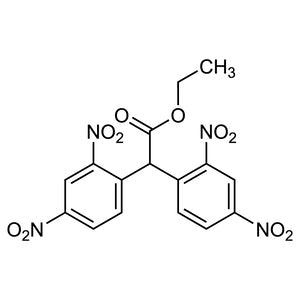
- TCI B0817 5833-18-1 Ethyl Bis(2,4-dinitrophenyl)acetate
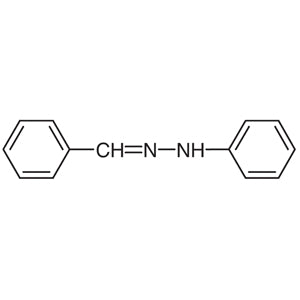
- TCI B0014 588-64-7 Benzaldehyde Phenylhydrazone
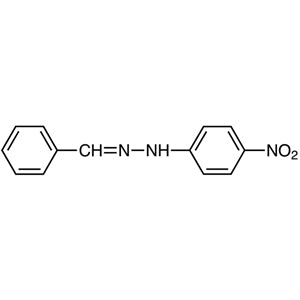
- TCI B0009 3078-09-9 Benzaldehyde 4-Nitrophenylhydrazone
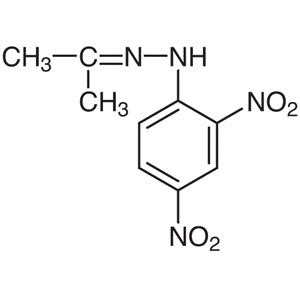
- TCI A1273 1567-89-1 Acetone 2,4-Dinitrophenylhydrazone
- Organic synthesis applications benefit from this compound due to its ability to form stable intermediates in condensation reactions.
- Structural analysis in chemical research utilizes this reagent for its predictable reactivity and molecular compatibility.
- Heterocyclic compound synthesis relies on its capacity to participate in bond-forming reactions under controlled conditions.
- Analytical chemistry experiments use this material for its consistent performance in molecular characterization studies.
- Complex molecule construction in research labs depends on its reactivity with diverse substrates and stability in controlled environments.
| Brand | TCI |
|---|---|
| CAS number | 1081-15-8 |
| Molecular formula | — |
| Purity | — |
| Category | Chemistry > Building Blocks > Non-Heterocyclic Building Blocks |
| Pack sizes | — |
| Physical form | Solid |
| Storage | Requires protection from moisture and air exposure |
This compound should be stored in a cool, dry place away from moisture and air exposure to maintain its chemical integrity. It is recommended to use airtight containers to prevent degradation due to environmental factors. Laboratory personnel should handle the material with care, using appropriate personal protective equipment to ensure safety. Due to its sensitivity, it should not be exposed to high humidity or direct sunlight. Storage conditions must remain consistent to preserve its reactivity and effectiveness in chemical reactions. Proper labeling and secure storage are essential to prevent accidental exposure and ensure safe handling in laboratory settings.
—
Produk Terkait
-
FormaldehydeDimethylhydrazone TCI F0713
Regular price From Rp 2.306.850,00Regular price -
Benzaldehyde2,4-Dinitrophenylhydrazone TCI B1593
Regular price From Rp 1.087.800,00Regular price -
EthylBis(2,4-dinitrophenyl)acetate TCI B0817
Regular price Rp 1.458.450,00Regular price -
BenzaldehydePhenylhydrazone TCI B0014
Regular price Rp 3.551.100,00Regular price -
Benzaldehyde4-Nitrophenylhydrazone TCI B0009
Regular price Rp 5.009.550,00Regular price -
Acetone2,4-Dinitrophenylhydrazone TCI A1273
Regular price From Rp 1.087.800,00Regular price -
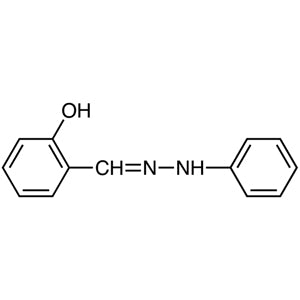
2-HydroxybenzaldehydePhenylhydrazone TCI H1478
Regular price From Rp 1.936.200,00Regular price -
EthylMethylKetone2,4-Dinitrophenylhydrazone TCI E0439
Regular price From Rp 1.167.600,00Regular price