Trans-4-Hydroxy-L-proline is a chemical compound with a complex structure widely used in various chemical reactions, particularly in the field of organic catalysis. It plays a crucial role in laboratory settings as a substrate or cofactor in catalytic reactions that require specific chemical activation. This compound is essential for researchers working on organic synthesis, offering versatility in its application across different experimental setups. Its presence in laboratory workflows supports the development of new chemical compounds, pharmaceuticals, and industrial materials.
The properties that make trans-4-Hydroxy-L-proline a preferred choice include its stable molecular structure, ability to bind with various reactants, and participation in redox and substitution reactions. Its polar nature allows it to dissolve easily in organic solvents such as ethanol and acetone, making it suitable for a wide range of chemical processes. These characteristics enhance its utility in both synthetic and analytical applications, ensuring reliability and consistency in experimental outcomes.
In Indonesian laboratories, trans-4-Hydroxy-L-proline is commonly used in organic and biochemical research. It is particularly relevant for studies involving the synthesis of pharmaceutical compounds and other organic molecules. Its availability and performance make it a key component in chemical research, supporting both academic and industrial investigations in the field of chemistry.
TCI brochures (PDF)
- Asymmetric Organocatalysts 2025-06-12 · p. 7
- Amino Acids and Peptide Synthesis Reagents 2025-08-14 · p. 5
Related TCI products
- TCI F0818 2507-61-1 trans-4-Fluoro-L-proline
- TCI H1358 2584-71-6 cis-4-Hydroxy-D-proline
- TCI H1169 618-27-9 cis-4-Hydroxy-L-proline
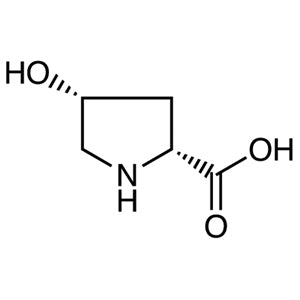
- TCI A1043 2133-34-8 L-Azetidine-2-carboxylic Acid [Antagonist of L-Proline]
- TCI M2077 42856-71-3 alpha-Methyl-L-proline
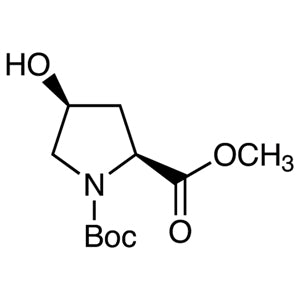
- TCI B3987 102195-79-9 N-(tert-Butoxycarbonyl)-cis-4-hydroxy-L-proline Methyl Ester
- Organic synthesis experiments benefit from trans-4-Hydroxy-L-proline due to its ability to participate in catalytic reactions and enhance reaction efficiency.
- Biochemical research utilizes this compound as a substrate or cofactor in enzyme-mediated reactions, aiding in the study of metabolic pathways.
- Pharmaceutical development relies on trans-4-Hydroxy-L-proline for the synthesis of complex organic molecules, supporting drug discovery efforts.
- Industrial chemical processes incorporate this compound to produce specialty chemicals and functional materials with specific properties.
- Analytical chemistry applications use trans-4-Hydroxy-L-proline as a standard for qualitative and quantitative analysis in chromatographic and spectroscopic techniques.
| Brand | TCI |
|---|---|
| CAS number | 51-35-4 |
| Molecular formula | — |
| Purity | — |
| Category | Chemistry > Catalysis and Inorganic Chemistry > Organocatalysts [Catalysis] |
| Pack sizes | Available in various quantities as per supplier specifications |
| Physical form | Solid |
| Storage | Store in a cool, dry place away from moisture and direct sunlight |
Trans-4-Hydroxy-L-proline should be stored in a cool, dry environment to maintain its chemical stability and prevent degradation. It is recommended to use airtight containers to protect it from moisture and contaminants. Due to its polar nature, it is advisable to store it in a desiccator or a container with a drying agent to minimize exposure to humidity. Proper labeling of storage containers is essential for safe handling and easy identification. In laboratory settings, it should be handled with appropriate personal protective equipment, such as gloves and safety goggles, to ensure safe usage and prevent accidental contact. Regular inspection of storage conditions is necessary to maintain the integrity of the compound and ensure its effectiveness in experimental applications.
—
Product Categories
Produk Terkait
-
trans-4-Fluoro-L-proline TCI F0818
Regular price Rp 2.782.500,00Regular priceRp 1.961.400,00Sale price Rp 2.782.500,00 -
cis-4-Hydroxy-D-proline TCI H1358
Regular price Rp 955.500,00Regular priceRp 683.550,00Sale price Rp 955.500,00 -
cis-4-Hydroxy-L-proline TCI H1169
Regular price Rp 582.750,00Regular priceRp 423.150,00Sale price Rp 582.750,00 -
L-Azetidine-2-carboxylicAcid[AntagonistofL-Proline] TCI A1043
Regular price Rp 1.378.650,00Regular priceRp 979.650,00Sale price Rp 1.378.650,00 -
alpha-Methyl-L-proline TCI M2077
Regular price Rp 4.691.400,00Regular priceRp 3.295.950,00Sale price Rp 4.691.400,00 -
N-(tert-Butoxycarbonyl)-cis-4-hydroxy-L-prolineMethylEster TCI B3987
Regular price Rp 742.350,00Regular priceRp 534.450,00Sale price Rp 742.350,00 -
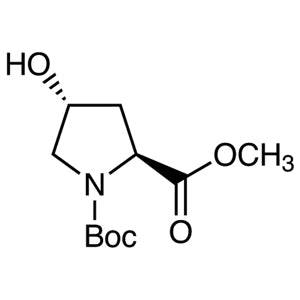
N-(tert-Butoxycarbonyl)-trans-4-hydroxy-L-prolineMethylEster TCI B3843
Regular price Rp 822.150,00Regular priceRp 590.100,00Sale price Rp 822.150,00 -
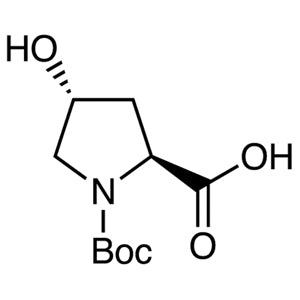
trans-N-(tert-Butoxycarbonyl)-4-hydroxy-L-proline TCI B1635
Regular price Rp 1.829.100,00Regular priceRp 1.294.650,00Sale price Rp 1.829.100,00



![2133-34-8 L-Azetidine-2-carboxylic Acid [Antagonist of L-Proline] - AMI Scientific](http://amiscientific.com/cdn/shop/files/TCI2510A1043.jpg?v=1767080570&width=533)