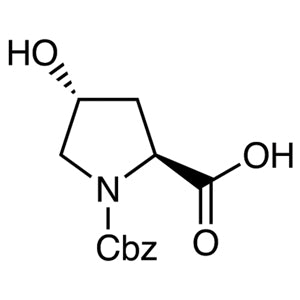
cis-4-Hydroxy-D-proline is a chemical compound widely used in chemical and biochemical experiments, particularly in the field of peptide chemistry and protein research. This compound plays a crucial role in laboratory settings where the synthesis of peptides and the study of protein structures are required. Its unique molecular structure, featuring a hydroxyl group attached to the fourth carbon of the proline chain, makes it a valuable tool for researchers seeking to manipulate and understand complex biological systems. Its presence in various experimental protocols underscores its importance in modern biochemical investigations.
The compound is favored for its stable chemical properties and controlled reactivity, which ensure predictable chemical reactions and consistent results. These characteristics make it an ideal choice for high-precision research applications. Its specificity allows for targeted chemical interactions, enhancing the accuracy of experiments. Additionally, its availability in pure form and various packaging options facilitates its use across a wide range of experimental scales, from small-scale laboratory tests to larger research projects.
In Indonesian laboratories, cis-4-Hydroxy-D-proline is commonly used in biomedical, pharmacological, and organic chemistry research. Local researchers rely on its reliability and versatility to advance their studies in areas such as drug development, protein analysis, and molecular biology. Its resistance to degradation under standard laboratory conditions further supports its long-term utility in research environments.
TCI brochures (PDF)
- D-Amino Acids 2026-03-19 · p. 1
- Asymmetric Organocatalysts 2025-06-12 · p. 7
- Amino Acids and Peptide Synthesis Reagents 2025-08-14 · p. 5
Related TCI products
- TCI H1169 618-27-9 cis-4-Hydroxy-L-proline
- TCI H0296 51-35-4 trans-4-Hydroxy-L-proline
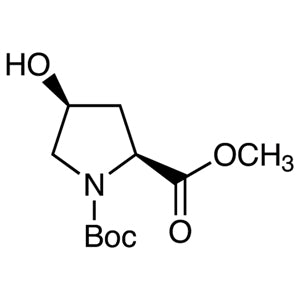
- TCI B3987 102195-79-9 N-(tert-Butoxycarbonyl)-cis-4-hydroxy-L-proline Methyl Ester
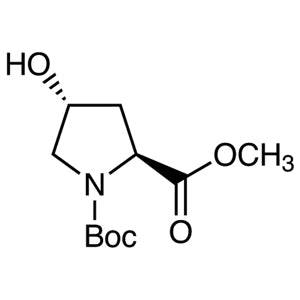
- TCI B3843 74844-91-0 N-(tert-Butoxycarbonyl)-trans-4-hydroxy-L-proline Methyl Ester
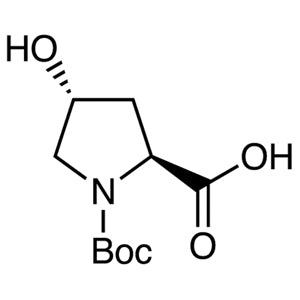
- TCI B1635 13726-69-7 trans-N-(tert-Butoxycarbonyl)-4-hydroxy-L-proline
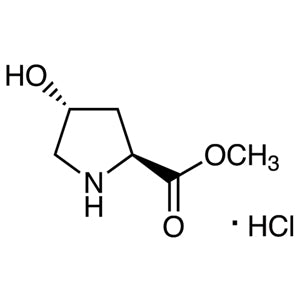
- TCI H1533 40216-83-9 trans-4-Hydroxy-L-proline Methyl Ester Hydrochloride
- Peptide Synthesis: This compound is essential for the synthesis of peptides due to its structural similarity to proline, enabling the formation of stable peptide bonds.
- Protein Structure Analysis: Its unique molecular structure allows it to be used in studies that aim to understand the conformation and behavior of proteins.
- Biochemical Assays: It serves as a key reagent in biochemical assays that require precise chemical interactions and controlled reactivity.
- Drug Development: Researchers use it to study the interactions between small molecules and biological targets, aiding in the design of new therapeutic agents.
- Analytical Chemistry: It is employed in qualitative and quantitative analysis of biological components, providing accurate and reproducible results.
| Brand | TCI |
|---|---|
| CAS number | 2584-71-6 |
| Molecular formula | — |
| Purity | — |
| Category | Chemistry > Chemical Biology > Peptide Chemistry |
| Pack sizes | Available in various sizes to suit different experimental needs |
| Physical form | Solid |
| Storage | Store in a cool, dry place away from light |
This compound should be stored in a cool, dry environment, away from direct sunlight and sources of heat. It is recommended to use airtight containers to prevent moisture absorption and maintain its chemical integrity. Due to its chemical stability, it does not require refrigeration but should be kept in a secure location to avoid contamination. In laboratory settings, it is important to handle the compound with care, using appropriate personal protective equipment to ensure safety. Regular monitoring of storage conditions helps maintain the compound's effectiveness and ensures its usability for research purposes.
—
Product Categories
Produk Terkait
-
cis-4-Hydroxy-L-proline TCI H1169
Regular price From Rp 530.250,00Regular price -
trans-4-Hydroxy-L-proline TCI H0296
Regular price From Rp 584.850,00Regular price -
N-(tert-Butoxycarbonyl)-cis-4-hydroxy-L-prolineMethylEster TCI B3987
Regular price From Rp 689.850,00Regular price -
N-(tert-Butoxycarbonyl)-trans-4-hydroxy-L-prolineMethylEster TCI B3843
Regular price From Rp 769.650,00Regular price -
trans-N-(tert-Butoxycarbonyl)-4-hydroxy-L-proline TCI B1635
Regular price Rp 1.776.600,00Regular price -
trans-4-Hydroxy-L-prolineMethylEsterHydrochloride TCI H1533
Regular price From Rp 1.008.000,00Regular price -
trans-N-Carbobenzoxy-4-hydroxy-L-proline TCI C2506
Regular price From Rp 769.650,00Regular price -
cis-N-(tert-Butoxycarbonyl)-4-hydroxy-L-proline TCI B5887
Regular price From Rp 1.167.600,00Regular price