Alpha-Methyl-L-proline is a chemical compound widely used in various chemical reactions, particularly in the field of organic catalysis. This compound plays a crucial role in laboratory settings by acting as a catalyst in specific chemical reactions. Its unique molecular structure enables it to facilitate reactions without undergoing significant chemical changes itself. In the laboratory, it is often employed to accelerate reaction rates, making it an essential tool for researchers working in organic chemistry. Its versatility and effectiveness make it a valuable asset in both academic and industrial research environments.
The properties that make alpha-Methyl-L-proline a preferred choice include its high purity, stability, and reactivity. It exhibits excellent solubility in organic solvents, which makes it easy to handle and incorporate into different experimental setups. Its ability to bind with various substrates further enhances its utility in catalytic processes. These characteristics ensure that it remains a reliable and efficient component in chemical synthesis and catalytic applications. The compound’s consistent performance across a range of conditions also contributes to its popularity among scientists and researchers.
In Indonesian laboratories, alpha-Methyl-L-proline is commonly used in chemical research, especially in the fields of catalysis and organic synthesis. It is frequently found in studies focused on the development of new materials or the modification of existing chemical compounds. Due to its reliability and effectiveness, it is a favored choice for researchers aiming to achieve precise and reproducible results in their experiments.
TCI brochures (PDF)
- Asymmetric Organocatalysts 2025-06-12 · p. 7
- Organic Catalysis: Alpha-Methyl-L-proline is ideal for organic catalysis due to its ability to accelerate reactions without undergoing chemical changes, making it a preferred catalyst in synthetic chemistry.
- Chemical Synthesis: This compound is widely used in chemical synthesis to facilitate the formation of complex organic molecules, offering high efficiency and selectivity in reaction processes.
- Material Development: Its reactivity and solubility make it suitable for the development of new materials, especially in research focused on polymer chemistry and functional compounds.
- Analytical Chemistry: The compound’s stability and reactivity allow it to be used in analytical procedures where precise chemical interactions are required.
- Environmental Research: It is applied in environmental studies to investigate the behavior of organic compounds in different reaction conditions and their potential impact on chemical processes.
| Brand | TCI |
|---|---|
| CAS number | 42856-71-3 |
| Molecular formula | — |
| Purity | — |
| Category | Chemistry > Catalysis and Inorganic Chemistry > Organocatalysts [Catalysis] |
| Pack sizes | Available in various quantities as per standard laboratory supply formats |
| Physical form | Solid (as per standard product description) |
| Storage | Store in a cool, dry place away from direct sunlight and moisture |
Alpha-Methyl-L-proline should be stored in a cool, dry place, away from direct sunlight and moisture to maintain its stability and effectiveness. It is recommended to use airtight containers made of glass or polyethylene to prevent contamination and degradation. Since it is a chemical compound, it should be handled with appropriate personal protective equipment, such as gloves and safety goggles, to ensure laboratory safety. Proper labeling of storage containers is essential for easy identification and safe handling. Regular monitoring of storage conditions is advised to ensure the compound remains in optimal condition for use in research applications.
—
Product Categories
Produk Terkait
-
L-Azetidine-2-carboxylicAcid[AntagonistofL-Proline] TCI A1043
Regular price Rp 1.378.650,00Regular priceRp 979.650,00Sale price Rp 1.378.650,00 -
trans-4-Hydroxy-L-proline TCI H0296
Regular price Rp 637.350,00Regular priceRp 460.950,00Sale price Rp 637.350,00 -
trans-4-Fluoro-L-proline TCI F0818
Regular price Rp 2.782.500,00Regular priceRp 1.961.400,00Sale price Rp 2.782.500,00 -
D-Proline TCI P0994
Regular price Rp 1.431.150,00Regular priceRp 1.016.400,00Sale price Rp 1.431.150,00 -
L-Proline TCI P0481
Regular price Rp 1.033.200,00Regular priceRp 738.150,00Sale price Rp 1.033.200,00 -
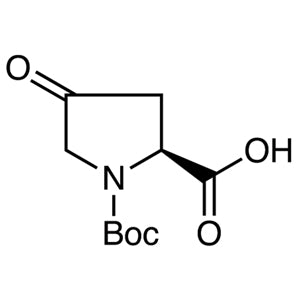
N-(tert-Butoxycarbonyl)-4-oxo-L-proline TCI B4141
Regular price Rp 1.351.350,00Regular priceRp 960.750,00Sale price Rp 1.351.350,00 -
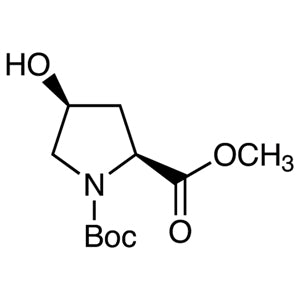
N-(tert-Butoxycarbonyl)-cis-4-hydroxy-L-prolineMethylEster TCI B3987
Regular price Rp 742.350,00Regular priceRp 534.450,00Sale price Rp 742.350,00 -
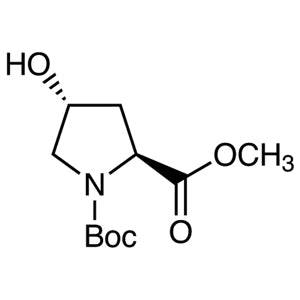
N-(tert-Butoxycarbonyl)-trans-4-hydroxy-L-prolineMethylEster TCI B3843
Regular price Rp 822.150,00Regular priceRp 590.100,00Sale price Rp 822.150,00
![2133-34-8 L-Azetidine-2-carboxylic Acid [Antagonist of L-Proline] - AMI Scientific](http://amiscientific.com/cdn/shop/files/TCI2510A1043.jpg?v=1767080570&width=533)