

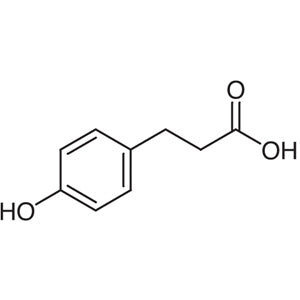
3-(4-Hydroxyphenyl)propionic Acid is a chemical compound widely used as a foundational building block in the synthesis of complex organic compounds. Its molecular structure, featuring a hydroxyl group attached to a phenyl ring, makes it essential for creating molecules with carbon chains connected to hydroxyl functionalities. In laboratory settings, this compound serves as a versatile reagent for various chemical transformations, including substitution and oxidation reactions. Its role is critical in the development of pharmaceuticals, polymers, and other specialty chemicals.
The compound's chemical properties make it a preferred choice for synthetic chemists. It exhibits stability under controlled conditions but is sensitive to moisture and air exposure, which requires careful handling. This sensitivity also enhances its reactivity with a wide range of reagents, making it suitable for diverse applications. Its open molecular structure allows for easy modification, enabling chemists to tailor its properties for specific experimental needs. This adaptability is a key factor in its widespread use across multiple research fields.
In Indonesian laboratories, 3-(4-Hydroxyphenyl)propionic Acid is commonly found in chemical, pharmaceutical, and materials research. It is frequently used in the development of new compounds with potential applications in medicine and industry. Many research institutions and universities rely on this compound to advance their studies, contributing to scientific innovation and discovery. Its versatility and reliability make it a staple in the chemical supply chain of Indonesian laboratories.
Related TCI products
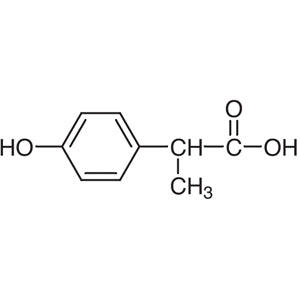
- TCI H1037 938-96-5 2-(4-Hydroxyphenyl)propionic Acid
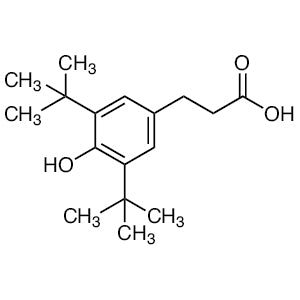
- TCI D3452 20170-32-5 3-(3,5-Di-tert-butyl-4-hydroxyphenyl)propionic Acid
- TCI T2797 1505-50-6 3-(p-Tolyl)propionic Acid
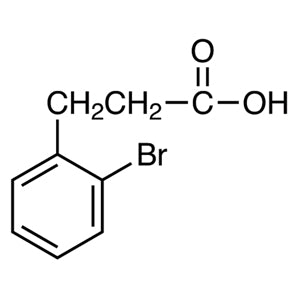
- TCI B4409 15115-58-9 3-(2-Bromophenyl)propionic Acid
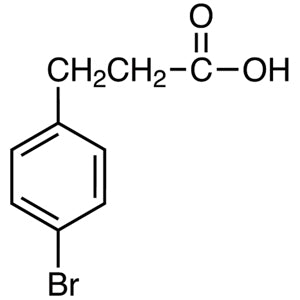
- TCI B3753 1643-30-7 3-(4-Bromophenyl)propionic Acid
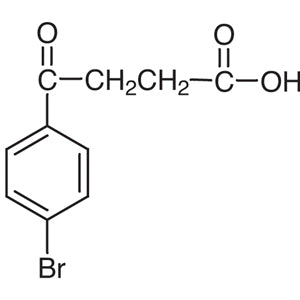
- TCI B3129 6340-79-0 3-(4-Bromobenzoyl)propionic Acid
- Pharmaceutical research utilizes this compound for the synthesis of drug molecules due to its hydroxyl functionality and reactivity.
- Polymer development benefits from its ability to participate in chain-forming reactions, enhancing material properties.
- Organic synthesis relies on its structural versatility for creating complex molecules through substitution and oxidation.
- Material science applications use it to develop functional materials with specific chemical properties.
- Analytical chemistry employs it as a standard for testing reagent purity and reaction efficiency in controlled environments.
| Brand | TCI |
|---|---|
| CAS number | 501-97-3 |
| Molecular formula | — |
| Purity | — |
| Category | Chemistry > Building Blocks > Non-Heterocyclic Building Blocks |
| Pack sizes | Available in standard laboratory quantities |
| Physical form | Solid powder |
| Storage | Requires dry, cool, and dark conditions to prevent degradation |
This compound should be stored in a dry, cool, and dark environment to maintain its chemical stability and prevent moisture-induced degradation. It is recommended to use airtight containers made of glass or high-density polyethylene to minimize exposure to air and humidity. Due to its sensitivity, it is important to handle it in a controlled laboratory setting, using appropriate personal protective equipment. Avoid prolonged exposure to light and ensure proper ventilation when working with the compound. Regular monitoring of storage conditions is essential to ensure the integrity of the material for experimental use.
—
Produk Terkait
-
2-(4-Hydroxyphenyl)propionicAcid TCI H1037
Regular price Rp 16.906.050,00Regular price -
3-(3,5-Di-tert-butyl-4-hydroxyphenyl)propionicAcid TCI D3452
Regular price From Rp 795.900,00Regular price -
3-(p-Tolyl)propionicAcid TCI T2797
Regular price From Rp 2.359.350,00Regular price -
3-(2-Bromophenyl)propionicAcid TCI B4409
Regular price From Rp 1.087.800,00Regular price -
3-(4-Bromophenyl)propionicAcid TCI B3753
Regular price From Rp 477.750,00Regular price -
3-(4-Bromobenzoyl)propionicAcid TCI B3129
Regular price Rp 1.829.100,00Regular price -
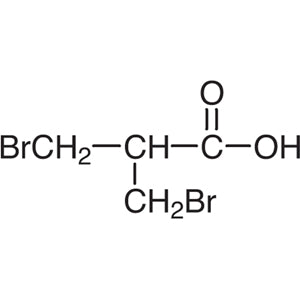
3-Bromo-2-(bromomethyl)propionicAcid TCI B3081
Regular price From Rp 1.510.950,00Regular price -
2-[4-(Bromomethyl)phenyl]propionicAcid TCI B2101
Regular price From Rp 505.050,00Regular price

![111128-12-2 2-[4-(Bromomethyl)phenyl]propionic Acid - AMI Scientific](http://amiscientific.com/cdn/shop/files/TCI2510B2101_3164fa18-db8c-41f7-9c31-4bf45a41bebb.jpg?v=1767335146&width=533)