![10-Hydroxybenzo[h]quinoline (CAS 33155-90-7) - TCI H0738 - AMI Scientific](http://amiscientific.com/cdn/shop/files/TCI2510H0738.jpg?v=1769142554&width=1946)
![10-Hydroxybenzo[h]quinoline (CAS 33155-90-7) - TCI H0738 - AMI Scientific](http://amiscientific.com/cdn/shop/files/TCI2510H0738.jpg?v=1769142554&width=1445)
10-Hydroxybenzo[h]quinoline is a chemical compound widely used in scientific research, particularly in organic chemistry and materials science. It plays a crucial role in the synthesis of functional compounds by acting as a ligand in the formation of metal complexes. Its unique molecular structure enables it to interact effectively with various metals, making it a valuable tool in the development of advanced materials. This compound is essential for researchers aiming to create materials with specific optical and electronic properties. Its versatility and chemical stability make it a preferred choice in modern laboratory settings.
The compound is known for its chemical stability, solubility in organic solvents, and ability to bind with a range of metals. These properties allow it to be used in the synthesis of metal-based complexes with unique optical and electronic characteristics. Its solubility in organic solvents facilitates its use in various synthetic processes, while its chemical stability ensures consistent performance in laboratory experiments. These attributes make it an ideal material for functional material research and optical applications.
In Indonesian laboratories, 10-Hydroxybenzo[h]quinoline is commonly used in applied research projects such as the development of optical materials, chemical sensors, and catalysts. Its role in forming metal complexes makes it a key component in studies related to material science and chemistry. Researchers in Indonesia rely on this compound for its reliability and effectiveness in creating advanced functional materials with specific properties.
TCI brochures (PDF)
- Ligands 2025-12-01 · p. 17
Related TCI products
- TCI C3952 939-69-5 6-Hydroxybenzo[d]thiazole-2-carbonitrile
- TCI B0088 230-27-3 Benzo[h]quinoline
- TCI T3507 406463-06-7 6-(4,4,5,5-Tetramethyl-1,3,2-dioxaborolan-2-yl)quinoline
- TCI B0087 85-02-9 Benzo[f]quinoline
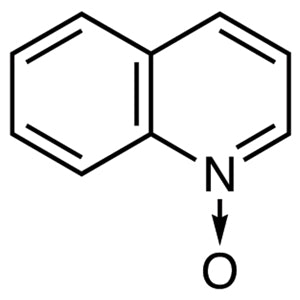
- TCI Q0104 1613-37-2 Quinoline N-Oxide
- TCI Q0087 355386-94-6 Quinoline-5-boronic Acid (contains varying amounts of Anhydride)
- Optical material development: This compound is used to create materials with unique optical properties due to its ability to form metal complexes with specific electronic characteristics.
- Chemical sensor fabrication: Its interaction with metals allows for the development of sensitive and selective chemical sensors for detecting various analytes.
- Catalytic processes: The compound's ability to bind with metals makes it useful in catalytic reactions, enhancing reaction efficiency and selectivity.
- Functional material synthesis: It serves as a ligand in the synthesis of functional materials with tailored properties for various applications.
- Metal complex research: Its role in forming stable metal complexes makes it ideal for studying the behavior and properties of metal-based compounds.
| Brand | TCI |
|---|---|
| CAS number | 33155-90-7 |
| Molecular formula | — |
| Purity | — |
| Category | Materials Science > Material Building Blocks > Ligands for Functional Metal Complexes |
| Pack sizes | Available in various quantities as per supplier specifications |
| Physical form | Solid |
| Storage | Store in a cool, dry place away from light |
This compound should be stored in a cool, dry place away from direct light to maintain its chemical stability. It is recommended to use airtight containers to prevent exposure to moisture and air, which could affect its integrity. Due to its chemical nature, it should be handled with appropriate personal protective equipment, including gloves and safety goggles. It is important to ensure proper ventilation when working with this material to avoid inhalation of vapors. Storage conditions should be controlled to prevent degradation and maintain its effectiveness in laboratory applications. Always follow standard laboratory safety protocols when handling and storing this compound.
—
Produk Terkait
-
6-Hydroxybenzo[d]thiazole-2-carbonitrile TCI C3952
Regular price Rp 2.862.300,00Regular price -
Benzo[h]quinoline TCI B0088
Regular price From Rp 2.597.700,00Regular price -
6-(4,4,5,5-Tetramethyl-1,3,2-dioxaborolan-2-yl)quinoline TCI T3507
Regular price Rp 2.041.200,00Regular price -
Benzo[f]quinoline TCI B0087
Regular price Rp 2.545.200,00Regular price -
QuinolineN-Oxide TCI Q0104
Regular price Rp 1.829.100,00Regular price -
Quinoline-5-boronicAcid(containsvaryingamountsofAnhydride) TCI Q0087
Regular price Rp 1.405.950,00Regular price -
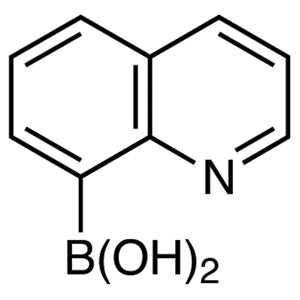
Quinoline-8-boronicAcid(containsvaryingamountsofAnhydride) TCI Q0086
Regular price Rp 823.200,00Regular price -
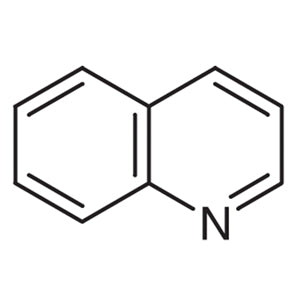
Quinoline TCI Q0085
Regular price From Rp 477.750,00Regular price
![6-Hydroxybenzo[d]thiazole-2-carbonitrile (CAS 939-69-5) - TCI C3952 - AMI Scientific](http://amiscientific.com/cdn/shop/files/TCI2510C3952.jpg?v=1768204809&width=533)
![230-27-3 Benzo[h]quinoline - AMI Scientific](http://amiscientific.com/cdn/shop/files/TCI2510B0088.jpg?v=1767085172&width=533)

![85-02-9 Benzo[f]quinoline - AMI Scientific](http://amiscientific.com/cdn/shop/files/TCI2510B0087.jpg?v=1767085168&width=533)