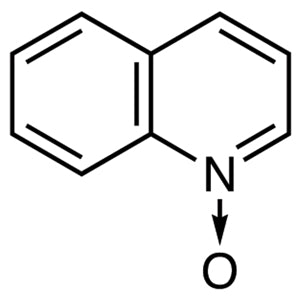
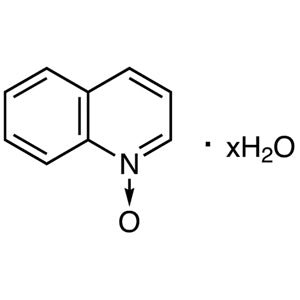
Quinoline N-Oxide (TCI Q0104), with CAS number 1613-37-2, is a chemical compound that plays a crucial role in laboratory settings, particularly in organic and pharmaceutical research. This compound is a heterocyclic derivative with an oxidized nitrogen atom, making it a valuable building block for the synthesis of complex molecules. Its chemical structure allows it to participate in various reactions, contributing to the development of compounds with specific biological activities. Due to its stability and reactivity, it is widely used in both academic and industrial chemical research.
Quinoline N-Oxide is preferred for its unique chemical properties, including high melting point and purity, which facilitate purification and processing in laboratory environments. Its ability to form bonds with different functional groups makes it versatile for a range of synthetic applications. The compound's stability under various reaction conditions ensures reliable performance in chemical synthesis. Additionally, its reactivity in substitution and oxidation reactions makes it a key reagent in the development of new compounds. These characteristics make it an essential material for chemists and researchers working in diverse fields.
In Indonesian laboratories, Quinoline N-Oxide is commonly used in chemical research, particularly in pharmaceutical and organic synthesis. It is a key component in the development of new drugs and bioactive compounds. Its availability and chemical properties make it a popular choice for researchers in both academic and industrial settings. The compound is frequently found in chemical, pharmaceutical, and research laboratories, supporting a wide range of scientific investigations.
- Organic synthesis where Quinoline N-Oxide is used for its reactivity in substitution and oxidation reactions.
- Pharmaceutical research due to its role in the synthesis of bioactive compounds with therapeutic potential.
- Chemical analysis applications where its stability and purity aid in accurate and reproducible results.
- Drug development processes that require reliable building blocks for complex molecule creation.
- Research in medicinal chemistry where its ability to form functional groups is essential for compound modification.
| Brand | TCI |
|---|---|
| CAS number | 1613-37-2 |
| Molecular formula | — |
| Purity | — |
| Category | Chemistry > Building Blocks > Non-Heterocyclic Building Blocks |
| Pack sizes | — |
| Physical form | — |
| Storage | Store in a cool, dry place away from light and incompatible materials. |
Quinoline N-Oxide should be stored in a cool, dry environment, away from direct sunlight and sources of heat. It is recommended to use airtight containers to prevent moisture absorption and contamination. Due to its chemical nature, it should be kept away from incompatible substances such as strong acids or bases. Proper ventilation is essential when handling the compound to avoid inhalation of vapors. Laboratory personnel should wear appropriate personal protective equipment, including gloves and safety goggles, to ensure safe handling. The compound should be stored in a designated chemical storage area to maintain safety and compliance with laboratory protocols.
—
Produk Terkait
-
TetracyanoethyleneOxide TCI T1439
Regular price Rp 3.683.400,00Regular price -
QuinolineN-OxideHydrate TCI Q0072
Regular price From Rp 4.268.250,00Regular price -
4-(Hydroxyamino)quinolineN-Oxide TCI H0515
Regular price Rp 3.180.450,00Regular price -
Benzo[h]quinoline TCI B0088
Regular price From Rp 2.597.700,00Regular price -
Benzo[f]quinoline TCI B0087
Regular price Rp 2.545.200,00Regular price -
Quinoline TCI Q0085
Regular price From Rp 477.750,00Regular price -
Quinoline-8-sulfonylChloride TCI Q0016
Regular price From Rp 1.644.300,00Regular price -
QuinolineHydrochloride TCI Q0013
Regular price Rp 1.431.150,00Regular price


![230-27-3 Benzo[h]quinoline - AMI Scientific](http://amiscientific.com/cdn/shop/files/TCI2510B0088.jpg?v=1767085172&width=533)
![85-02-9 Benzo[f]quinoline - AMI Scientific](http://amiscientific.com/cdn/shop/files/TCI2510B0087.jpg?v=1767085168&width=533)