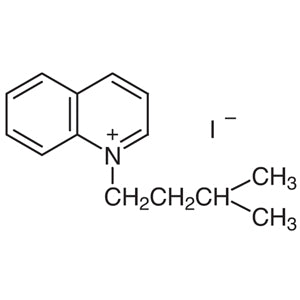
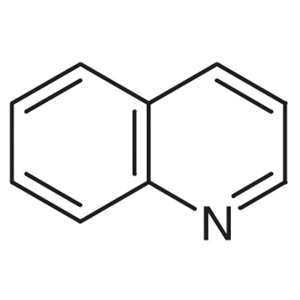
Quinoline Hydrochloride TCI Q0013 is the salt formed when quinoline reacts with hydrochloric acid. In this compound, the nitrogen atom of the quinoline ring is protonated. The salt form is a more practical alternative to free quinoline, which is a liquid with a pungent odour. In the laboratory, quinoline hydrochloride serves as a source of the quinoline scaffold in synthesis. It is also used as a reagent in reactions that need an aromatic amine salt and as a model compound for studying the acid-base behaviour of nitrogen-containing heterocycles.
The main advantage of the hydrochloride form is that it is easier to handle. Because it is a solid, it can be weighed accurately, and its odour is much milder than that of the free base. The salt also tends to dissolve more readily in water and polar solvents, which makes aqueous solutions easier to prepare for analytical and biological experiments. When needed, free quinoline can be recovered by neutralising the salt with a base. This gives researchers flexibility when planning reaction sequences, since they can choose to work with either the salt or the free base at different stages of a synthetic route.
In Indonesia, quinoline hydrochloride is useful to organic chemistry, analytical chemistry, and pharmacy laboratories at universities and research institutions. Its solid form makes it practical to store, dispense, and weigh in teaching and research settings. Students can use it to study heterocyclic chemistry, while research groups can use it as a building block for quinoline-based compounds. As a TCI product listed under heterocyclic building blocks, it is a convenient option for laboratories that work regularly with nitrogen heterocycles.
- Heterocyclic synthesis: the compound supplies the quinoline scaffold for building more complex molecules, and its solid salt form makes accurate weighing and controlled addition easier.
- Reactions requiring aromatic amine salts: the protonated quinoline nitrogen means it can be used directly as a reagent wherever a salt of an aromatic nitrogen base is needed.
- Acid-base studies of nitrogen heterocycles: as the protonated form of quinoline, it is a suitable model for studying protonation, neutralisation, and related behaviour in heterocyclic bases.
- Preparation of aqueous solutions: it tends to dissolve better in water and polar solvents than free quinoline, so aqueous solutions for analytical and biological work are easier to prepare.
- Controlled recovery of free quinoline: neutralising the salt with a base gives back free quinoline, so researchers can generate the free base only when a reaction step needs it.
| Brand | TCI (product code Q0013) |
|---|---|
| CAS number | 530-64-3 |
| Molecular formula | — |
| Purity | — |
| Category | Chemistry > Building Blocks > Heterocyclic Building Blocks |
| Pack sizes | as listed in the product options on this page |
| Physical form | solid (hydrochloride salt of quinoline) |
| Storage | keep in a tightly closed container in a cool, dry, well-ventilated place; follow the manufacturer's label and SDS |
Store quinoline hydrochloride in its original, tightly sealed container in a cool, dry, well-ventilated area, away from moisture, strong bases, and incompatible materials. Strong bases are a particular concern because they convert the salt back into free quinoline. Make sure containers are clearly labelled and closed again straight after use. Wear standard laboratory protective equipment when handling it, including gloves, safety glasses, and a lab coat. Weigh and transfer the solid in a fume hood or a well-ventilated area to avoid inhaling dust, and avoid contact with skin and eyes. Always read the supplier's Safety Data Sheet for detailed hazard information, and dispose of waste according to institutional and local regulations.
—
Produk Terkait
-
Benzo[h]quinoline TCI B0088
Regular price From Rp 2.597.700,00Regular price -
Benzo[f]quinoline TCI B0087
Regular price Rp 2.545.200,00Regular price -
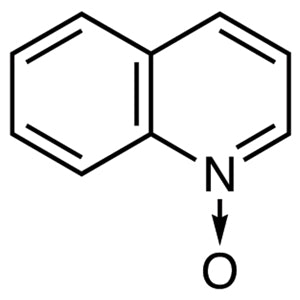
QuinolineN-Oxide TCI Q0104
Regular price Rp 1.829.100,00Regular price -
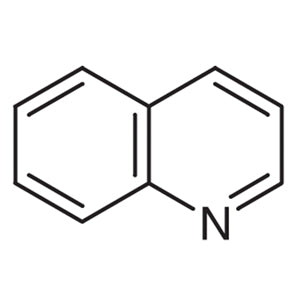
Quinoline TCI Q0085
Regular price From Rp 477.750,00Regular price -
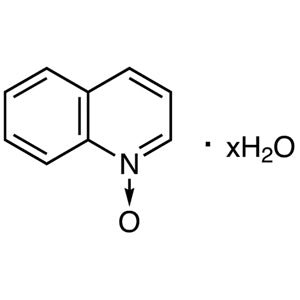
QuinolineN-OxideHydrate TCI Q0072
Regular price From Rp 4.268.250,00Regular price -
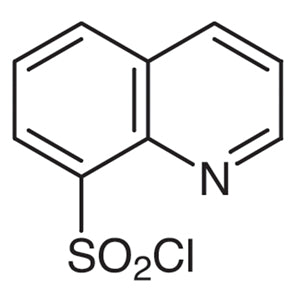
Quinoline-8-sulfonylChloride TCI Q0016
Regular price From Rp 1.644.300,00Regular price -
QuinolineIsoamylIodide TCI Q0012
Regular price Rp 5.114.550,00Regular price -
Quinoline TCI Q0011
Regular price From Rp 903.000,00Regular price
![230-27-3 Benzo[h]quinoline - AMI Scientific](http://amiscientific.com/cdn/shop/files/TCI2510B0088.jpg?v=1767085172&width=533)
![85-02-9 Benzo[f]quinoline - AMI Scientific](http://amiscientific.com/cdn/shop/files/TCI2510B0087.jpg?v=1767085168&width=533)