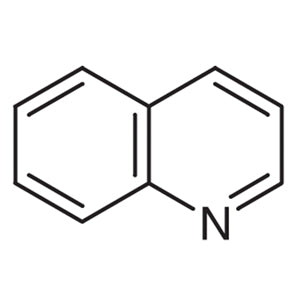
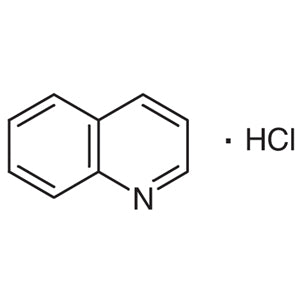
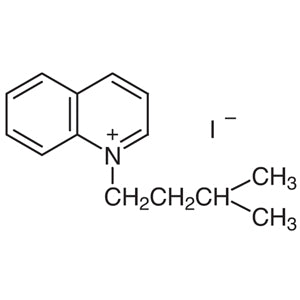
TCI Q0011 Quinoline is an aromatic heterocyclic compound containing a single nitrogen atom. Its structure is a benzene ring fused to a pyridine ring. In organic chemistry laboratories, quinoline serves several roles: it is a starting material for synthesis, a weak organic base, and a high-boiling solvent. The quinoline framework appears in many bioactive compounds, including antimalarial drugs, dyes, and metal ligands. Researchers therefore often start from this material when building more complex derivative molecules for pharmaceutical and materials research.
Researchers choose quinoline because its chemistry is well studied and its reactivity is predictable. The nitrogen atom in the ring is basic, so it can form salts, coordinate to metal ions, or be alkylated to give quaternary salts. The benzene ring undergoes electrophilic substitution, while the pyridine ring is more reactive toward nucleophiles. Together, these two behaviours give chemists many options for modifying the molecule. Quinoline is also known as a selective catalyst poison, for example in the partial hydrogenation of alkynes with a Lindlar catalyst. TCI's consistent quality helps keep results reproducible from batch to batch.
In Indonesian laboratories, quinoline is used mainly in university organic chemistry research groups, pharmaceutical and medicinal chemistry laboratories, and materials science teams that study coordination compounds and functional dyes. Graduate students and researchers use it to prepare substituted quinoline derivatives for thesis projects, screening programmes, and method development. Analytical and quality control laboratories may also keep it as a reference heterocycle. Because it is a well-documented building block, it fits teaching-oriented research as well as more advanced synthetic work.
- Heterocyclic synthesis: quinoline is a well-characterised starting scaffold, and researchers can attach substituents to it to build more complex derivatives for pharmaceutical and materials research programmes.
- Medicinal chemistry research: the quinoline framework is found in antimalarial drugs and other bioactive molecules, so it is a logical starting point for designing and exploring new candidate compounds.
- Coordination chemistry and ligand design: the basic ring nitrogen coordinates to metal ions, which makes quinoline useful for preparing metal complexes and studying ligand behaviour in catalytic or material systems.
- Selective catalytic hydrogenation: quinoline is a known selective catalyst poison, used with Lindlar catalyst in the partial hydrogenation of alkynes to stop the reaction before full reduction occurs.
- Weak base and high-boiling solvent: quinoline is a weak organic base with a high boiling point, so it can be used as a reaction medium or acid scavenger in reactions that need elevated temperatures.
| Brand | TCI (product code Q0011) |
|---|---|
| CAS number | 91-22-5 |
| Molecular formula | — |
| Purity | — |
| Category | Chemistry > Building Blocks > Heterocyclic Building Blocks |
| Pack sizes | several pack sizes are offered; please contact AMI Scientific to confirm current options |
| Physical form | liquid at room temperature |
| Storage | keep tightly closed in a cool, dry, well-ventilated place, protected from light |
Store quinoline in its original, tightly sealed container in a cool, dry, well-ventilated area, away from direct sunlight, heat sources, and strong oxidising agents. Amber glass or other light-protective containers work best, because the material can darken when exposed to air and light. Handle it in a fume hood and wear chemical-resistant gloves, safety goggles, and a laboratory coat. Do not inhale vapours or let the liquid touch your skin or eyes. Read the supplier's Safety Data Sheet before use. Dispose of waste and contaminated materials according to institutional procedures and local chemical waste regulations.
—
Produk Terkait
-
Benzo[h]quinoline TCI B0088
Regular price From Rp 2.597.700,00Regular price -
Benzo[f]quinoline TCI B0087
Regular price Rp 2.545.200,00Regular price -
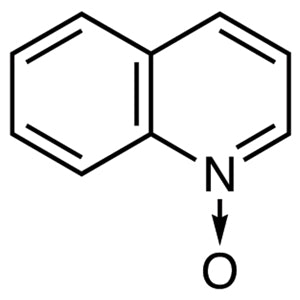
QuinolineN-Oxide TCI Q0104
Regular price Rp 1.829.100,00Regular price -
Quinoline TCI Q0085
Regular price From Rp 477.750,00Regular price -
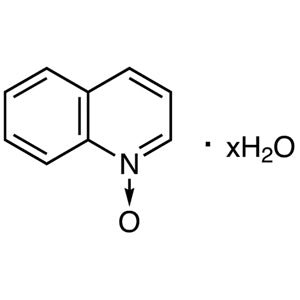
QuinolineN-OxideHydrate TCI Q0072
Regular price From Rp 4.268.250,00Regular price -
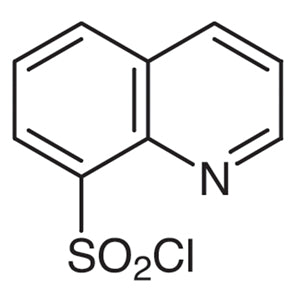
Quinoline-8-sulfonylChloride TCI Q0016
Regular price From Rp 1.644.300,00Regular price -
QuinolineHydrochloride TCI Q0013
Regular price Rp 1.431.150,00Regular price -
QuinolineIsoamylIodide TCI Q0012
Regular price Rp 5.114.550,00Regular price
![230-27-3 Benzo[h]quinoline - AMI Scientific](http://amiscientific.com/cdn/shop/files/TCI2510B0088.jpg?v=1767085172&width=533)
![85-02-9 Benzo[f]quinoline - AMI Scientific](http://amiscientific.com/cdn/shop/files/TCI2510B0087.jpg?v=1767085168&width=533)