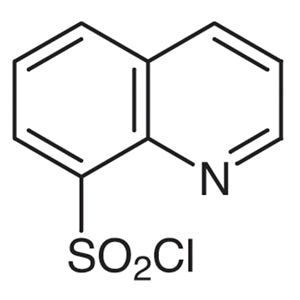
Quinoline-8-sulfonyl Chloride (TCI Q0016, CAS 18704-37-5) is a quinoline derivative with a sulfonyl chloride group at the 8-position of the ring. The sulfonyl chloride group reacts readily with nucleophiles such as amines and alcohols, which makes this compound a key reagent for adding a quinolinesulfonyl group to other molecules. In organic and medicinal chemistry laboratories, it is used to make sulfonamides and sulfonate esters that carry the quinoline scaffold. These compounds are often studied for their biological activity, so the reagent is a useful heterocyclic building block in synthesis work.
Chemists choose this reagent because it is highly reactive and shows good selectivity toward amines. Reactions with primary or secondary amines usually run under mild conditions with the help of a base, so the sulfonylation step is easy to fit into a longer synthetic route. The 8-position of the quinoline ring adds another advantage. The ring nitrogen sits close to it and can act as a directing group or a metal coordination site. Researchers use this feature in ligand design and in C–H bond activation reactions. Quinoline sulfonamides also show fluorescence and can bind metals, which makes them interesting for sensor research.
In Indonesia, this reagent is relevant to medicinal chemistry researchers who build sulfonamide compound libraries for biological activity screening. University organic synthesis groups, pharmaceutical research laboratories and institutes working on new bioactive molecules can use it to make series of quinoline-containing sulfonamides and sulfonate esters for comparison studies. Groups working on coordination chemistry, catalysis or fluorescent chemosensors may also use it as a starting material for ligands and sensing molecules that rely on the quinoline nitrogen next to the sulfonyl group.
- Sulfonamide synthesis: the sulfonyl chloride group reacts efficiently with primary and secondary amines under mild, base-assisted conditions to give quinoline-containing sulfonamides.
- Sulfonate ester preparation: the compound's reactivity toward alcohols lets chemists introduce the quinolinesulfonyl group as a sulfonate ester for further study or synthetic manipulation.
- Medicinal chemistry library building: researchers can attach the quinoline scaffold to many different amines, producing sulfonamide series for biological activity screening programs.
- Ligand design and C–H activation: the ring nitrogen next to the 8-position can serve as a directing group or metal coordination site, supporting ligand development and C–H bond activation studies.
- Fluorescent sensor research: quinoline sulfonamides made from this reagent show fluorescence and metal-binding ability, so they suit the development of chemosensors for metal ions.
| Brand | TCI (product code Q0016) |
|---|---|
| CAS number | 18704-37-5 |
| Molecular formula | — |
| Purity | — |
| Category | Chemistry > Building Blocks > Heterocyclic Building Blocks |
| Pack sizes | please ask AMI Scientific which pack sizes are currently available |
| Physical form | see the TCI product documentation and Certificate of Analysis |
| Storage | keep tightly closed in a cool, dry place away from moisture; follow the TCI label and SDS |
Sulfonyl chlorides react with nucleophiles, including water, so keep this reagent in its original tightly sealed container in a cool, dry, well-ventilated place away from moisture, amines, alcohols and bases. Close the container quickly after each use, and consider storing it under an inert atmosphere or in a desiccator. Always follow the storage conditions on the TCI label and Safety Data Sheet. Handle the reagent in a fume hood and wear chemical-resistant gloves, safety goggles and a lab coat. Avoid breathing dust or vapors and avoid skin and eye contact. Dispose of waste according to local regulations.
—
Produk Terkait
-
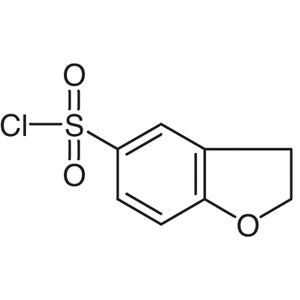
2,3-Dihydrobenzofuran-5-sulfonylChloride TCI D3553
Regular price From Rp 2.094.750,00Regular price -
Benzo[h]quinoline TCI B0088
Regular price From Rp 2.597.700,00Regular price -
Benzo[f]quinoline TCI B0087
Regular price Rp 2.545.200,00Regular price -
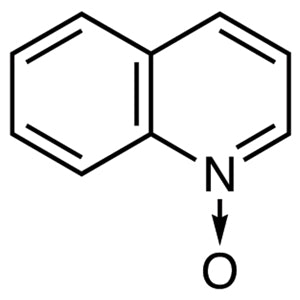
QuinolineN-Oxide TCI Q0104
Regular price Rp 1.829.100,00Regular price -
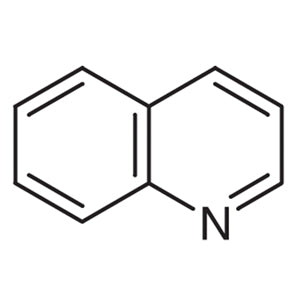
Quinoline TCI Q0085
Regular price From Rp 477.750,00Regular price -
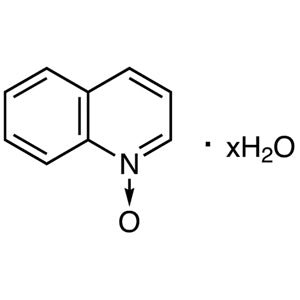
QuinolineN-OxideHydrate TCI Q0072
Regular price From Rp 4.268.250,00Regular price -
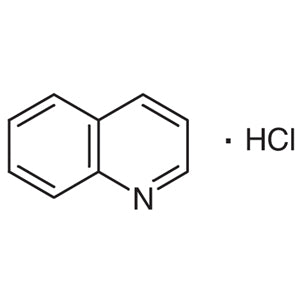
QuinolineHydrochloride TCI Q0013
Regular price Rp 1.431.150,00Regular price -
QuinolineIsoamylIodide TCI Q0012
Regular price Rp 5.114.550,00Regular price
![230-27-3 Benzo[h]quinoline - AMI Scientific](http://amiscientific.com/cdn/shop/files/TCI2510B0088.jpg?v=1767085172&width=533)
![85-02-9 Benzo[f]quinoline - AMI Scientific](http://amiscientific.com/cdn/shop/files/TCI2510B0087.jpg?v=1767085168&width=533)