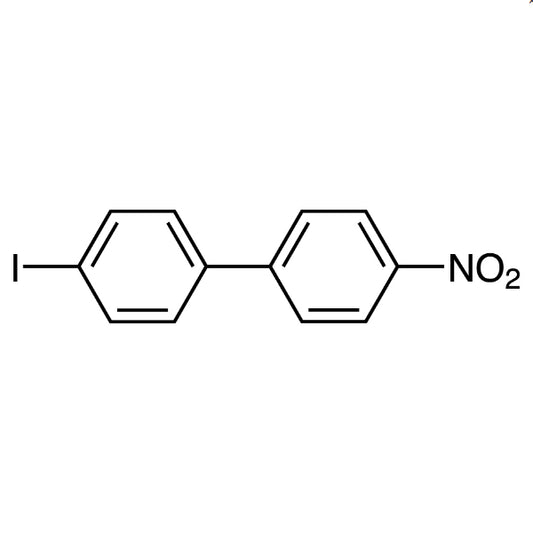
4-Hydroxy-4'-nitrobiphenyl is an organic compound with a complex molecular structure and unique optical properties, making it a valuable material in laboratory research. This compound is widely used in the field of material science, particularly in the development of non-linear optical (NLO) materials. In the laboratory, it serves as a foundational component for creating materials that respond to light in specific ways, such as polarization changes or reflection. Its optical responsiveness makes it a key material for studies in photonics and optoelectronics.
The compound's molecular structure is stable, allowing it to interact effectively with electromagnetic radiation. Its chemical properties are relatively inert under normal conditions, which simplifies handling and storage. This stability ensures consistent performance in laboratory settings, making it a reliable choice for researchers. The compound’s ability to maintain its properties over time also supports long-term research applications.
In Indonesian laboratories, 4-Hydroxy-4'-nitrobiphenyl is commonly used in material science research, especially in the development of advanced optical materials. It is a preferred choice for institutions and research centers working on innovative technologies. Its role in optical material development aligns with the growing demand for high-performance materials in both academic and industrial research.
- Non-Linear Optical Material Development: This compound is ideal for creating materials that exhibit non-linear optical responses, essential for advanced optical devices and photonic applications.
- Organic Semiconductor Research: Its molecular structure supports studies on organic semiconductors, which are critical for optoelectronic devices and flexible electronics.
- Polarization-Responsive Material Synthesis: The compound's ability to respond to light polarization makes it suitable for developing materials used in optical modulation and sensing technologies.
- Optical Sensor Fabrication: Its optical properties are leveraged in the creation of sensors that detect changes in light intensity or polarization, useful in environmental and industrial monitoring.
- Advanced Photonic Material Testing: It is used in testing and prototyping of new photonic materials, supporting research in light-based technologies and communication systems.
| Brand | TCI |
|---|---|
| CAS number | 3916-44-7 |
| Molecular formula | — |
| Purity | — |
| Category | Materials Science > Photonic Materials and Optical Materials > Organic Non-Linear Optical (NLO) Materials |
| Pack sizes | Available in various quantities as per standard laboratory supply |
| Physical form | Solid |
| Storage | Store in a cool, dry place away from light and moisture |
This compound should be stored in a cool, dry environment, away from direct light and moisture to maintain its stability and optical properties. It is recommended to use airtight containers made of glass or polyethylene to prevent contamination and degradation. Due to its chemical inertness, it does not react readily under normal laboratory conditions, but standard safety precautions should still be followed when handling. Proper labeling and storage conditions ensure the compound remains effective for research applications. Laboratory personnel should always use appropriate personal protective equipment when handling this material to ensure safety and compliance with standard operating procedures.
—
Produk Terkait
-
4-Hydroxy-3-nitrobiphenyl TCI N0560
Regular price From Rp 2.757.300,00Regular price -
4-Hydroxy-2'-nitrobiphenyl TCI H0753
Regular price From Rp 3.155.250,00Regular price -
4-Methoxy-4'-nitrobiphenyl TCI M0997
Regular price From Rp 769.650,00Regular price -
4'-Nitrobiphenyl-4-carboxaldehyde TCI N0967
Regular price From Rp 3.710.700,00Regular price -
4-Methoxy-3-nitrobiphenyl TCI M1166
Regular price From Rp 903.000,00Regular price -
4-Iodo-4'-nitrobiphenyl TCI I0537
Regular price From Rp 2.809.800,00Regular price -
4,4'-Dibromo-2-nitrobiphenyl TCI D5189
Regular price From Rp 1.326.150,00Regular price -
2,4-Dichloro-4'-nitrobiphenylEther TCI D3912
Regular price Rp 6.943.650,00Regular price