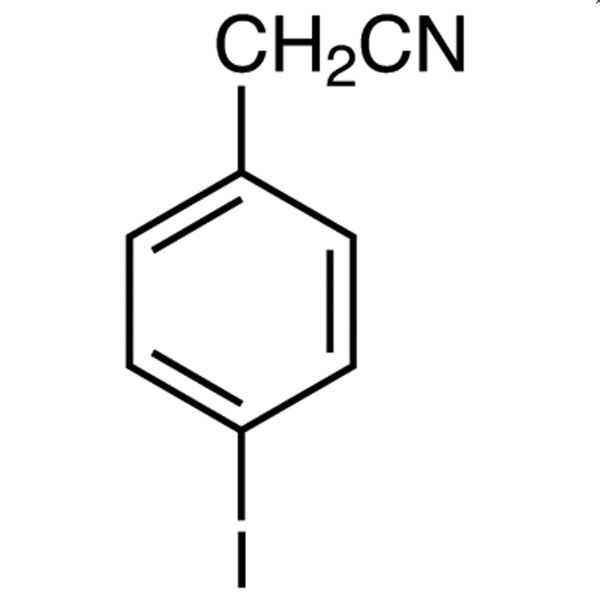
4-Iodophenylacetonitrile is a chemical compound widely used as a foundational building block in the synthesis of complex organic molecules. This compound plays a crucial role in laboratory settings by enabling the creation of more intricate chemical structures through its reactive functional groups. Its molecular structure features an iodide group on the phenyl ring and a nitrile group on the carbon chain, making it a versatile reagent in various chemical reactions. Due to its structural characteristics, it is often employed in synthetic pathways that require high reactivity and specificity.
The compound's chemical stability and ability to participate in nucleophilic substitution and coupling reactions make it a preferred choice for synthetic chemists. These properties allow it to be used in the development of pharmaceuticals, industrial chemicals, and materials science applications. Its reactivity and stability under controlled conditions make it suitable for a wide range of chemical transformations. Additionally, its resistance to degradation ensures that it remains effective throughout the synthesis process, enhancing its utility in laboratory research.
In Indonesian laboratories, 4-Iodophenylacetonitrile is commonly utilized by researchers in organic synthesis, pharmacology, and material science. Its unique chemical properties make it an essential component in the development of new compounds and the exploration of chemical reactivity. It is particularly valuable in contexts where precise and reliable chemical reactions are required for scientific advancement.
- Organic synthesis applications benefit from this compound due to its reactivity and ability to form complex molecular structures through coupling and substitution reactions.
- Pharmaceutical research utilizes it for the development of new drug molecules, leveraging its iodide and nitrile functionalities for targeted chemical modifications.
- Material science applications take advantage of its chemical stability and reactivity to create advanced polymers and functional materials.
- Analytical chemistry uses it as a standard reference compound for spectroscopic and chromatographic analyses due to its well-defined molecular structure.
- Industrial chemical production incorporates it in the synthesis of specialty chemicals, where its reactivity supports the creation of high-value products.
| Brand | TCI |
|---|---|
| CAS number | 51628-12-7 |
| Molecular formula | — |
| Purity | — |
| Category | Chemistry > Building Blocks > Non-Heterocyclic Building Blocks |
| Pack sizes | Available in various quantities as per supplier specifications |
| Physical form | Liquid or solid, depending on the specific product variant |
| Storage | Store in a cool, dry place away from direct sunlight and incompatible substances |
This compound should be stored in a cool, dry environment to maintain its chemical stability and prevent degradation. It is recommended to use airtight containers to minimize exposure to moisture and air, which can affect its reactivity. Due to its potential chemical reactivity, it should be kept away from incompatible substances such as strong oxidizers or reducing agents. Proper labeling and secure storage are essential to ensure safety in the laboratory. Always follow standard chemical handling protocols to prevent accidental exposure and maintain a safe working environment.
—
Produk Terkait
-
Phenylacetonitrile TCI P0128
Regular price From Rp 477.750,00Regular price -
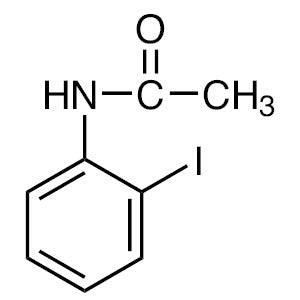
N-(2-Iodophenyl)acetamide TCI I1162
Regular price From Rp 1.565.550,00Regular price -
4-Biphenylacetonitrile TCI B1545
Regular price From Rp 3.446.100,00Regular price -
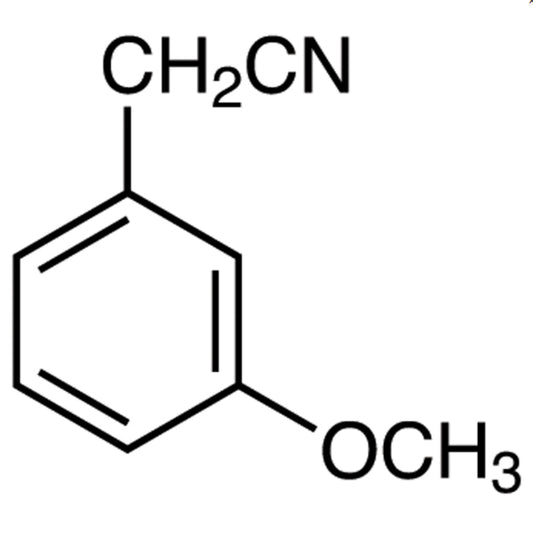
3-Methoxyphenylacetonitrile TCI M2331
Regular price From Rp 717.150,00Regular price -
4-Methoxyphenylacetonitrile TCI M0856
Regular price From Rp 823.200,00Regular price -
2-Methoxyphenylacetonitrile TCI M0855
Regular price Rp 875.700,00Regular price -
3,5-Dimethoxyphenylacetonitrile TCI D5186
Regular price From Rp 1.193.850,00Regular price -
2,5-Dimethylphenylacetonitrile TCI D4271
Regular price From Rp 1.749.300,00Regular price