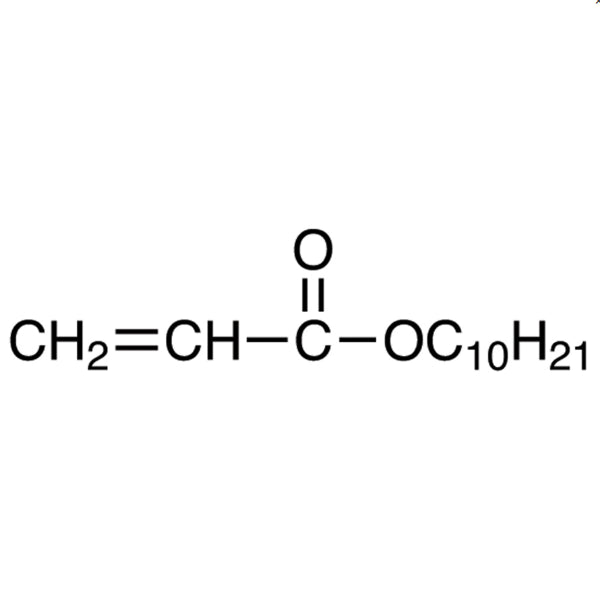
Isodecyl Acrylate (mixture of branched chain isomers), with CAS number 1330-61-6, is a versatile chemical compound widely used in laboratory settings for various chemical reactions. As a monomer, it plays a crucial role in polymer synthesis and organic compound development. Its molecular structure enables efficient polymerization reactions, making it a key component in the production of plastics, coatings, and additives. This compound is commonly utilized in both academic and industrial research environments due to its adaptability and effectiveness in chemical processes.
The chemical properties of Isodecyl Acrylate make it a preferred choice for laboratory applications. It exhibits good solubility in organic solvents and maintains chemical stability under normal conditions. The stabilization with MEHQ (methyl-4-hydroxyphenyl propionate) enhances its resistance to oxidative degradation, ensuring a longer shelf life and consistent performance. These characteristics contribute to its reliability in both routine and specialized laboratory work. Its reactivity and stability allow it to be used in a wide range of chemical processes without compromising quality or safety.
In Indonesian laboratories, Isodecyl Acrylate is frequently used in chemical research, material development, and polymer testing. It is an essential component in the study of new materials and the optimization of chemical processes. Its availability supports the work of educational institutions and industries focused on innovation in chemical products and materials. Its role in both academic and industrial settings underscores its importance in the chemical research landscape of Indonesia.
Related TCI products
- TCI B2715 126198-74-1 Benzyl Isononyl Phthalate (mixture of branched chain isomers)
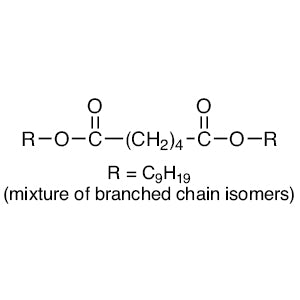
- TCI A1387 33703-08-1 Diisononyl Adipate (mixture of branched chain isomers)
- TCI T0456 7756-94-7 Triisobutylene (mixture of branched chain isomer)
- TCI T0170 26544-38-7 Tetrapropenylsuccinic Anhydride (mixture of branched chain isomers)
- TCI T0098 112-57-2 Tetraethylenepentamine (mixture of branched chain isomers and cyclic compounds)
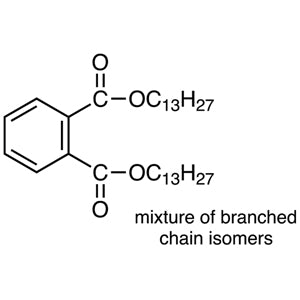
- TCI P0307 75359-31-8 Ditridecyl Phthalate (mixture of branched chain isomers)
- Polymer synthesis and modification for creating new materials with specific mechanical and chemical properties.
- Organic chemistry experiments requiring a reliable and reactive monomer for synthetic pathways.
- Coating and polymer formulation research to develop durable and functional surface treatments.
- Material science studies aimed at improving the performance of plastics and additives in industrial applications.
- Chemical process development for the production of advanced polymers and specialty chemicals.
| Brand | TCI |
|---|---|
| CAS number | 1330-61-6 |
| Molecular formula | — |
| Purity | — |
| Category | TCI |
| Pack sizes | Available in standard laboratory quantities as per supplier specifications |
| Physical form | Liquid |
| Storage | Store in a cool, dark place away from heat and direct sunlight |
Isodecyl Acrylate should be stored in a cool, dark location, away from heat and direct sunlight to maintain its chemical stability. It is recommended to use suitable containers that are resistant to chemical degradation and properly sealed to prevent evaporation or contamination. As a reactive chemical, it should be handled in a well-ventilated area, and appropriate personal protective equipment should be worn when handling. Due to its potential for oxidative degradation, it is important to use the material before the expiration date specified by the supplier. Proper storage and handling ensure the material remains effective and safe for use in laboratory applications.
—
Produk Terkait
-
BenzylIsononylPhthalate(mixtureofbranchedchainisomers) TCI B2715
Regular price Rp 955.500,00Regular price -
DiisononylAdipate(mixtureofbranchedchainisomers) TCI A1387
Regular price From Rp 584.850,00Regular price -
Triisobutylene(mixtureofbranchedchainisomer) TCI T0456
Regular price From Rp 980.700,00Regular price -
TetrapropenylsuccinicAnhydride(mixtureofbranchedchainisomers) TCI T0170
Regular price From Rp 505.050,00Regular price -
Tetraethylenepentamine(mixtureofbranchedchainisomersandcycliccompounds) TCI T0098
Regular price From Rp 505.050,00Regular price -
DitridecylPhthalate(mixtureofbranchedchainisomers) TCI P0307
Regular price Rp 477.750,00Regular price -
DiisononylPhthalate(mixtureofbranchedchainisomers) TCI P0300
Regular price Rp 769.650,00Regular price -
DiisodecylPhthalate(mixtureofbranchedchainisomers) TCI P0299
Regular price From Rp 477.750,00Regular price