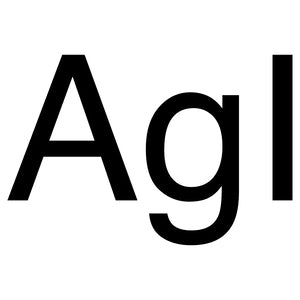
Silver(I) Iodide (AgI) is a chemical compound widely used in scientific and industrial applications. It is a key material in laboratory settings, particularly in the fields of catalysis and inorganic chemistry. As a transition metal compound, AgI plays a vital role in various chemical reactions, especially those requiring metal-based catalysts. Its unique properties make it an essential reagent for researchers working on complex synthesis and redox reactions. Due to its chemical stability under controlled conditions, AgI remains a reliable choice for experimental work when handled properly.
The properties of Silver(I) Iodide that make it a preferred choice include its unique crystalline structure and optical characteristics. These features contribute to its effectiveness in analytical and synthetic processes. AgI is highly absorbent of specific ions, which makes it suitable for qualitative and quantitative analysis. Additionally, its reactivity and stability under certain conditions allow it to be used in a wide range of chemical applications. Its ability to participate in redox reactions and form complexes with other compounds further enhances its utility in laboratory research.
In Indonesian laboratories, Silver(I) Iodide is commonly used in scientific research, particularly in inorganic chemistry and catalysis. It is a popular choice for experiments requiring reactivity and stability. Due to its sensitivity to moisture and light, it is often used in controlled environments where its properties can be fully utilized. Researchers in Indonesia rely on AgI for its versatility and effectiveness in various chemical processes, making it a valuable material in both academic and industrial settings.
TCI brochures (PDF)
- Metallic Salts 2025-11-06 · p. 5
- Transition Metal Catalysts 2026-04-10 · p. 16
Related TCI products
- Inorganic chemistry research benefits from AgI due to its role in metal-based catalytic reactions and complex synthesis.
- Redox reactions often utilize AgI as a reagent because of its ability to participate in electron transfer processes.
- Analytical chemistry applications take advantage of AgI's high ion absorption capacity for qualitative and quantitative analysis.
- Catalytic processes in industrial settings rely on AgI for its effectiveness in promoting chemical reactions under controlled conditions.
- Synthesis of complex compounds in laboratory experiments frequently uses AgI as a key reagent due to its chemical stability and reactivity.
| Brand | TCI |
|---|---|
| CAS number | 7783-96-2 |
| Molecular formula | — |
| Purity | — |
| Category | Chemistry > Catalysis and Inorganic Chemistry > Transition Elements |
| Pack sizes | Available in various quantities as per supplier specifications |
| Physical form | Solid powder |
| Storage | Requires protection from moisture and light |
Silver(I) Iodide should be stored in a cool, dry place away from direct light and moisture. It is recommended to use airtight containers to prevent exposure to humidity, which can degrade its properties. Due to its sensitivity, it should be handled with care to avoid contamination. In laboratory settings, proper ventilation is essential when working with AgI to ensure safety. Regular inspection of storage conditions is necessary to maintain its integrity and effectiveness for experimental use. Always follow standard safety protocols when handling this compound to ensure both product quality and personnel safety.
—
Produk Terkait
-
SilverHexafluorophosphate TCI S0981
Regular price From Rp 1.829.100,00Regular priceRp 1.278.900,00Sale price From Rp 1.829.100,00 -
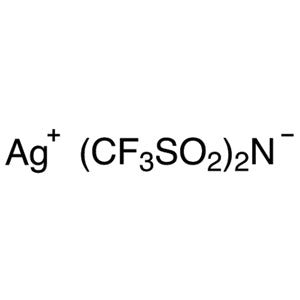
SilverBis(trifluoromethanesulfonyl)imide TCI S0898
Regular price From Rp 5.485.200,00Regular priceRp 3.835.650,00Sale price From Rp 5.485.200,00 -
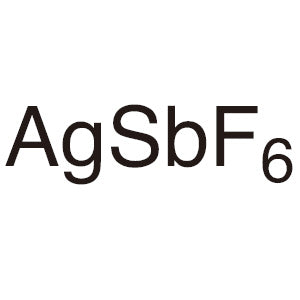
SilverHexafluoroantimonate(V) TCI S0463
Regular price Rp 3.155.250,00Regular priceRp 2.206.050,00Sale price Rp 3.155.250,00 -
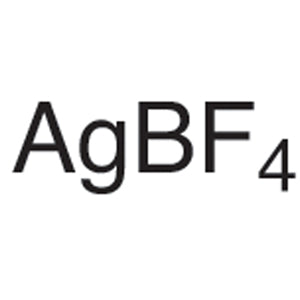
SilverTetrafluoroborate TCI S0446
Regular price From Rp 2.650.200,00Regular priceRp 1.853.250,00Sale price From Rp 2.650.200,00 -
PotassiumSilver(I)Cyanide TCI P3370
Regular price Rp 848.400,00Regular priceRp 593.250,00Sale price Rp 848.400,00 -
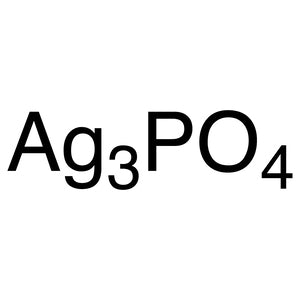
Silver(I)Phosphate TCI I1259
Regular price From Rp 1.670.550,00Regular priceRp 1.167.600,00Sale price From Rp 1.670.550,00 -
Silver(I)Bromide TCI I1258
Regular price From Rp 1.644.300,00Regular priceRp 1.149.750,00Sale price From Rp 1.644.300,00 -
Silver(I)Nitrate TCI I1245
Regular price From Rp 795.900,00Regular priceRp 556.500,00Sale price From Rp 795.900,00