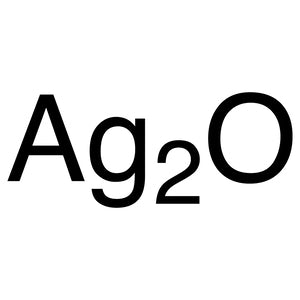
Silver(I) Oxide (Ag₂O) is a chemical compound widely used in laboratory settings, particularly in the fields of catalysis and inorganic chemistry. As a transition metal compound, it plays a crucial role in various chemical reactions, especially those involving oxidation and reduction processes. Its ability to act as a catalyst allows it to facilitate reactions without being consumed, making it an essential tool for researchers aiming to optimize reaction conditions. In laboratory environments, Ag₂O is valued for its stability and chemical inertness, which contribute to its reliability in a wide range of experimental applications.
One of the key properties that make Silver(I) Oxide a preferred choice is its stable crystalline structure and high melting point. These characteristics ensure that it remains chemically inert under normal laboratory conditions, reducing the risk of unwanted side reactions. Additionally, its resistance to degradation in the presence of other reagents enhances its usability in complex chemical systems. The compound's chemical stability and predictable behavior make it a trusted material for both routine and specialized laboratory tasks.
In Indonesian laboratories, Silver(I) Oxide is commonly used in chemical research, especially in catalytic and redox reactions. Its role in supporting analytical and synthetic processes is well recognized, contributing to the advancement of scientific studies in both academic and industrial settings. The compound’s reliability and versatility make it an indispensable component in the chemical laboratories of Indonesia.
- Catalytic Oxidation Reactions: Silver(I) Oxide is ideal for oxidation processes due to its ability to facilitate electron transfer without being consumed, making it a reliable catalyst in organic synthesis.
- Redox Reaction Studies: Its stable chemical properties allow it to be used in redox experiments where controlled electron transfer is essential for accurate results.
- Inorganic Compound Synthesis: The compound is frequently used in the preparation of other inorganic materials, where its chemical stability ensures consistent reaction outcomes.
- Analytical Chemistry Applications: Silver(I) Oxide is employed in analytical procedures where precise chemical interactions are required, such as in titration and spectroscopic analysis.
- Electrochemical Research: Its conductive properties and stability make it suitable for use in electrochemical cells and battery research, contributing to energy storage studies.
| Brand | TCI |
|---|---|
| CAS number | 20667-12-3 |
| Molecular formula | — |
| Purity | — |
| Category | Chemistry > Catalysis and Inorganic Chemistry > Transition Elements |
| Pack sizes | Available in various quantities as per standard laboratory supply formats |
| Physical form | Solid |
| Storage | Store in a cool, dry place away from moisture and direct sunlight |
Silver(I) Oxide should be stored in a cool, dry environment to maintain its chemical stability. It is recommended to keep it in airtight containers to prevent exposure to moisture, which could lead to degradation. The compound is generally non-hazardous under normal conditions but should be handled with care to avoid inhalation or contact with skin. In laboratory settings, it should be stored separately from reactive materials to ensure safety. Proper labeling and storage conditions are essential to maintain its effectiveness and ensure safe handling in both academic and industrial research environments.
—
Produk Terkait
-
TCI B5774 5,10-Bis(4,4,5,5-tetramethyl-1,3,2-dioxaborolan-2-yl)naphtho[1,2-c:5,6-c']bis([1,2,5]oxadiazole)
Regular price Rp 10.255.350,00Regular price -
Dihydroiodide TCI B6569
Regular price From Rp 1.936.200,00Regular price -
Trifluoromethanesulfonate TCI B7003
Regular price From Rp 1.936.200,00Regular price
![5,10-Bis(4,4,5,5-tetramethyl-1,3,2-dioxaborolan-2-yl)naphtho[1,2-c:5,6-c']bis([1,2,5]oxadiazole) - TCI B5774 - AMI Scientific](http://amiscientific.com/cdn/shop/files/TCI2510B5774.jpg?v=1769180228&width=533)