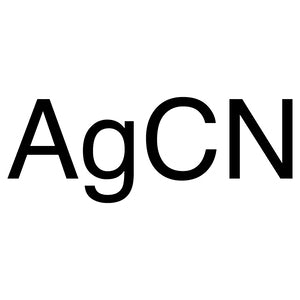
Silver(I) Cyanide (AgCN) is a chemical compound widely used in laboratory settings for its unique reactivity and versatility in chemical reactions. As a silver-based inorganic compound, it plays a crucial role in catalytic processes and redox reactions. Its ability to form complexes with various ions and molecules makes it a valuable tool in synthetic chemistry. This compound is commonly found in research laboratories where precise chemical control is essential. AgCN is particularly useful in the synthesis of organic and inorganic compounds, offering a range of chemical behaviors that support diverse experimental needs.
One of the key properties that make Silver(I) Cyanide a preferred choice is its reactivity and solubility characteristics. It exhibits solubility in certain organic solvents and water, which allows for controlled use in different experimental conditions. Its reactivity enables it to participate in complex chemical transformations, making it suitable for advanced research applications. Additionally, its ability to form stable complexes with various metals and ligands enhances its utility in catalytic and analytical processes. These properties make it an essential reagent in modern chemical laboratories.
In Indonesian laboratories, Silver(I) Cyanide is frequently used in chemical research, particularly in catalytic studies and redox reactions. It is a key component in the synthesis of organic and inorganic compounds, supporting a wide range of experimental protocols. Due to its reactivity, it is often employed in controlled environments where precise chemical interactions are required. Its presence in Indonesian research facilities highlights its importance in advancing chemical science and industrial applications.
TCI brochures (PDF)
- Metallic Salts 2025-11-06 · p. 11
- Transition Metal Catalysts 2026-04-10 · p. 16
Related TCI products
- Catalytic Studies: Silver(I) Cyanide is ideal for catalytic applications due to its ability to facilitate redox reactions and form metal complexes.
- Redox Reaction Research: Its reactivity makes it suitable for studying oxidation-reduction processes in chemical systems.
- Organic Synthesis: It is used in the synthesis of organic compounds, where its chemical properties enable controlled reactions.
- Inorganic Compound Formation: Silver(I) Cyanide helps in the preparation of various inorganic compounds through complexation and precipitation reactions.
- Analytical Chemistry: It is employed in analytical techniques where precise chemical interactions are required for detection and quantification.
| Brand | TCI |
|---|---|
| CAS number | 506-64-9 |
| Molecular formula | — |
| Purity | — |
| Category | Chemistry > Catalysis and Inorganic Chemistry > Transition Elements |
| Pack sizes | Available in standard laboratory quantities |
| Physical form | Solid |
| Storage | Store in a cool, dry place away from moisture and incompatible materials |
Silver(I) Cyanide should be stored in a cool, dry environment to maintain its chemical stability. It is recommended to use airtight containers to prevent exposure to moisture and air, which can lead to decomposition. Due to its reactivity, it should be kept away from incompatible substances such as acids and strong oxidizers. Proper labeling and secure storage are essential to ensure safety in laboratory settings. Handling should be done with appropriate personal protective equipment to minimize risk. Regular monitoring of storage conditions is advised to maintain the integrity of the compound.
—
Produk Terkait
-
PotassiumSilver(I)Cyanide TCI P3370
Regular price Rp 848.400,00Regular priceRp 593.250,00Sale price Rp 848.400,00 -
SilverHexafluorophosphate TCI S0981
Regular price From Rp 1.829.100,00Regular priceRp 1.278.900,00Sale price From Rp 1.829.100,00 -
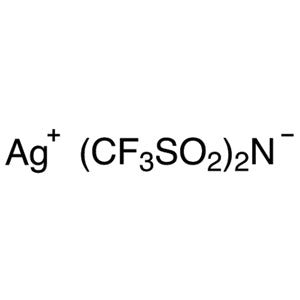
SilverBis(trifluoromethanesulfonyl)imide TCI S0898
Regular price From Rp 5.485.200,00Regular priceRp 3.835.650,00Sale price From Rp 5.485.200,00 -
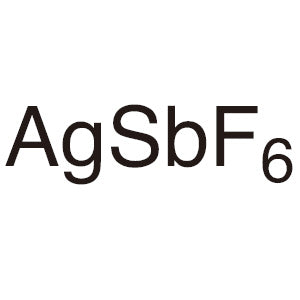
SilverHexafluoroantimonate(V) TCI S0463
Regular price Rp 3.155.250,00Regular priceRp 2.206.050,00Sale price Rp 3.155.250,00 -
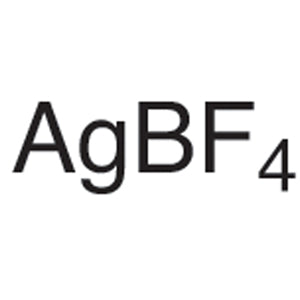
SilverTetrafluoroborate TCI S0446
Regular price From Rp 2.650.200,00Regular priceRp 1.853.250,00Sale price From Rp 2.650.200,00 -
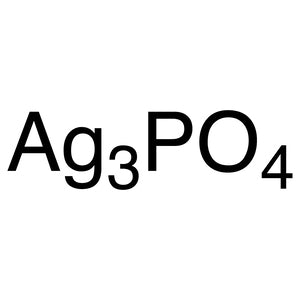
Silver(I)Phosphate TCI I1259
Regular price From Rp 1.670.550,00Regular priceRp 1.167.600,00Sale price From Rp 1.670.550,00 -
Silver(I)Bromide TCI I1258
Regular price From Rp 1.644.300,00Regular priceRp 1.149.750,00Sale price From Rp 1.644.300,00 -
Silver(I)Nitrate TCI I1245
Regular price From Rp 795.900,00Regular priceRp 556.500,00Sale price From Rp 795.900,00