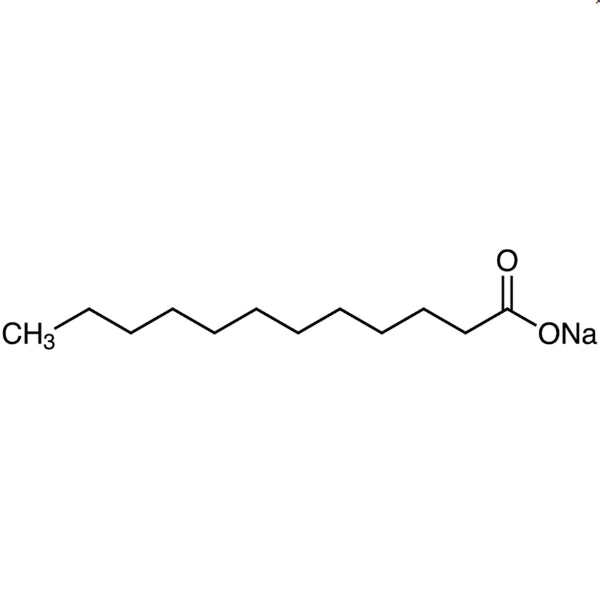
Sodium Laurate is the sodium salt of lauric acid, supplied as a solid material and classified within materials science as a polymer additive. Structurally, it is a classic fatty acid soap consisting of a twelve-carbon hydrocarbon tail paired with a negatively charged carboxylate head group, a combination that gives the compound strongly amphiphilic behaviour. In laboratory work it serves as a model anionic surfactant, as an internal lubricant and processing aid in polymer studies, and as a stabilising agent in particle synthesis and water-based colloidal systems.
The properties that make Sodium Laurate a frequently chosen material begin with its solubility in water, which produces genuine soap solutions rather than simple dispersions. It lowers surface tension significantly and shows a clear tendency to form micelles above a certain critical concentration, which makes it valuable wherever aggregation behaviour must be observed or controlled. As a polymer additive, the salt helps improve melt flow characteristics and reduces interfacial friction during processing. The intermediate length of the laurate chain provides a balance between hydrophilic and hydrophobic character, so its behaviour is readily predictable.
Because that balance is so predictable, Sodium Laurate is often used as a reference point in comparative studies of carboxylate soaps of differing chain lengths. In Indonesian laboratories this makes it a practical choice for surfactant teaching exercises, polymer processing trials, and colloid research groups that need a well-understood anionic soap as a baseline. Materials science laboratories and polymer workshops typically keep it on hand for formulation work where consistent, reproducible amphiphilic behaviour is required.
- Model anionic surfactant studies: the defined twelve-carbon chain and carboxylate head make it a clean, reproducible reference system for investigating adsorption, wetting, and surface activity.
- Micelle formation research: its tendency to aggregate above a critical concentration allows researchers to study micellisation thresholds and self-assembly behaviour in aqueous solution reliably.
- Polymer processing aid trials: used as an internal lubricant, it improves melt flow properties and reduces interfacial friction during compounding and forming experiments.
- Colloidal system stabilisation: the amphiphilic structure allows it to act as a stabilising agent in water-based colloidal dispersions and particle synthesis procedures.
- Comparative carboxylate soap studies: the balanced hydrophilic and hydrophobic character makes it a standard benchmark when comparing fatty acid soaps of different chain lengths.
| Brand | TCI |
|---|---|
| CAS number | 629-25-4 |
| Molecular formula | — |
| Purity | — |
| Category | Materials Science > Polymer/Macromolecule Reagents > Polymer Additives |
| Pack sizes | available in standard TCI catalogue pack sizes; please confirm the required size when ordering |
| Physical form | solid |
| Storage | keep in a cool, dry place in a tightly closed container |
- Product code: L0016
Store Sodium Laurate in a cool, dry, and well-ventilated area, away from moisture and direct sunlight. Because the material is a hygroscopically sensitive fatty acid soap in solid form, containers should be kept tightly closed at all times; the original manufacturer packaging or a clean, chemically compatible screw-cap glass or polyethylene container is suitable for repackaging. Handle the solid in a fume hood or a well-ventilated workspace to avoid generating and inhaling dust. Standard laboratory personal protective equipment, including safety goggles, gloves, and a laboratory coat, should be worn during weighing and transfer. Use clean, dry spatulas to prevent contamination and moisture uptake, label all secondary containers clearly, and consult the manufacturer's safety data sheet before first use.
—
Produk Terkait
-
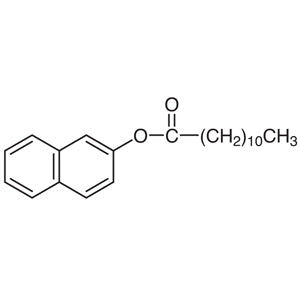
2-NaphthylLaurate TCI L0122
Regular price From Rp 1.696.800,00Regular price -
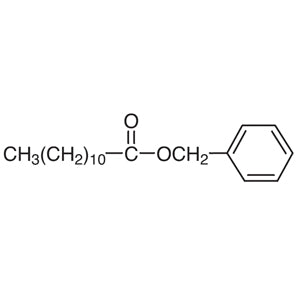
BenzylLaurate TCI L0107
Regular price Rp 2.174.550,00Regular price -
VinylLaurate(stabilizedwithMEHQ) TCI L0090
Regular price From Rp 557.550,00Regular price -
IsobutylLaurate TCI L0084
Regular price From Rp 769.650,00Regular price -
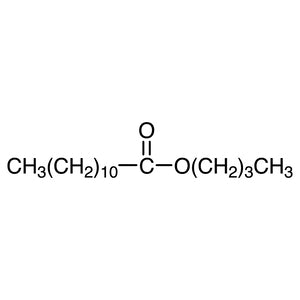
ButylLaurate TCI L0083
Regular price From Rp 477.750,00Regular price -
MethylLaurate TCI L0015
Regular price From Rp 505.050,00Regular price -
IsoamylLaurate TCI L0014
Regular price Rp 903.000,00Regular price -
EthylLaurate TCI L0013
Regular price From Rp 505.050,00Regular price