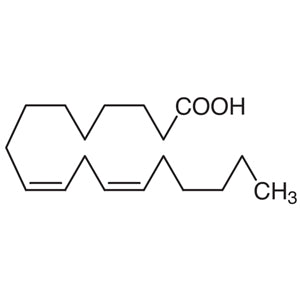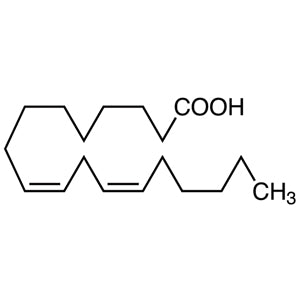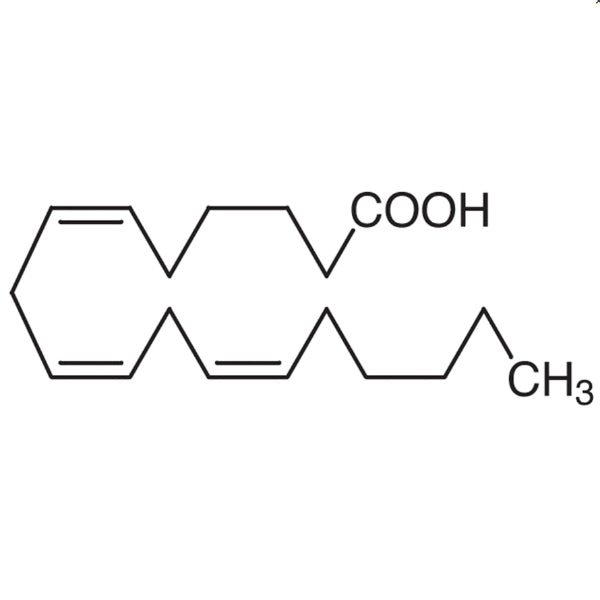
Gamma-Linolenic Acid (GLA), with the CAS number 506-26-3, is an essential fatty acid that plays a crucial role in scientific research, particularly within the field of Material Science. As a key reagent in colloidal quantum dot (QD) research, GLA is used to synthesize nanoparticles with unique optical and electronic properties. These properties make it indispensable for the development of advanced electronic and optoelectronic materials. In the laboratory, GLA serves as a foundational component in the creation of nanomaterials that are essential for cutting-edge technological applications.
GLA is valued for its chemical stability and its ability to interact with various reagents to form controlled nanostructures. Its hydrophobic nature and capacity to form emulsions make it highly versatile in material synthesis. Additionally, its resistance to degradation ensures that it maintains its integrity during extended research processes. These characteristics make GLA a preferred choice for researchers aiming to develop high-performance nanomaterials.
In Indonesian laboratories, GLA is widely used in academic and industrial research, especially in the fields of material technology and energy. Its role in producing thin-film coatings and nanostructured materials supports innovation in both scientific and industrial applications. Researchers in Indonesia frequently rely on GLA to advance their work in nanotechnology and electronic materials.
TCI brochures (PDF)
- Colloidal Quantum Dot (QD) Research Reagents 2026-05-21 · p. 4
- Lipids 2025-12-17 · p. 5
- Colloidal Quantum Dot Synthesis: GLA is used to create colloidal quantum dots with tunable optical properties, making it ideal for optoelectronic device development.
- Thin-Film Coating Production: Its ability to form stable films makes it suitable for applications in nanocoating technologies and surface modification.
- Nanostructured Material Fabrication: GLA enables the controlled formation of nanostructures, supporting research in advanced material engineering and nanotechnology.
- Emulsion-Based Material Development: Its hydrophobic properties allow it to be used in emulsion systems for creating stable and functional nanomaterials.
- Electronic Material Research: GLA contributes to the development of electronic materials with enhanced conductivity and optical response characteristics.
| Brand | TCI |
|---|---|
| CAS number | 506-26-3 |
| Molecular formula | — |
| Purity | — |
| Category | Materials Science > Electronic Materials > Colloidal Quantum Dot (QD) Research Reagents |
| Pack sizes | Available in various quantities as per standard laboratory supply |
| Physical form | Solid or liquid, depending on formulation |
| Storage | Store in a cool, dry place away from light and moisture |
GLA should be stored in a cool, dry environment, away from direct sunlight and moisture to maintain its chemical stability. It is recommended to use airtight containers made of glass or high-density polyethylene to prevent contamination and degradation. Due to its hydrophobic nature, it is important to ensure that the container is properly sealed to avoid exposure to air and humidity. In a laboratory setting, GLA should be handled with care, using appropriate personal protective equipment such as gloves and safety goggles. Proper labeling of containers is essential to ensure safe handling and prevent accidental misuse. Regular monitoring of storage conditions is advised to maintain the integrity of the material throughout its shelf life.
—
Product Categories
- Biochemicals and ReagentsLipidsFatty Acyls
- Cell BiologyCancer ResearchChemopreventive Agents [Cancer Research]
- Cell BiologyCancer ResearchTumor Growth Regulation [Cancer Research]
- Cell BiologyMetabolomicsMetabolic Libraries
- Cell BiologyMetabolomicsMetabolic Pathways
- Cell BiologyNutrition ResearchFunctional Food Research
Produk Terkait
-
LinolenicAcid TCI L0050
Regular price Rp 2.466.450,00Regular priceRp 1.724.100,00Sale price Rp 2.466.450,00 -
ArachidonicAcid TCI A0781
Regular price From Rp 2.384.550,00Regular priceRp 1.683.150,00Sale price From Rp 2.384.550,00 -
LinoleicAcid TCI L0124
Regular price From Rp 1.881.600,00Regular priceRp 1.331.400,00Sale price From Rp 1.881.600,00 -
LinoleicAcid TCI L0053
Regular price From Rp 1.538.250,00Regular priceRp 1.090.950,00Sale price From Rp 1.538.250,00 -
OleicAcid TCI O0180
Regular price From Rp 1.618.050,00Regular priceRp 1.130.850,00Sale price From Rp 1.618.050,00 -
OleicAcid TCI O0011
Regular price From Rp 477.750,00Regular priceRp 333.900,00Sale price From Rp 477.750,00 -
allcis-5,8,11,14,17-EicosapentaenoicAcid TCI E0441
Regular price From Rp 4.559.100,00Regular priceRp 3.203.550,00Sale price From Rp 4.559.100,00 -
cis-4,7,10,13,16,19-DocosahexaenoicAcid TCI D2226
Regular price Rp 6.386.100,00Regular priceRp 4.481.400,00Sale price Rp 6.386.100,00