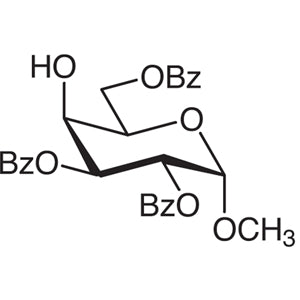
Methyl beta-D-Galactopyranoside is a chemical compound widely used in chemical and biochemical experiments, particularly in carbohydrate structure studies. As a derivative of beta-D-galactose, it plays a crucial role in understanding the molecular mechanisms of carbohydrate metabolism and cellular communication. This compound is essential for researchers working in glycoscience, offering a reliable and versatile tool for various experimental applications. Its chemical stability and solid form make it easy to handle and store, enhancing its usability in laboratory settings.
The compound's chemical properties, including its solubility in organic solvents and non-toxic nature, make it a preferred choice for laboratory use. These characteristics ensure safe handling and broad applicability across different experimental protocols. Its stability under normal conditions and compatibility with various reagents further contribute to its popularity among researchers. The compound's reliability and consistent performance make it an ideal component for both basic and advanced biochemical investigations.
In Indonesian laboratories, Methyl beta-D-Galactopyranoside is commonly used in biochemical, pharmacological, and food technology research. Its availability and affordability make it a popular choice for both academic and industrial applications. Researchers rely on this compound for its versatility and effectiveness in a wide range of experimental setups, supporting advancements in scientific understanding and innovation.
TCI brochures (PDF)
Related TCI products
- TCI B3470 97753-82-7 5-Bromo-3-indolyl beta-D-Galactopyranoside [for Biochemical Research]
- TCI B3201 7240-90-6 5-Bromo-4-chloro-3-indolyl beta-D-Galactopyranoside [for Biochemical Research]
- TCI P2078 183875-28-7 Phenyl 2-O-Acetyl-3,4,6-tri-O-benzyl-1-thio-beta-D-galactopyranoside
- TCI P1326 2818-58-8 Phenyl beta-D-Galactopyranoside
- TCI N0616 3150-24-1 4-Nitrophenyl beta-D-Galactopyranoside [Substrate for beta-Galactosidase]
- TCI N0492 7493-95-0 4-Nitrophenyl alpha-D-Galactopyranoside [Substrate for alpha-D-Galactosidase]
- Biochemical research utilizes Methyl beta-D-Galactopyranoside as a substrate for enzymatic reactions due to its structural similarity to natural carbohydrates.
- Pharmacological studies incorporate this compound to investigate carbohydrate-based drug interactions and metabolic pathways.
- Food technology applications benefit from its use in studying carbohydrate structures and their impact on food composition and digestion.
- Glycoscience research employs it for the synthesis of complex carbohydrates and the study of glycosylation processes.
- Structural analysis in molecular biology uses it to explore the role of carbohydrates in cellular recognition and signaling mechanisms.
| Brand | TCI |
|---|---|
| CAS number | 1824-94-8 |
| Molecular formula | — |
| Purity | — |
| Category | Chemistry > Chemical Biology > Glycoscience |
| Pack sizes | Available in various quantities as per supplier specifications |
| Physical form | Solid |
| Storage | Store in a cool, dry place away from direct sunlight |
Methyl beta-D-Galactopyranoside should be stored in a cool, dry environment to maintain its chemical stability. It is recommended to keep it in a sealed container to prevent moisture absorption, which could affect its purity. The compound is non-toxic and generally safe to handle, but standard laboratory precautions should still be followed, such as wearing gloves and safety goggles. It is compatible with most organic solvents, making it suitable for use in a variety of experimental conditions. Proper labeling and storage are essential to ensure safe handling and prevent cross-contamination in the laboratory setting.
—
Product Categories
Produk Terkait
-
5-Bromo-3-indolylbeta-D-Galactopyranoside[forBiochemicalResearch] TCI B3470
Regular price From Rp 743.400,00Regular price -
5-Bromo-4-chloro-3-indolylbeta-D-Galactopyranoside[forBiochemicalResearch] TCI B3201
Regular price From Rp 1.326.150,00Regular price -
Phenyl2-O-Acetyl-3,4,6-tri-O-benzyl-1-thio-beta-D-galactopyranoside TCI P2078
Regular price Rp 10.229.100,00Regular price -
Phenylbeta-D-Galactopyranoside TCI P1326
Regular price From Rp 3.207.750,00Regular price -
4-Nitrophenylbeta-D-Galactopyranoside[Substrateforbeta-Galactosidase] TCI N0616
Regular price From Rp 1.961.400,00Regular price -
4-Nitrophenylalpha-D-Galactopyranoside[Substrateforalpha-D-Galactosidase] TCI N0492
Regular price Rp 1.298.850,00Regular price -
2-Nitrophenylbeta-D-Galactopyranoside[Substrateforbeta-D-Galactosidase] TCI N0418
Regular price From Rp 848.400,00Regular price -
Methyl2,3,6-Tri-O-benzoyl-alpha-D-galactopyranoside TCI M1933
Regular price From Rp 1.749.300,00Regular price
![97753-82-7 5-Bromo-3-indolyl beta-D-Galactopyranoside [for Biochemical Research] - AMI Scientific](http://amiscientific.com/cdn/shop/files/TCI2510B3470.jpg?v=1768193597&width=533)
![7240-90-6 5-Bromo-4-chloro-3-indolyl beta-D-Galactopyranoside [for Biochemical Research] - AMI Scientific](http://amiscientific.com/cdn/shop/files/TCI2510B3201.jpg?v=1768193511&width=533)


![3150-24-1 4-Nitrophenyl beta-D-Galactopyranoside [Substrate for beta-Galactosidase] - AMI Scientific](http://amiscientific.com/cdn/shop/files/TCI2510N0616.jpg?v=1767130131&width=533)
![7493-95-0 4-Nitrophenyl alpha-D-Galactopyranoside [Substrate for alpha-D-Galactosidase] - AMI Scientific](http://amiscientific.com/cdn/shop/files/TCI2510N0492.jpg?v=1767129934&width=533)
![369-07-3 2-Nitrophenyl beta-D-Galactopyranoside [Substrate for beta-D-Galactosidase] - AMI Scientific](http://amiscientific.com/cdn/shop/files/TCI2510N0418.jpg?v=1767129806&width=533)