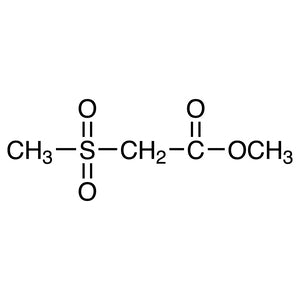
Methyl Methanesulfonylacetate (MMSA) is a chemical compound widely used as a building block in organic synthesis. It serves as a versatile reagent in laboratory settings, enabling the formation of complex organic molecules through various reaction mechanisms. This compound is particularly valuable for its ability to participate in substitution reactions and other key chemical transformations. Its role in the laboratory is critical for researchers aiming to develop new compounds, drugs, and materials. Due to its reactivity and functional group versatility, MMSA is a fundamental component in synthetic chemistry workflows.
The chemical properties of MMSA make it a preferred choice for many laboratory applications. It is polar in nature and dissolves well in organic solvents such as ethyl acetate and acetone, which facilitates its use in a wide range of reactions. Its stability under certain conditions, combined with its sensitivity to water and heat, requires careful handling but also allows for controlled reactivity in synthetic processes. These characteristics make it ideal for use in both academic and industrial research environments.
In Indonesian laboratories, MMSA is commonly used in organic chemistry and pharmaceutical research. It plays a key role in the synthesis of drugs, fragrances, and other complex compounds. Its high purity and controlled reactivity make it a go-to material for scientists and researchers working on advanced chemical projects. The compound's versatility and effectiveness have made it an essential reagent in the Indonesian scientific community.
- Organic synthesis is a primary application where MMSA is used to create complex molecules through substitution and other reactions.
- Pharmaceutical research benefits from MMSA due to its role in the development of new drug compounds and therapeutic agents.
- Fragrance and flavor synthesis relies on MMSA for the creation of aromatic compounds used in perfumery and food industries.
- Analytical chemistry utilizes MMSA as a reagent for the preparation of standards and the study of reaction mechanisms.
- Industrial chemical production incorporates MMSA as a building block for the manufacture of various organic compounds and materials.
| Brand | TCI |
|---|---|
| CAS number | 62020-09-1 |
| Molecular formula | — |
| Purity | — |
| Category | Chemistry > Building Blocks > Non-Heterocyclic Building Blocks |
| Pack sizes | Available in various quantities as per supplier specifications |
| Physical form | Liquid |
| Storage | Store in a cool, dry place away from moisture and heat |
Methyl Methanesulfonylacetate should be stored in a cool, dry place away from moisture and heat to maintain its chemical stability. It is recommended to use airtight containers made of glass or high-density polyethylene to prevent exposure to air and water. Due to its sensitivity to moisture, it is important to ensure that the storage area is well-ventilated and free from sources of humidity. Laboratory personnel should always wear appropriate personal protective equipment, such as gloves and safety goggles, when handling this compound. Proper labeling of containers is essential to ensure safe handling and prevent accidental exposure. Regular monitoring of storage conditions is advised to maintain the integrity and effectiveness of the material.
—
Produk Terkait
-
MethylPhenylsulfonylacetate TCI P1353
Regular price From Rp 1.298.850,00Regular price -
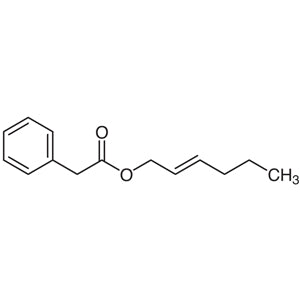
trans-2-Hexen-1-ylPhenylacetate TCI P1045
Regular price Rp 1.298.850,00Regular price -
MethylPhenylacetate TCI P0125
Regular price From Rp 505.050,00Regular price -
IsobutylPhenylacetate TCI P0124
Regular price Rp 477.750,00Regular price -
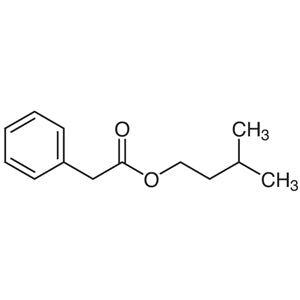
IsoamylPhenylacetate TCI P0123
Regular price Rp 2.809.800,00Regular price -
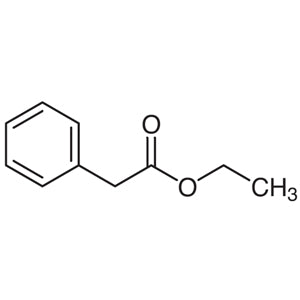
EthylPhenylacetate TCI P0122
Regular price From Rp 505.050,00Regular price -
BenzylPhenylacetate TCI P0121
Regular price Rp 769.650,00Regular price -
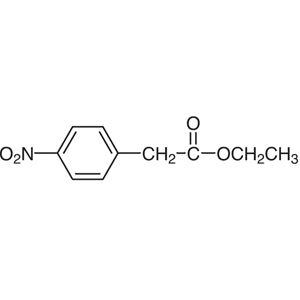
Ethyl4-Nitrophenylacetate TCI N0228
Regular price From Rp 769.650,00Regular price