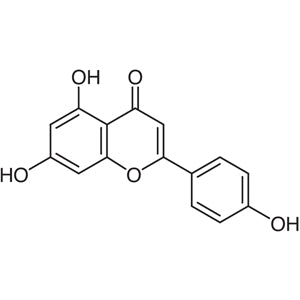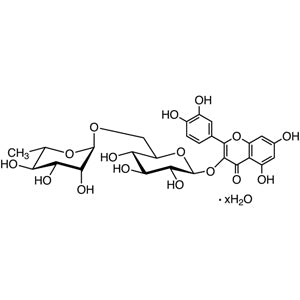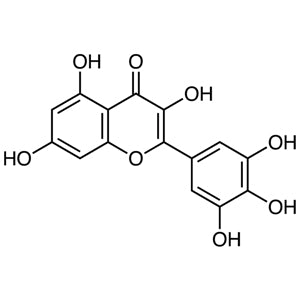
Myricetin is a flavonoid compound known for its significant biological activity. As a phenolic compound, it plays a crucial role in life science research, particularly in cell biology and neuroscience. It is widely used as a modulator of cellular signaling pathways, especially in studies exploring the role of phenolic compounds in gene expression regulation and cellular responses to oxidative stress. Myricetin is a versatile tool for investigating biological mechanisms related to inflammation, apoptosis, and cell differentiation.
Myricetin is valued for its strong antioxidant properties, which make it a highly sought-after material in health and pharmacological research. It also exhibits anti-inflammatory and anti-cancer activities that have been extensively studied. Its stability and solubility characteristics further enhance its usability in various chemical and biochemical analyses. These properties make it a preferred choice for researchers aiming to explore the interactions between phenolic compounds and cellular signaling pathways.
In Indonesian laboratories, Myricetin is commonly used in research related to the biological effects of natural compounds. It is a key component in experiments that aim to understand the molecular mechanisms underlying cellular responses to stress and disease. Its availability and reliability make it a popular choice among scientists working in both academic and industrial research settings.
TCI brochures (PDF)
- Polyphenols 2024-12-05 · p. 1
- Phytochemicals 2025-12-17 · p. 11
- Cellular signaling studies benefit from Myricetin's ability to modulate key signaling pathways involved in inflammation and apoptosis.
- Neuroscientific research utilizes Myricetin to investigate its impact on neuronal function and neurodegenerative processes.
- Antioxidant activity assays often include Myricetin to evaluate its protective effects against oxidative stress in biological systems.
- Cancer research employs Myricetin to study its potential anti-cancer properties and mechanisms of action.
- Biochemical analysis methods use Myricetin as a standard compound for testing solubility and stability under various experimental conditions.
| Brand | TCI |
|---|---|
| CAS number | 529-44-2 |
| Molecular formula | — |
| Purity | — |
| Category | Life Science > Cell Biology > Cell Signaling and Neuroscience |
| Pack sizes | Available in various quantities as per supplier specifications |
| Physical form | Powder |
| Storage | Store in a cool, dry place away from direct sunlight |
Myricetin should be stored in a cool, dry place, away from direct sunlight and moisture. It is recommended to keep it in a tightly sealed container to prevent contamination and maintain its stability. Due to its solubility in polar solvents, it is important to handle it with care during preparation and use. Laboratory personnel should wear appropriate personal protective equipment when handling this compound. Proper ventilation should be maintained in the workspace to minimize exposure. Myricetin is generally stable under standard laboratory conditions, making it suitable for routine use in research settings.
—
Produk Terkait
-
QuercetinHydrate TCI P0042
Regular price Rp 1.378.650,00Regular priceRp 979.650,00Sale price Rp 1.378.650,00 -
Curcumin(Synthetic) TCI C2302
Regular price From Rp 1.246.350,00Regular priceRp 887.250,00Sale price From Rp 1.246.350,00 -
Curcumin(Natural) TCI C0434
Regular price From Rp 637.350,00Regular priceRp 445.200,00Sale price From Rp 637.350,00 -
(+)-Taxifolin TCI T3666
Regular price From Rp 3.207.750,00Regular priceRp 2.258.550,00Sale price From Rp 3.207.750,00 -
3',4',5,7-Tetrahydroxyflavone TCI T2682
Regular price From Rp 1.618.050,00Regular priceRp 1.146.600,00Sale price From Rp 1.618.050,00 -
Apigenin TCI A1514
Regular price Rp 5.830.650,00Regular priceRp 4.092.900,00Sale price Rp 5.830.650,00 -
Farnesol(mixtureofisomers) TCI T0608
Regular price From Rp 557.550,00Regular priceRp 389.550,00Sale price From Rp 557.550,00 -
RutinHydrate TCI R0035
Regular price Rp 1.431.150,00Regular priceRp 1.016.400,00Sale price Rp 1.431.150,00