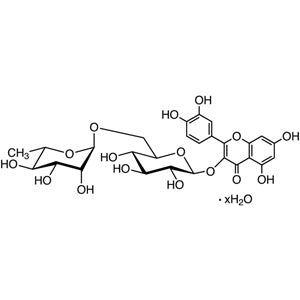
Quercetin Hydrate is a flavonoid compound widely used in laboratory experiments, particularly in the fields of chemistry and biology. It serves as a versatile reagent, often employed as a dye or a key component in specific chemical reactions. Its presence in research settings is crucial for studying antioxidant, anti-inflammatory, and pharmacological effects on various biological compounds. Due to its stability and solubility, it is a preferred choice for experiments requiring precision and clarity.
The compound's chemical structure and physical properties make it easy to process and handle in laboratory environments. It is non-toxic at certain dosages and dissolves well in organic solvents such as ethanol and water. These characteristics contribute to its broad applicability in both fundamental and applied research. Its solubility and stability also allow for long-term storage and consistent performance in repeated experiments.
In Indonesian laboratories, Quercetin Hydrate is commonly used in research related to natural products, pharmacology, and biochemistry. It is a key ingredient in experiments aimed at understanding the biological activities of plant-derived compounds. Its availability and reliability make it a standard material in many research setups, supporting both academic and industrial scientific investigations.
TCI brochures (PDF)
- Epigenetics Research Reagents 2024-11-22 · p. 1
- Quorum Sensing Research Reagents 2024-10-17 · p. 2
- Organoid Research Reagents 2025-09-11 · p. 4
- Biofilm Research Reagents 2024-06-21 · p. 2
- Antioxidants for Research and Experimental Use 2026-07-29 · p. 2
- Polyphenols 2024-12-05 · p. 1
- Antioxidant Activity Testing - Quercetin Hydrate is used to assess the antioxidant properties of natural and synthetic compounds due to its ability to neutralize free radicals.
- Inflammation Research - Its anti-inflammatory properties make it ideal for studying the mechanisms of inflammation in cellular and tissue models.
- Pharmacological Studies - The compound is frequently used in drug development to evaluate the bioavailability and efficacy of potential therapeutic agents.
- Biochemical Assays - Its solubility and stability make it suitable for a wide range of biochemical experiments, including enzyme inhibition and protein binding studies.
- Natural Product Analysis - It is commonly used in the extraction and characterization of flavonoids from plant sources for pharmaceutical and nutraceutical applications.
| Brand | TCI |
|---|---|
| CAS number | 849061-97-8 |
| Molecular formula | — |
| Purity | — |
| Category | Chemistry > Stains and Dyes (for Research and Experimental Use) > Stains and Dyes (Other) (for Research and Experimental Use) |
| Pack sizes | Available in various quantities as per supplier specifications |
| Physical form | Powder |
| Storage | Store in a cool, dry place away from light |
Quercetin Hydrate should be stored in a cool, dry place, away from direct light to maintain its stability and potency. It is recommended to use airtight containers to prevent moisture absorption, which could affect its solubility and purity. Due to its chemical nature, it should be handled with care, using appropriate personal protective equipment such as gloves and safety goggles. It is not toxic at recommended dosages, but general laboratory safety protocols should still be followed to ensure safe handling. Proper storage conditions help preserve its integrity for extended use in research applications.
—
Product Categories
- Biochemicals and ReagentsPhenylpropanoids, Aromatic PolyketidesAromatic Polyketides
- Cell BiologyCancer ResearchCancer Metabolism
- Cell BiologyCancer ResearchChemopreventive Agents [Cancer Research]
- Cell BiologyCancer Research
- Cell BiologyCell Signaling and NeuroscienceKinase/Phosphatase Biology
- Cell BiologyNutrition ResearchPhytochemicals
- MicrobiologyBiofilm ResearchBiofilm Inhibitors and Suppressors, etc.
- MicrobiologyEfflux Pump ResearchEfflux Pump Inhibitors
- Molecular BiologyEpigeneticsBioactive Small Molecules for Epigenetic Research
Produk Terkait
-
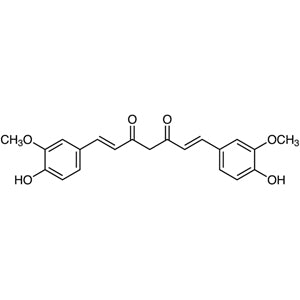
Curcumin(Synthetic) TCI C2302
Regular price From Rp 1.219.000,00Regular priceRp 845.000,00Sale price From Rp 1.219.000,00 -
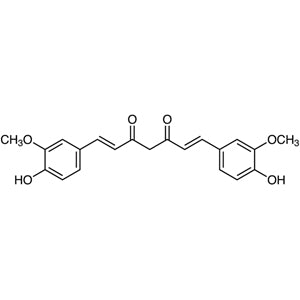
Curcumin(Natural) TCI C0434
Regular price From Rp 624.000,00Regular priceRp 424.000,00Sale price From Rp 624.000,00 -
Kaempferol TCI K0018
Regular price From Rp 3.189.000,00Regular priceRp 2.186.000,00Sale price From Rp 3.189.000,00 -
Quercetin TCI Q0112
Regular price From Rp 1.219.000,00Regular priceRp 845.000,00Sale price From Rp 1.219.000,00 -
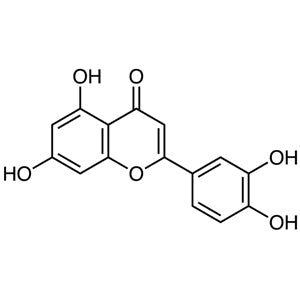
3',4',5,7-Tetrahydroxyflavone TCI T2682
Regular price From Rp 1.582.000,00Regular priceRp 1.092.000,00Sale price From Rp 1.582.000,00 -
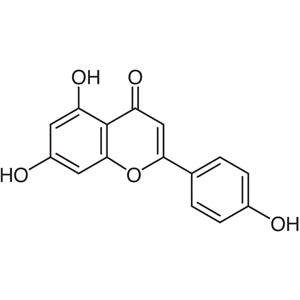
Apigenin TCI A1514
Regular price Rp 5.705.000,00Regular priceRp 3.898.000,00Sale price Rp 5.705.000,00 -
RutinHydrate TCI R0035
Regular price Rp 1.400.000,00Regular priceRp 968.000,00Sale price Rp 1.400.000,00 -
(+)-Taxifolin TCI T3666
Regular price From Rp 3.138.000,00Regular priceRp 2.151.000,00Sale price From Rp 3.138.000,00