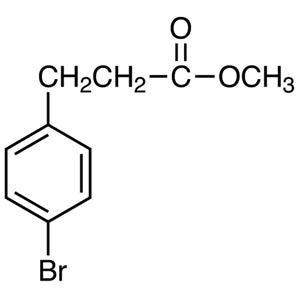
Methyl 3-(4-Bromophenyl)propionate is a chemical compound widely used in organic synthesis reactions within laboratory settings. It serves as a key building block in the development of various organic compounds, particularly in pharmaceutical and material science research. This compound is valued for its structural versatility and reactivity, making it a crucial component in the synthesis of complex molecules. Its molecular structure consists of a propionate chain linked to a bromophenyl group, which provides unique chemical properties that are beneficial in multiple synthetic pathways.
The compound is known for its stability under controlled conditions, although it remains sensitive to temperature and humidity. It dissolves well in organic solvents such as ethyl acetate and chloroform, which enhances its utility in chemical reactions requiring specific solvents. These solubility characteristics make it a preferred choice for researchers aiming to achieve high yields and purity in their synthetic processes. Additionally, its chemical stability allows for reliable performance in both small-scale and large-scale laboratory applications.
In Indonesian laboratories, Methyl 3-(4-Bromophenyl)propionate is commonly used in organic chemistry research, particularly in academic and research institutions focused on pharmaceutical development and material innovation. Its role in synthesizing compounds with potential applications in drug discovery and advanced materials makes it an essential reagent for scientists and researchers in Indonesia.
- Organic synthesis reactions benefit from this compound's reactivity and structural versatility, enabling the creation of complex molecules.
- Pharmaceutical research utilizes it as a building block for developing new drugs and therapeutic agents.
- Material science applications leverage its chemical properties for the synthesis of advanced polymers and functional materials.
- It is ideal for academic research in universities and research institutes focusing on chemical innovation.
- Its solubility in organic solvents makes it suitable for reactions requiring precise solvent control and high purity.
| Brand | TCI |
|---|---|
| CAS number | 75567-84-9 |
| Molecular formula | — |
| Purity | — |
| Category | Chemistry > Building Blocks > Non-Heterocyclic Building Blocks |
| Pack sizes | Available in standard laboratory quantities |
| Physical form | Solid or liquid, depending on the specific formulation |
| Storage | Store in a cool, dry place away from light and moisture |
This compound should be stored in a cool, dry environment, away from direct sunlight and moisture to maintain its chemical stability. It is recommended to use airtight containers made of glass or high-density polyethylene to prevent exposure to humidity. Due to its sensitivity to temperature and moisture, it is important to handle the compound with care during preparation and use. In laboratory settings, proper ventilation should be ensured when working with this material to minimize any potential risks. Always follow standard safety protocols when handling reactive chemicals to ensure a safe working environment.
—
Produk Terkait
-
Methyl3-(2-Bromophenyl)propionate TCI M2587
Regular price From Rp 848.400,00Regular price -
tert-ButylPropionate TCI B3327
Regular price From Rp 2.094.750,00Regular price -
2-PhenylethylPropionate TCI P1823
Regular price Rp 689.850,00Regular price -
SodiumPropionate TCI P0512
Regular price From Rp 610.050,00Regular price -
PropylPropionate TCI P0511
Regular price From Rp 505.050,00Regular price -
PotassiumPropionate TCI P0510
Regular price From Rp 769.650,00Regular price -
PhenylPropionate TCI P0509
Regular price From Rp 1.749.300,00Regular price -
MethylPropionate TCI P0508
Regular price From Rp 505.050,00Regular price