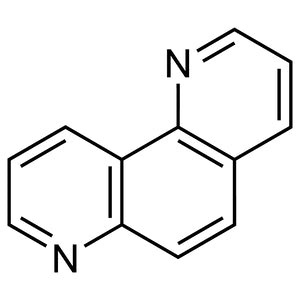
5-Nitro-1,10-phenanthroline is a chemical compound widely used in laboratory settings, particularly in catalysis and inorganic chemistry. It functions as a nitrogen-donor ligand, playing a crucial role in the formation of transition metal complexes. Its unique reactivity and structural characteristics make it a valuable tool for researchers working in analytical and synthetic chemistry. This compound is commonly employed in experiments that require the coordination of metal ions, contributing to the development of new catalytic systems and analytical methods.
The compound’s ability to bind with various transition metals such as iron, cobalt, and nickel makes it a preferred choice in many chemical applications. Its stability under controlled conditions ensures reliable performance in laboratory experiments, reducing the risk of degradation during use. Additionally, its molecular structure, modified with a nitro group, enhances its reactivity, allowing it to participate in a wide range of chemical reactions. These properties make it a versatile reagent in both research and industrial settings.
In Indonesian laboratories, 5-Nitro-1,10-phenanthroline is frequently used in chemical research, especially in analytical and catalytic studies. It is a key component in experiments involving metal complex formation, spectroscopic analysis, and reaction mechanisms. Its reliability and effectiveness have made it a standard material in academic and industrial laboratories across Indonesia, supporting both teaching and research activities.
TCI brochures (PDF)
- Titration Reagents and TLC Stains 2026-05-07 · p. 11
- Ligands 2025-12-01 · p. 14
Related TCI products
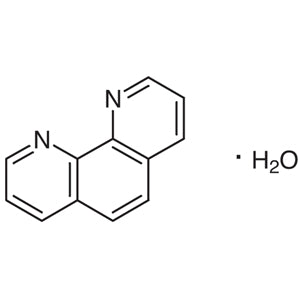
- TCI P0221 5144-89-8 1,10-Phenanthroline Monohydrate
- TCI B4456 22426-14-8 2-Bromo-1,10-phenanthroline
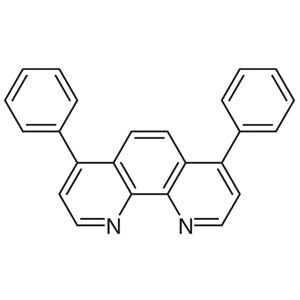
- TCI B2695 1662-01-7 Bathophenanthroline (purified by sublimation)
- TCI B2632 66127-01-3 3-Bromo-1,10-phenanthroline
- TCI B0989 53744-42-6 Bathophenanthrolinedisulfonic Acid Disodium Salt Hydrate [for Determination of Ferrous Ion]
- TCI A2977 54258-41-2 5-Amino-1,10-phenanthroline
- Metal complex formation in catalytic reactions due to its strong coordination ability with transition metals.
- Spectroscopic analysis for detecting and quantifying metal ions in solution.
- Development of new synthetic routes involving ligand-metal interactions in organic chemistry.
- Analytical chemistry applications for metal ion detection in environmental and industrial samples.
- Research in coordination chemistry to study ligand binding and metal ion behavior in different environments.
| Brand | TCI |
|---|---|
| CAS number | 4199-88-6 |
| Molecular formula | — |
| Purity | — |
| Category | Chemistry > Catalysis and Inorganic Chemistry > Nitrogen-Donor Ligands [Catalysis] |
| Pack sizes | Available in standard laboratory quantities as per supplier specifications |
| Physical form | Solid, typically in crystalline or powder form |
| Storage | Store in a cool, dry place away from direct light and moisture |
This compound should be stored in a cool, dry environment, away from direct sunlight and moisture to maintain its stability and effectiveness. It is recommended to use airtight containers to prevent exposure to air and humidity, which may affect its chemical integrity. Proper labeling of storage containers is essential for safety and traceability. In laboratory settings, it should be handled with appropriate personal protective equipment, such as gloves and safety goggles, to minimize exposure. While it is generally stable under normal storage conditions, it should be kept in a secure location to prevent accidental spills or contamination. Regular inspection of storage conditions ensures the compound remains suitable for use in chemical experiments.
—
Product Categories
Produk Terkait
-
1,10-PhenanthrolineMonohydrate TCI P0221
Regular price From Rp 505.050,00Regular price -
2-Bromo-1,10-phenanthroline TCI B4456
Regular price From Rp 3.312.750,00Regular price -
Bathophenanthroline(purifiedbysublimation) TCI B2695
Regular price Rp 5.432.700,00Regular price -
3-Bromo-1,10-phenanthroline TCI B2632
Regular price Rp 3.683.400,00Regular price -
BathophenanthrolinedisulfonicAcidDisodiumSaltHydrate[forDeterminationofFerrousIon] TCI B0989
Regular price Rp 5.672.100,00Regular price -
5-Amino-1,10-phenanthroline TCI A2977
Regular price Rp 3.738.000,00Regular price -
3,4,7,8-Tetramethyl-1,10-phenanthroline TCI T0847
Regular price From Rp 2.094.750,00Regular price -
1,7-Phenanthroline TCI P3288
Regular price From Rp 1.565.550,00Regular price


![53744-42-6 Bathophenanthrolinedisulfonic Acid Disodium Salt Hydrate [for Determination of Ferrous Ion] - AMI Scientific](http://amiscientific.com/cdn/shop/files/TCI2510B0989.jpg?v=1768193262&width=533)