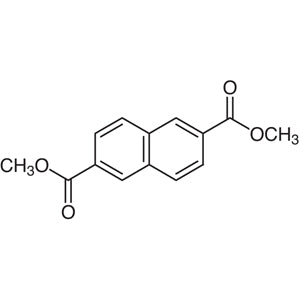
Dimethyl 2,6-Naphthalenedicarboxylate is a chemical compound widely used as a building block in the synthesis of complex molecules. This compound features a naphthalene ring with two carboxylate groups attached, making it a versatile intermediate in organic chemistry. In laboratory settings, it plays a crucial role in the development of polymers, pharmaceuticals, and industrial chemicals. Its structural simplicity and functional versatility allow it to be a key component in various synthetic pathways.
The compound is valued for its chemical stability and controlled reactivity, which make it suitable for a wide range of chemical reactions. Its ability to participate in esterification, amidation, and substitution reactions enhances its utility in organic synthesis. Additionally, its complex molecular structure provides opportunities for further modification, making it a preferred choice for researchers aiming to create heterocyclic compounds. This stability and reactivity contribute to its popularity in both academic and industrial research environments.
In Indonesian laboratories, Dimethyl 2,6-Naphthalenedicarboxylate is commonly used in organic chemistry and material science research. It is a key reagent in the development of new materials and pharmaceutical compounds. Many research institutions and universities in Indonesia rely on this compound to advance their scientific studies and technological innovations. Its consistent performance and reliability make it a trusted resource in both teaching and research laboratories.
Related TCI products
- TCI N0684 2549-47-5 Dimethyl 2,7-Naphthalenedicarboxylate
- TCI N0590 13728-34-2 Dimethyl 2,3-Naphthalenedicarboxylate
- TCI D4400 7487-15-2 Dimethyl 1,4-Naphthalenedicarboxylate
- TCI D4399 3068-03-9 Dimethyl Decahydro-1,4-naphthalenedicarboxylate (mixture of isomers)
- TCI D3745 3068-02-8 Dimethyl Decahydro-2,6-naphthalenedicarboxylate (mixture of isomers)
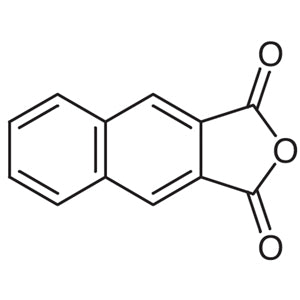
- TCI N0530 716-39-2 2,3-Naphthalenedicarboxylic Anhydride
- Organic synthesis applications benefit from its structural versatility and reactivity in forming complex molecules.
- Polymer development utilizes its ability to act as a monomer or functional group in chain-building processes.
- Pharmaceutical research leverages its role in the synthesis of drug compounds and active pharmaceutical ingredients.
- Material science applications rely on its chemical stability for creating advanced polymer-based materials.
- Industrial chemical production uses it as a precursor in the manufacture of various chemical intermediates.
| Brand | TCI |
|---|---|
| CAS number | 840-65-3 |
| Molecular formula | — |
| Purity | — |
| Category | Chemistry > Building Blocks > Non-Heterocyclic Building Blocks |
| Pack sizes | Available in standard laboratory quantities |
| Physical form | Solid, crystalline appearance |
| Storage | Store in a cool, dry place away from direct sunlight |
Dimethyl 2,6-Naphthalenedicarboxylate should be stored in a cool, dry environment to maintain its chemical stability. It is recommended to keep it in a tightly sealed container to prevent moisture absorption and contamination. Suitable storage containers include glass or high-density polyethylene vessels that are resistant to chemical degradation. In laboratory settings, it should be handled with appropriate personal protective equipment to ensure safety. Due to its chemical nature, it should be stored away from incompatible substances such as strong acids or bases. Regular monitoring of storage conditions ensures the compound remains in optimal condition for use in research applications.
—
Produk Terkait
-
Dimethyl2,7-Naphthalenedicarboxylate TCI N0684
Regular price From Rp 7.844.550,00Regular price -
Dimethyl2,3-Naphthalenedicarboxylate TCI N0590
Regular price From Rp 1.590.750,00Regular price -
Dimethyl1,4-Naphthalenedicarboxylate TCI D4400
Regular price From Rp 2.625.000,00Regular price -
DimethylDecahydro-1,4-naphthalenedicarboxylate(mixtureofisomers) TCI D4399
Regular price Rp 3.605.700,00Regular price -
DimethylDecahydro-2,6-naphthalenedicarboxylate(mixtureofisomers) TCI D3745
Regular price Rp 4.929.750,00Regular price -
2,3-NaphthalenedicarboxylicAnhydride TCI N0530
Regular price Rp 4.559.100,00Regular price -
2,3-NaphthalenedicarboxylicAcid TCI N0526
Regular price From Rp 1.538.250,00Regular price -
2,6-NaphthalenedicarboxylicAcid TCI N0377
Regular price From Rp 743.400,00Regular price