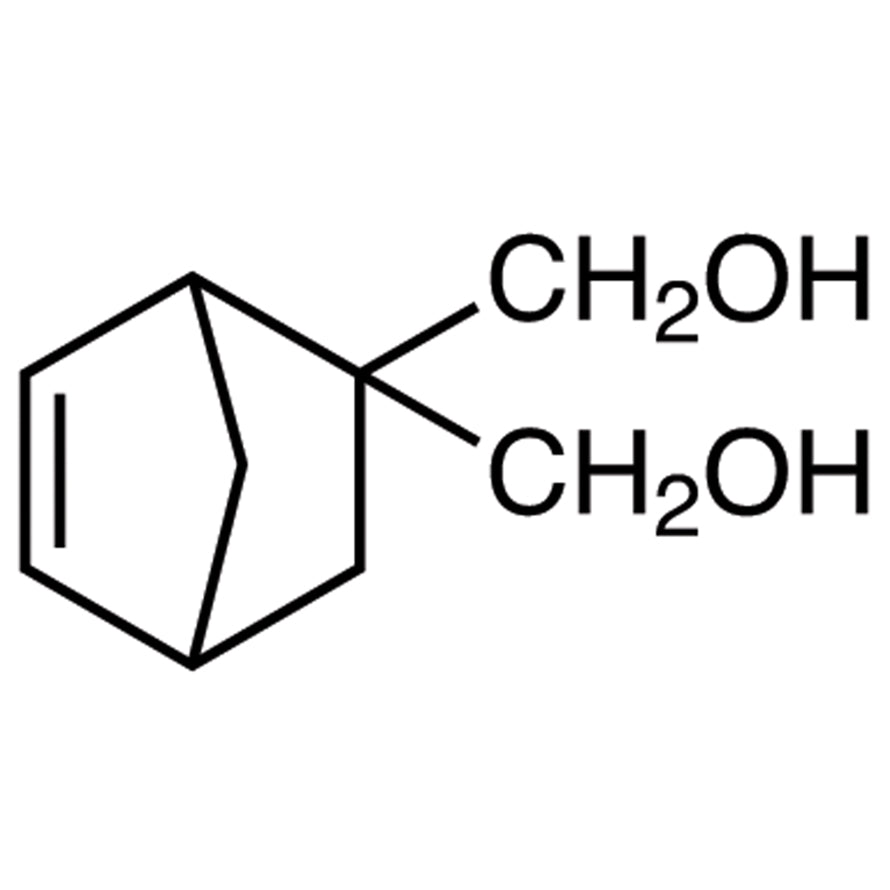
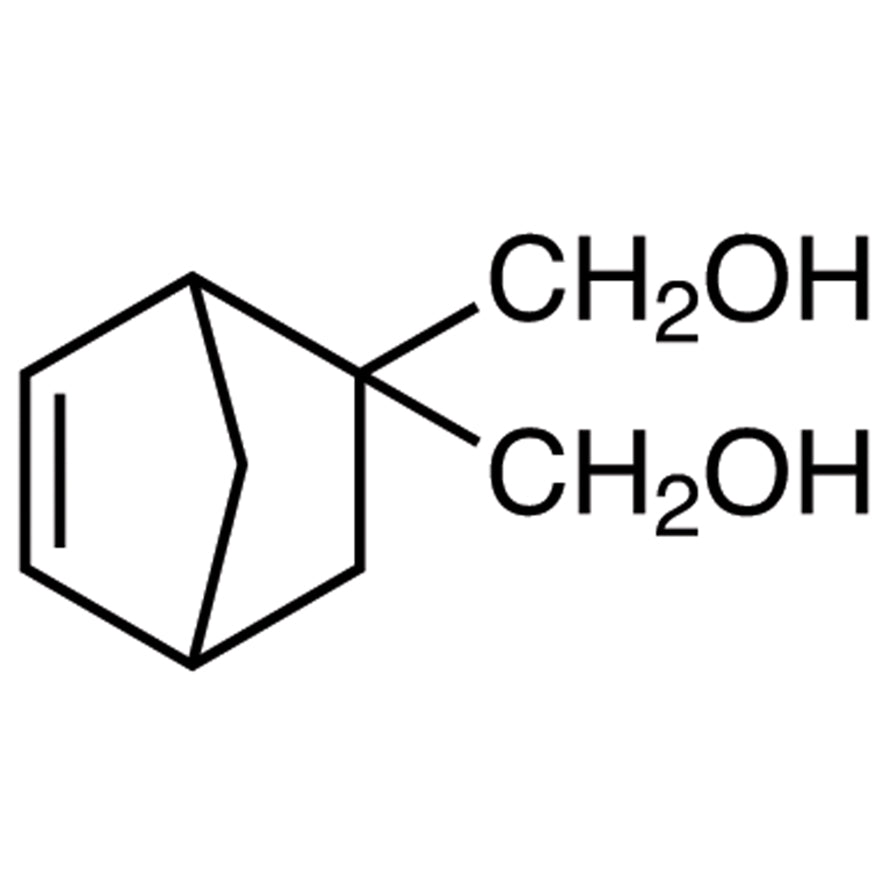
5-Norbornene-2,2-dimethanol from TCI is a bicyclic diol. Its norbornene framework carries a strained C=C double bond, and two hydroxymethyl groups sit on a single carbon atom at the 2-position. TCI classifies it as a monomer for materials science and polymer research. Its main advantage is that one molecule holds two different kinds of reactive group. Research groups working on functional polymers, crosslinkable networks and macromolecular design can therefore use it to join two separate lines of chemistry in one building block.
The norbornene double bond holds a large amount of ring strain. This makes it highly reactive in ring-opening metathesis polymerization (ROMP) with ruthenium catalysts such as Grubbs catalysts. It also reacts readily in thiol-ene reactions and several types of cycloaddition. The two geminal primary hydroxyl groups let the compound act as a diol in polyesters and polyurethanes. The resulting polymers carry strained double bonds along the chain, which can be modified or crosslinked later. The hydroxyl groups can also be esterified with other groups before polymerization, giving researchers ROMP monomers with tailored side chains.
In Indonesian laboratories, this monomer suits university polymer chemistry groups, materials science research centres and industrial R&D teams developing new functional materials. It is useful wherever researchers need a single monomer that can be polymerized through its double bond, built into a step-growth polymer through its hydroxyl groups, or both one after the other. Postgraduate projects on ROMP, click chemistry, crosslinked networks and post-polymerization modification are typical settings where this TCI reagent is used as a well-defined starting material.
TCI brochures (PDF)
- Norbornene-Based Cyclic Olefin Monomers 2026-07-02 · p. 2
- Monomers 2025-05-28 · p. 19
Related TCI products
- TCI N0769 699-95-6 5-Norbornene-2-exo,3-exo-dimethanol
- TCI N0768 699-97-8 5-Norbornene-2-endo,3-endo-dimethanol
- TCI N0764 85-39-2 5-Norbornene-2,3-dimethanol (mixture of endo- and exo-, predominantly endo-isomer)
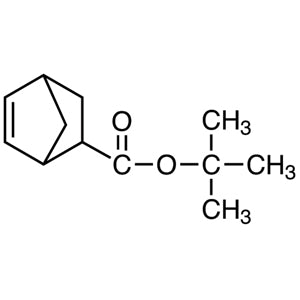
- TCI B4267 154970-45-3 tert-Butyl 5-Norbornene-2-carboxylate (endo- and exo- mixture)
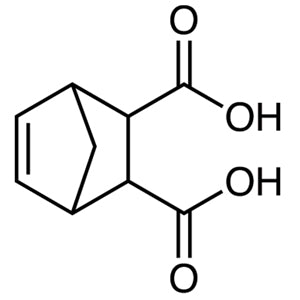
- TCI N1029 3813-52-3 5-Norbornene-2,3-dicarboxylic Acid
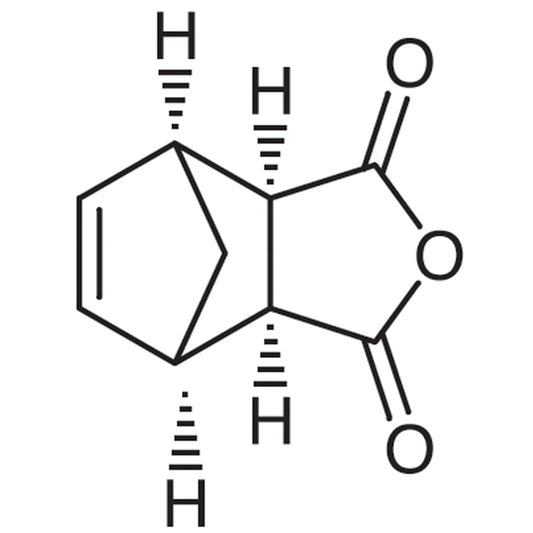
- TCI N0767 2746-19-2 cis-5-Norbornene-exo-2,3-dicarboxylic Anhydride
- Ring-opening metathesis polymerization (ROMP): the strained norbornene double bond reacts efficiently with ruthenium catalysts such as Grubbs catalysts, making this compound a suitable monomer for building polynorbornene backbones.
- Polyester and polyurethane synthesis: the two geminal primary hydroxyl groups let the molecule serve as a diol in polycondensation, placing reactive norbornene units along the resulting polymer chain.
- Post-polymerization crosslinking and modification: polymers made through the hydroxyl groups keep strained double bonds along the chain, which can be crosslinked or functionalized in a later, separate step.
- Thiol-ene click chemistry: the reactive norbornene alkene takes part readily in thiol-ene reactions, which suits network formation and surface or polymer functionalization under controlled conditions.
- Custom ROMP monomer design: esterifying the hydroxyl groups with chosen substituents before polymerization lets researchers prepare ROMP monomers with tailored side chains for specific material properties.
| Brand | TCI (product code N0636) |
|---|---|
| CAS number | 6707-12-6 |
| Molecular formula | — |
| Purity | — |
| Category | Materials Science > Polymer/Macromolecule Reagents > Monomers |
| Pack sizes | see the product listing for available TCI pack sizes |
| Physical form | see the TCI product documentation and Certificate of Analysis |
| Storage | follow the storage conditions on the TCI label and Safety Data Sheet |
Keep 5-Norbornene-2,2-dimethanol in its original, tightly closed TCI container, in a cool, dry, well-ventilated area away from heat, direct sunlight and strong oxidizing agents. Follow any specific temperature or atmosphere requirements on the product label and Safety Data Sheet. Handle the material in a fume hood or well-ventilated area, and wear appropriate personal protective equipment, including safety glasses, chemical-resistant gloves and a laboratory coat. Avoid contact with skin and eyes and avoid breathing dust or vapour. Reseal the container promptly after each use to protect the contents from moisture and contamination. Dispose of waste according to local regulations and your institution's chemical safety procedures.
—
Product Categories
Produk Terkait
-
5-Norbornene-2-exo,3-exo-dimethanol TCI N0769
Regular price From Rp 2.837.100,00Regular price -
5-Norbornene-2-endo,3-endo-dimethanol TCI N0768
Regular price From Rp 1.803.900,00Regular price -
5-Norbornene-2,3-dimethanol(mixtureofendo-andexo-,predominantlyendo-isomer) TCI N0764
Regular price From Rp 2.016.000,00Regular price -
tert-Butyl5-Norbornene-2-carboxylate(endo-andexo-mixture) TCI B4267
Regular price From Rp 1.485.750,00Regular price -
5-Norbornene-2,3-dicarboxylicAcid TCI N1029
Regular price From Rp 1.273.650,00Regular price -
cis-5-Norbornene-exo-2,3-dicarboxylicAnhydride TCI N0767
Regular price From Rp 610.050,00Regular price -
Methyl5-Norbornene-2-carboxylate(endo-andexo-mixture) TCI N0691
Regular price Rp 6.228.600,00Regular price -
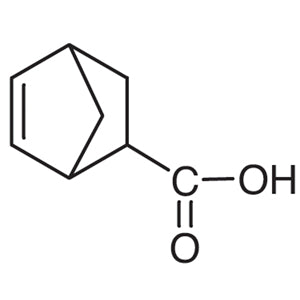
5-Norbornene-2-carboxylicAcid(endo-andexo-mixture) TCI N0667
Regular price From Rp 689.850,00Regular price