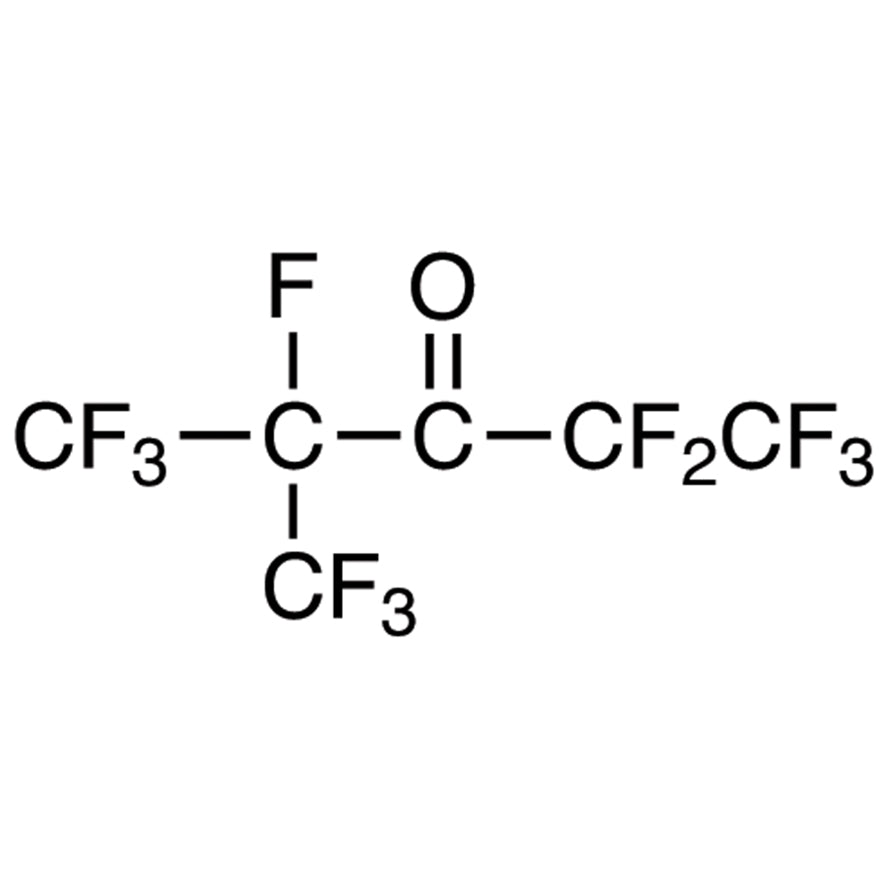
1,1,1,2,2,4,5,5,5-Nonafluoro-4-(trifluoromethyl)-3-pentanone is a highly fluorinated compound widely used in complex chemical reactions within laboratory settings. As a fluorinated building block, it plays a critical role in the synthesis of organofluorine compounds, which are essential in various scientific fields. Its unique molecular structure allows it to act as a reagent or intermediate in numerous synthetic pathways, making it a versatile tool for researchers. This compound is particularly valuable in applications where stability and reactivity are key factors.
The compound’s high fluorine content contributes to its exceptional chemical stability and unique reactivity profile. These properties make it a preferred choice for laboratories requiring compounds with specific functional characteristics, such as low solubility and high electrophilicity. Its ability to participate in substitution and electrophilic reactions further enhances its utility in synthetic chemistry. The combination of these properties ensures that it remains a reliable and effective component in advanced chemical research.
In Indonesian laboratories, this compound is commonly used in organic chemistry research, especially in the development of pharmaceuticals and advanced materials. Its role in creating compounds with specialized properties makes it an essential resource for scientists working on innovative projects. The compound's availability and reliability make it a popular choice among researchers in the region.
TCI brochures (PDF)
- Fluorous Chemistry 2025-01-21 · p. 6
Related TCI products
- TCI N0711 29420-49-3 Potassium Nonafluoro-1-butanesulfonate
- TCI N0709 375-73-5 Nonafluoro-1-butanesulfonic Acid
- TCI N0692 2378-02-1 Nonafluoro-tert-butyl Alcohol
- TCI N0689 424-36-2 Ethyl Nonafluorovalerate
- TCI N0677 79963-95-4 2,2,2-Trifluoroethyl Nonafluorobutanesulfonate
- TCI N0499 423-39-2 Nonafluorobutyl Iodide
- Organic synthesis: This compound is widely used in the synthesis of complex organic molecules due to its reactivity and stability.
- Pharmaceutical research: It serves as a building block for the development of new drugs with specific functional groups and properties.
- Material science: Its unique chemical properties make it suitable for the creation of advanced materials with tailored characteristics.
- Analytical chemistry: It is used as a standard or reagent in analytical procedures requiring high chemical stability.
- Environmental studies: Its fluorinated structure is useful in studying the behavior and degradation of fluorinated compounds in environmental systems.
| Brand | TCI |
|---|---|
| CAS number | 756-13-8 |
| Molecular formula | — |
| Purity | — |
| Category | Chemistry > Building Blocks > Fluorinated Building Blocks |
| Pack sizes | Available in various quantities as per standard laboratory supply |
| Physical form | Liquid |
| Storage | Store in a cool, dry place away from light and incompatible materials |
This compound should be stored in a cool, dry environment, away from direct sunlight and sources of heat. It is recommended to use airtight containers made of materials compatible with fluorinated compounds, such as glass or high-density polyethylene. Due to its high fluorine content, it is important to handle it with appropriate personal protective equipment, including gloves and safety goggles. Avoid contact with incompatible substances such as strong oxidizers. Ensure proper ventilation in the laboratory to minimize exposure. Regularly inspect storage conditions to maintain the compound's integrity and safety.
—
Produk Terkait
-
PotassiumNonafluoro-1-butanesulfonate TCI N0711
Regular price Rp 1.644.300,00Regular price -
Nonafluoro-1-butanesulfonicAcid TCI N0709
Regular price From Rp 823.200,00Regular price -
Nonafluoro-tert-butylAlcohol TCI N0692
Regular price From Rp 1.458.450,00Regular price -
EthylNonafluorovalerate TCI N0689
Regular price Rp 1.115.100,00Regular price -
2,2,2-TrifluoroethylNonafluorobutanesulfonate TCI N0677
Regular price Rp 2.386.650,00Regular price -
NonafluorobutylIodide TCI N0499
Regular price From Rp 1.618.050,00Regular price -
MethylNonafluorovalerate TCI M1912
Regular price Rp 2.094.750,00Regular price -
EthylNonafluorobutylEther(mixtureofisomers) TCI E0528
Regular price From Rp 1.035.300,00Regular price