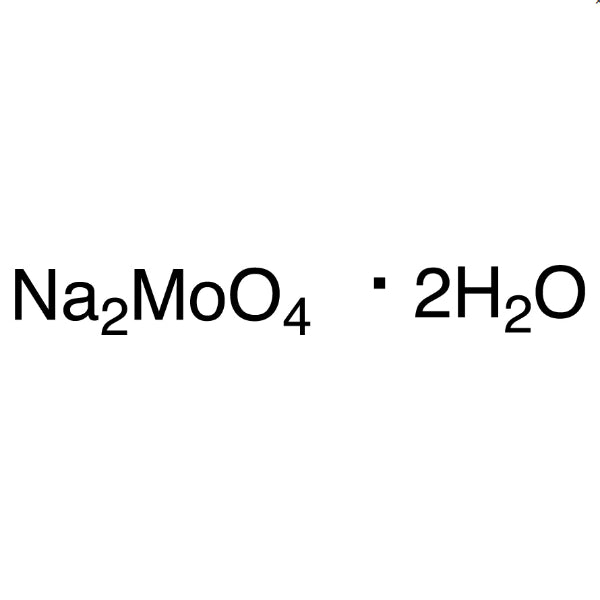
TCI O0683 Sodium Molybdate Dihydrate is an inorganic salt made of the molybdate anion and two molecules of water of crystallization. In the laboratory it is used mainly as a water-soluble source of molybdenum ions. It appears in many fields, including analytical chemistry, biochemistry, plant tissue culture, and research on catalysts and corrosion. It is easy to handle, so researchers often choose sodium molybdate first when they need molybdenum in solution form for routine or experimental work.
Its main advantages are good solubility in water and a stable hydrate form. Together, these make it easy to weigh accurately and to prepare as a stock solution. In acidic conditions, the molybdate ion reacts with phosphate and silicate to form heteropoly complexes. This reaction is the basis of the molybdenum blue colorimetric method, which is widely used for phosphate and silicate determination. In biochemistry, molybdate is known as a phosphatase inhibitor. Molybdenum is also an essential micronutrient for plants, so this compound is a routine component of plant growth media.
In Indonesia, agricultural and plant tissue culture laboratories need sodium molybdate to prepare plant media, where it supplies the molybdenum that cultured plants require. Environmental and water-testing laboratories use molybdate-based reagents to analyse phosphate and silicate in water samples. University and research institute laboratories also use it in biochemistry experiments as well as in inorganic chemistry, catalysis, and corrosion studies. Its range of uses makes it a practical reagent to keep on the shelf in many types of Indonesian laboratories.
TCI brochures (PDF)
- Transition Metal Catalysts 2026-04-10 · p. 6
Related TCI products
- Molybdenum blue colorimetry: molybdate forms heteropoly complexes with phosphate and silicate in acidic conditions, which is the basis for colorimetric determination of these analytes.
- Plant tissue culture media: molybdenum is an essential plant micronutrient, so this water-soluble salt is a routine component when laboratories prepare growth media for cultured plant material.
- Biochemical assays: molybdate is a known phosphatase inhibitor, which makes it useful in experiments where unwanted dephosphorylation has to be suppressed during sample preparation and analysis.
- Catalysis and inorganic chemistry research: it is a convenient, soluble molybdenum source for preparing molybdenum-containing compounds and for exploratory work on catalyst systems in research laboratories.
- Corrosion studies: sodium molybdate is used in corrosion research, where a stable, easily weighed and readily dissolved molybdate source makes test solutions simple to prepare reproducibly.
| Brand | TCI (product code O0683) |
|---|---|
| CAS number | 10102-40-6 |
| Molecular formula | — |
| Purity | — |
| Category | Chemistry > Catalysis and Inorganic Chemistry > Main-group Elements |
| Pack sizes | as listed on the product page |
| Physical form | solid crystalline hydrate (dihydrate) |
| Storage | keep tightly closed in a cool, dry place |
Store Sodium Molybdate Dihydrate in its original, tightly closed container in a cool, dry, well-ventilated area, away from direct sunlight and moisture. This helps keep the hydrate stable. Keep it apart from incompatible materials such as strong reducing agents and strong acids. Label stock solutions clearly with the concentration and preparation date. Follow standard laboratory practice: wear gloves, safety glasses, and a lab coat, avoid creating dust, do not eat or drink in the work area, and wash your hands after handling. Read the supplier's Safety Data Sheet before use and dispose of waste according to local regulations.
—
Produk Terkait
-
CalciumMolybdate TCI C4033
Regular price From Rp 689.850,00Regular priceRp 481.950,00Sale price From Rp 689.850,00 -
AmmoniumHeptamolybdateTetrahydrate TCI A3705
Regular price From Rp 530.250,00Regular priceRp 370.650,00Sale price From Rp 530.250,00 -
SodiumBis(fluorosulfonyl)imide TCI S0992
Regular price From Rp 3.021.900,00Regular priceRp 2.112.600,00Sale price From Rp 3.021.900,00 -
SodiumBis(trifluoromethanesulfonyl)imide TCI S0989
Regular price From Rp 1.405.950,00Regular priceRp 998.550,00Sale price From Rp 1.405.950,00 -
SodiumHypochloritePentahydrate TCI S0939
Regular price From Rp 530.250,00Regular priceRp 370.650,00Sale price From Rp 530.250,00 -
SodiumSulfate TCI S0566
Regular price Rp 530.250,00Regular priceRp 386.400,00Sale price Rp 530.250,00 -
SodiumNitrite TCI S0565
Regular price Rp 477.750,00Regular priceRp 333.900,00Sale price Rp 477.750,00 -
SodiumIodide TCI S0564
Regular price Rp 1.008.000,00Regular priceRp 720.300,00Sale price Rp 1.008.000,00