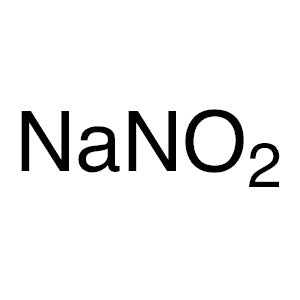
Sodium nitrite (NaNO₂), with the CAS number 7632-00-0, is a versatile chemical compound widely used in laboratory settings for its unique reactivity and utility in various chemical processes. As a key component in redox reactions, it serves both as an oxidizing and reducing agent, making it essential for synthetic and analytical chemistry applications. Its ability to participate in electron transfer reactions allows it to be a valuable reagent in the synthesis of organic and inorganic compounds. Sodium nitrite is also commonly employed in qualitative and quantitative analysis to detect specific ions, such as chloride and sulfide, due to its predictable chemical behavior.
One of the main reasons sodium nitrite is preferred in laboratory work is its chemical stability under controlled conditions, combined with its high reactivity when needed. This dual nature makes it suitable for a wide range of experiments, especially those involving oxidation-reduction reactions. Its solubility in water and ability to dissolve in various solvents further enhance its applicability in different experimental setups. Additionally, sodium nitrite is known for its effectiveness in catalytic processes, where it can facilitate the conversion of reactants into desired products with minimal side reactions.
In Indonesian laboratories, sodium nitrite is extensively used across multiple disciplines, including analytical chemistry, inorganic chemistry, and industrial applications. It plays a crucial role in both academic research and industrial processes, such as food preservation and metal processing. Its widespread use reflects its importance in maintaining the efficiency and accuracy of chemical experiments and analyses in the region.
Advantages (TCI brochure)
- Nitration of protected aniline derivatives by light has been reported
TCI brochures (PDF)
- Organic Photoreaction Reagents 2025-02-13 · p. 6
- Metallic Salts 2025-11-06 · p. 9
- Redox Reactions: Sodium nitrite is ideal for redox experiments due to its ability to act as both an oxidizing and reducing agent, enabling precise control over electron transfer processes.
- Qualitative Analysis: It is commonly used in detecting specific ions like chloride and sulfide, offering reliable and consistent results in analytical procedures.
- Organic Synthesis: Sodium nitrite facilitates the synthesis of organic compounds by participating in nucleophilic and electrophilic reactions, enhancing reaction efficiency.
- Inorganic Chemistry Experiments: Its role in catalytic processes and synthesis of inorganic compounds makes it a preferred reagent in inorganic chemistry research.
- Industrial Applications: It is used in food preservation and metal processing, demonstrating its utility beyond academic settings in industrial laboratories.
From the TCI brochure
- Nitration of a Boc-protected aniline derivative with riboflavin tetraacetate catalyst in CH3CN/H2O under blue LEDs
| Brand | TCI |
|---|---|
| CAS number | 7632-00-0 |
| Molecular formula | — |
| Purity | — |
| Category | Chemistry > Catalysis and Inorganic Chemistry > Main-group Elements |
| Pack sizes | Available in various quantities as per standard laboratory supply formats |
| Physical form | White crystalline solid |
| Storage | Store in a cool, dry place away from direct sunlight and incompatible materials |
Sodium nitrite should be stored in a cool, dry place, away from direct sunlight and sources of heat. It is best kept in airtight containers made of inert materials such as glass or polyethylene to prevent contamination and moisture absorption. Due to its corrosive nature, it is important to handle it with appropriate personal protective equipment, including gloves, goggles, and a lab coat. Avoid contact with skin, eyes, and respiratory system to prevent irritation. In case of spillage, neutralize with an appropriate chemical and clean up thoroughly. Proper labeling and storage in designated chemical cabinets are essential to ensure safety and compliance with laboratory protocols.
—
Product Categories
- Catalysis and Inorganic ChemistryMain-group Elements [Catalysis and Inorganic Chemistry]Sodium [Catalysis and Inorganic Chemistry]
- Catalysis and Inorganic ChemistryMetallic Salts [Catalysis and Inorganic Chemistry]Nitrate Salts and Nitrite Salts [Metallic Salts]
- Synthetic ReagentsInorganic Salts [Synthetic Reagents]
Produk Terkait
-
DicyclohexylamineNitrite TCI D1392
Regular price From Rp 557.550,00Regular priceRp 405.300,00Sale price From Rp 557.550,00 -
SodiumSulfate TCI S0566
Regular price Rp 530.250,00Regular priceRp 386.400,00Sale price Rp 530.250,00 -
SodiumIodide TCI S0564
Regular price Rp 1.008.000,00Regular priceRp 720.300,00Sale price Rp 1.008.000,00 -
SodiumHydrogenCarbonate TCI S0561
Regular price Rp 637.350,00Regular priceRp 460.950,00Sale price Rp 637.350,00 -
SodiumHexafluorophosphate TCI S0392
Regular price Rp 2.121.000,00Regular priceRp 1.482.600,00Sale price Rp 2.121.000,00 -
SodiumBis(fluorosulfonyl)imide TCI S0992
Regular price From Rp 3.021.900,00Regular priceRp 2.112.600,00Sale price From Rp 3.021.900,00 -
SodiumBis(trifluoromethanesulfonyl)imide TCI S0989
Regular price From Rp 1.405.950,00Regular priceRp 998.550,00Sale price From Rp 1.405.950,00 -
SodiumCarbonate TCI S0560
Regular price Rp 477.750,00Regular priceRp 333.900,00Sale price Rp 477.750,00