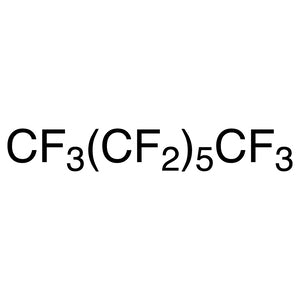
Hexadecafluoroheptane (mixture of isomers), with CAS number 335-57-9, is a highly fluorinated compound used extensively in chemical and technological applications. This compound is a mixture of isomers of heptane that has been fully fluorinated, resulting in a chemically and physically stable substance. In the laboratory, it serves as a fundamental building block for the synthesis of fluorinated compounds, particularly in organic chemistry and materials science. Its unique chemical structure enables it to play a crucial role in various synthetic processes and research projects.
The compound is known for its non-reactive nature, making it a safe and reliable choice for laboratory use. It is colorless, odorless, and exhibits minimal reactivity towards most chemical substances. These properties contribute to its stability under a wide range of conditions, making it ideal for applications that require chemical inertness. Its high boiling point also ensures thermal stability, which is beneficial in high-temperature experiments. Additionally, its inertness reduces the risk of unwanted side reactions, enhancing the safety and accuracy of chemical processes.
In Indonesian laboratories, Hexadecafluoroheptane is commonly used in research related to fluorinated materials, catalysts, and specialized chemical products. It is frequently found in academic and industrial settings where stability and chemical inertness are critical. Its application spans across various fields, including polymer science, pharmaceutical research, and advanced material development. Researchers in Indonesia rely on this compound for its consistent performance and reliability in complex chemical environments.
TCI brochures (PDF)
- Fluorous Chemistry 2025-01-21 · p. 4
Related TCI products
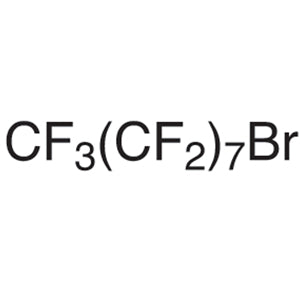
- TCI H0946 423-55-2 Heptadecafluoro-n-octyl Bromide
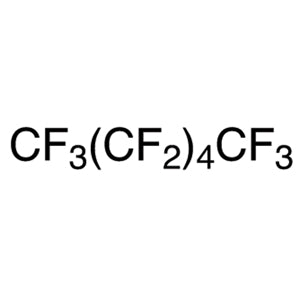
- TCI P0839 355-42-0 Tetradecafluorohexane
- TCI O0268 307-34-6 Octadecafluorooctane
- TCI M2030 26131-32-8 Methyl 2,5-Bis(trifluoromethyl)-3,6-dioxaundecafluorononanoate (mixture of isomers)
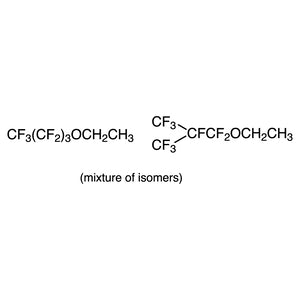
- TCI E0528 813458-04-7 Ethyl Nonafluorobutyl Ether (mixture of isomers)
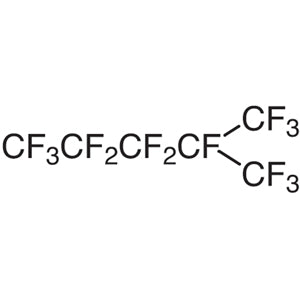
- TCI T1012 355-04-4 Tetradecafluoro-2-methylpentane
- Fluorinated Material Synthesis: Hexadecafluoroheptane is ideal for synthesizing fluorinated compounds due to its high fluorine content and chemical stability.
- Organic Chemistry Research: Its inert nature makes it suitable for use as a solvent or reagent in organic reactions where reactivity must be minimized.
- Thermal Stability Testing: The compound's high boiling point makes it useful in experiments requiring high-temperature stability and controlled environments.
- Analytical Chemistry: It is used as a non-reactive medium for separation and analysis processes, ensuring accurate and reproducible results.
- Catalyst Development: Its chemical inertness allows it to serve as a support or medium for catalysts in various chemical processes without interfering with reactions.
| Brand | TCI |
|---|---|
| CAS number | 335-57-9 |
| Molecular formula | — |
| Purity | — |
| Category | Chemistry > Building Blocks > Fluorinated Building Blocks |
| Pack sizes | Available in standard laboratory quantities |
| Physical form | Colorless liquid |
| Storage | — |
Hexadecafluoroheptane should be stored in a cool, dry, and well-ventilated area away from direct sunlight. It is recommended to use sealed containers made of materials compatible with fluorinated compounds, such as glass or high-density polyethylene. Due to its chemical inertness, it does not react with most substances, but it is still important to handle it with care to prevent contamination. In laboratory settings, it should be stored in a designated chemical storage cabinet to ensure safety and accessibility. Proper labeling and storage conditions are essential to maintain its stability and ensure safe handling in all experimental environments.
—
Produk Terkait
-
Heptadecafluoro-n-octylBromide TCI H0946
Regular price From Rp 980.700,00Regular price -
Tetradecafluorohexane TCI P0839
Regular price From Rp 3.367.350,00Regular price -
Octadecafluorooctane TCI O0268
Regular price Rp 1.326.150,00Regular price -
Methyl2,5-Bis(trifluoromethyl)-3,6-dioxaundecafluorononanoate(mixtureofisomers) TCI M2030
Regular price Rp 3.551.100,00Regular price -
EthylNonafluorobutylEther(mixtureofisomers) TCI E0528
Regular price From Rp 1.035.300,00Regular price -
Tetradecafluoro-2-methylpentane TCI T1012
Regular price Rp 2.704.800,00Regular price -
1H,1H,10H,10H-Hexadecafluoro-1,10-decanediol TCI H1233
Regular price From Rp 610.050,00Regular price -
MethylTridecafluoroheptanoate TCI M1914
Regular price From Rp 1.510.950,00Regular price