Pyridinium 3-Nitrobenzenesulfonate is a chemical compound widely used in laboratory settings, particularly in catalysis and inorganic chemistry. It plays a crucial role in condensation reactions, where it functions as a catalyst or reagent to accelerate chemical reactions without being consumed in the process. This compound is especially valuable in organic synthesis, where it helps in the formation of complex molecules by facilitating key reaction steps. Its versatility makes it a preferred choice for researchers aiming to optimize reaction conditions and improve yield.
One of the key attributes of Pyridinium 3-Nitrobenzenesulfonate is its chemical stability under specific conditions, which allows it to maintain its reactivity without degrading quickly. Its ability to interact with both organic and inorganic substrates enhances its effectiveness in a variety of chemical processes. The compound’s molecular structure enables it to act as a highly specific catalyst, making it ideal for applications that require precision and control. These properties contribute to its widespread use in modern chemical research.
In Indonesian laboratories, Pyridinium 3-Nitrobenzenesulfonate is commonly employed in chemical research, particularly in catalytic processes and organic synthesis. It is a key component in experiments that require efficient and selective catalytic activity. Its availability in various packaging formats supports its use in both small-scale and large-scale laboratory operations, making it a reliable choice for researchers in the field.
TCI brochures (PDF)
- Powerful Condensation Organocatalysts 2018-01-25 · p. 2
- Condensing Agents 2025-11-18 · p. 8
Related TCI products
- TCI P2231 244633-31-6 Pentafluorophenyl 4-Nitrobenzenesulfonate
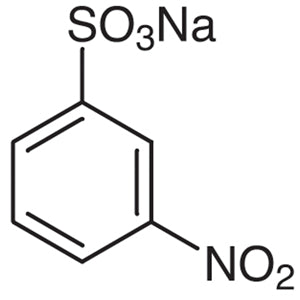
- TCI N0141 127-68-4 Sodium 3-Nitrobenzenesulfonate
- TCI G0287 115314-14-2 (S)-Glycidyl 3-Nitrobenzenesulfonate
- TCI G0286 115314-17-5 (R)-Glycidyl 3-Nitrobenzenesulfonate
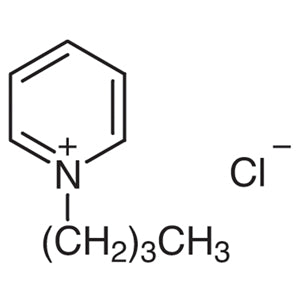
- TCI B1329 1124-64-7 1-Butylpyridinium Chloride
- TCI A5161 6004-24-6 CPC Monohydrate (=Cetylpyridinium Chloride Monohydrate) [Ion association reagent for extraction photometric analysis and sensitizer in photometric determination of metals]
- Organic synthesis reactions benefit from Pyridinium 3-Nitrobenzenesulfonate due to its catalytic efficiency and ability to promote condensation processes.
- Catalytic activation in complex molecule formation is enhanced by its specific interaction with substrates, making it ideal for advanced chemical research.
- Inorganic chemistry experiments often utilize this compound for its stability and reactivity in diverse chemical environments.
- Condensation reactions in laboratory settings are accelerated by its role as a catalyst, improving reaction rates and product yields.
- Research in catalysis and chemical activation relies on its unique properties to achieve high specificity and efficiency in experimental setups.
| Brand | TCI |
|---|---|
| CAS number | 84752-61-4 |
| Molecular formula | — |
| Purity | — |
| Category | Chemistry > Catalysis and Inorganic Chemistry > Condensation [Catalysis] |
| Pack sizes | Available in various packaging formats for different experimental needs |
| Physical form | Solid powder |
| Storage | Store in a cool, dry place away from moisture and direct sunlight |
Pyridinium 3-Nitrobenzenesulfonate should be stored in a cool, dry location, away from moisture and direct sunlight to maintain its chemical stability. It is recommended to use airtight containers to prevent exposure to air and humidity, which may affect its reactivity. In laboratory settings, proper ventilation is essential when handling this compound to minimize inhalation risks. Always wear appropriate personal protective equipment, such as gloves and safety goggles, when working with this material. It is important to keep it away from incompatible substances to ensure safe storage and handling. Regular inspection of storage conditions helps maintain the integrity and effectiveness of the compound for research purposes.
—
Produk Terkait
-
Pentafluorophenyl4-Nitrobenzenesulfonate TCI P2231
Regular price From Rp 848.400,00Regular priceRp 593.250,00Sale price From Rp 848.400,00 -
Sodium3-Nitrobenzenesulfonate TCI N0141
Regular price From Rp 505.050,00Regular priceRp 352.800,00Sale price From Rp 505.050,00 -
(S)-Glycidyl3-Nitrobenzenesulfonate TCI G0287
Regular price From Rp 2.094.750,00Regular priceRp 1.464.750,00Sale price From Rp 2.094.750,00 -
(R)-Glycidyl3-Nitrobenzenesulfonate TCI G0286
Regular price From Rp 3.180.450,00Regular priceRp 2.223.900,00Sale price From Rp 3.180.450,00 -
1-ButylpyridiniumChloride TCI B1329
Regular price From Rp 2.121.000,00Regular priceRp 1.482.600,00Sale price From Rp 2.121.000,00 -
CPCMonohydrate(=CetylpyridiniumChlorideMonohydrate)[Ionassociationreagentforextractionphotometricanalysisandsensitizerinphotometricdeterminationofmetals] TCI A5161
Regular price Rp 1.060.500,00Regular priceRp 741.300,00Sale price Rp 1.060.500,00 -
TMPyP[=alpha,beta,gamma,delta-Tetrakis(1-methylpyridinium-4-yl)porphyrinp-Toluenesulfonate][Ultra-highsensitivespectrophotometricreagentforCu,Mg][ForthesimultaneousdeterminationofmetalsbyHPLC] TCI A5014
Regular price From Rp 1.351.350,00Regular priceRp 960.750,00Sale price From Rp 1.351.350,00 -
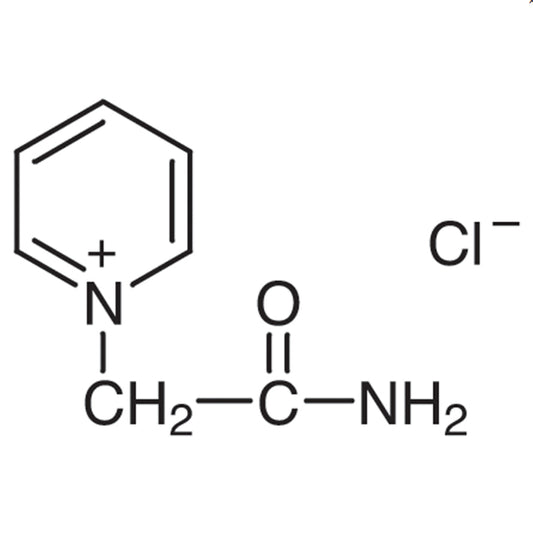
1-(Carbamoylmethyl)pyridiniumChloride TCI A0829
Regular price From Rp 664.650,00Regular priceRp 464.100,00Sale price From Rp 664.650,00




![TCI A5161 6004-24-6 CPC Monohydrate (=Cetylpyridinium Chloride Monohydrate) [Ion association reagent for extraction photometric analysis and sensitizer in photometric determination of metals]](http://amiscientific.com/cdn/shop/files/TCI2510A5161_3b9322ff-ad30-4d80-8492-b7e7ce5b70a2.jpg?v=1792658548&width=533)
![6004-24-6 CPC Monohydrate (=Cetylpyridinium Chloride Monohydrate) [Ion association reagent for extraction photometric analysis and sensitizer in photometric determination of metals] - AMI Scientific](http://amiscientific.com/cdn/shop/files/TCI2510A5161.jpg?v=1767084888&width=533)
![TCI A5014 36951-72-1 TMPyP [=alpha,beta,gamma,delta-Tetrakis(1-methylpyridinium-4-yl)porphyrin p-Toluenesulfonate] [Ultra-high sensitive spectrophotometric reagent for Cu, Mg] [For the simultaneous determination of metals by HPLC]](http://amiscientific.com/cdn/shop/files/TCI2510A5014_85e970ad-0735-462e-8101-7034fbd3b032.jpg?v=1792658521&width=533)
![36951-72-1 TMPyP [=alpha,beta,gamma,delta-Tetrakis(1-methylpyridinium-4-yl)porphyrin p-Toluenesulfonate] [Ultra-high sensitive spectrophotometric reagent for Cu, Mg] [For the simultaneous determination of metals by HPLC] - AMI Scientific](http://amiscientific.com/cdn/shop/files/TCI2510A5014.jpg?v=1768203998&width=533)