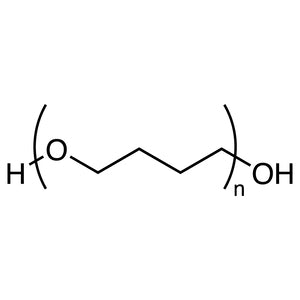
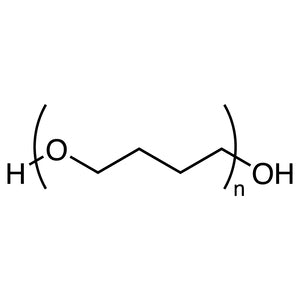
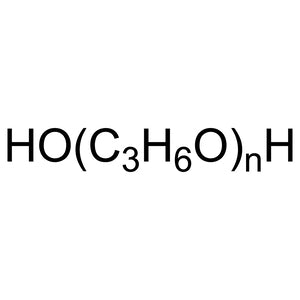
Poly(tetramethylene ether) glycol (PTMEG), also known as TCI P3028 25190-06-1, is a key chemical compound widely used in scientific and industrial applications related to polymer science. As a monomer, PTMEG plays a crucial role in the synthesis of polyesters and polyurethanes, which are known for their excellent mechanical and chemical properties. This material is essential in laboratory settings where polymer synthesis and material modification are required, offering a reliable and versatile component for a variety of experiments. Its high molecular weight and well-ordered molecular structure contribute to the consistency and performance of the resulting polymers, making it a fundamental reagent in polymer chemistry.
PTMEG is prized for its chemical stability, high molecular weight, and consistent physical properties. These characteristics ensure that it remains effective under various experimental conditions, including exposure to temperature and humidity. Its ability to form polymers with predictable and durable properties makes it a preferred choice for researchers aiming to develop materials with specific performance requirements. Additionally, its compatibility with a wide range of chemical environments enhances its utility in both academic and industrial laboratory settings. The stability and reliability of PTMEG make it an ideal component for long-term research projects and repeated experimental applications.
In Indonesian laboratories, PTMEG is commonly used in material and chemical research for the development of new materials such as composites, coatings, and specialty polymers. Its role in creating high-performance materials with flexibility, strength, and environmental resistance is vital for advancing polymer-based technologies. Researchers in Indonesia rely on PTMEG as a core reagent for experiments that require precise control over polymer properties and performance. Its availability and reliability make it a standard component in many laboratory workflows across the country.
TCI brochures (PDF)
- Monomers 2025-05-28 · p. 26
Related TCI products
- TCI P3031 25190-06-1 Poly(tetramethylene ether) Glycol 2900
- TCI P3027 25190-06-1 Poly(tetramethylene ether) Glycol 1000
- TCI P3026 25190-06-1 Poly(tetramethylene ether) Glycol 650
- TCI P3279 25322-69-4 Poly(propylene glycol) 4000
- TCI P3278 25322-69-4 Poly(propylene glycol) 3000
- TCI P3277 25322-69-4 Poly(propylene glycol) 2000
- Polymer synthesis experiments benefit from PTMEG due to its role in forming polyesters and polyurethanes with consistent mechanical properties.
- Material modification studies use PTMEG to create flexible and durable polymers, ideal for applications in coatings and composites.
- Research into high-performance materials relies on PTMEG for its ability to produce polymers with excellent environmental resistance and strength.
- Chemical research applications utilize PTMEG for its stability and compatibility with various reaction conditions in laboratory settings.
- Industrial material development projects incorporate PTMEG to create advanced polymers with tailored physical and chemical characteristics.
| Brand | TCI |
|---|---|
| CAS number | 25190-06-1 |
| Molecular formula | — |
| Purity | — |
| Category | Materials Science > Polymer/Macromolecule Reagents > Monomers |
| Pack sizes | Available in various quantities as per supplier specifications |
| Physical form | Liquid |
| Storage | Store in a cool, dry place away from direct sunlight and sources of heat |
PTMEG should be stored in a cool, dry environment, away from direct sunlight and sources of heat to maintain its chemical stability. It is recommended to use sealed containers made of materials compatible with its chemical nature, such as glass or high-density polyethylene, to prevent contamination and evaporation. In laboratory settings, PTMEG should be handled with appropriate personal protective equipment, including gloves and safety goggles, to ensure the safety of personnel. It is important to keep the material in a well-ventilated area to minimize exposure to vapors. Regular monitoring of storage conditions is advised to ensure the material remains in optimal condition for use in experiments. Proper labeling of containers is also essential to prevent accidental misuse or contamination.
—
Produk Terkait
-
Poly(tetramethyleneether)Glycol2900 TCI P3031
Regular price From Rp 717.150,00Regular priceRp 500.850,00Sale price From Rp 717.150,00 -
Poly(tetramethyleneether)Glycol1000 TCI P3027
Regular price From Rp 717.150,00Regular priceRp 500.850,00Sale price From Rp 717.150,00 -
Poly(tetramethyleneether)Glycol650 TCI P3026
Regular price From Rp 769.650,00Regular priceRp 553.350,00Sale price From Rp 769.650,00 -
Poly(propyleneglycol)4000 TCI P3279
Regular price From Rp 557.550,00Regular priceRp 405.300,00Sale price From Rp 557.550,00 -
Poly(propyleneglycol)3000 TCI P3278
Regular price From Rp 557.550,00Regular priceRp 405.300,00Sale price From Rp 557.550,00 -
Poly(propyleneglycol)2000 TCI P3277
Regular price From Rp 557.550,00Regular priceRp 405.300,00Sale price From Rp 557.550,00 -
Poly(propyleneglycol)1000 TCI P3276
Regular price From Rp 557.550,00Regular priceRp 405.300,00Sale price From Rp 557.550,00 -
Poly(propyleneglycol)600 TCI P3275
Regular price From Rp 557.550,00Regular priceRp 405.300,00Sale price From Rp 557.550,00