Dibutyl Succinate from TCI is the dibutyl ester of succinic acid. It is a liquid, and TCI classifies it as a polymer additive in its materials science range. In the laboratory it is best known as a plasticizer, a substance added to polymers to make them more flexible and easier to process. Dibutyl succinate is also used as a moderate-strength solvent, as an intermediate in organic synthesis, and as a model compound in research on aliphatic esters. This range of uses makes it a practical reagent for both polymer formulation work and general organic chemistry.
Researchers choose this material because it pairs two fairly hydrophobic butyl groups with a polar succinate core. This combination gives it good compatibility with a wide range of polymer matrices, so it can blend evenly into many materials without separating. Its low volatility means it tends to stay inside the material once incorporated, which is a valuable property in a plasticizer. Succinic acid can be produced biologically, so dibutyl succinate is also of interest as a candidate for greener alternative plasticizers in modern materials research.
In Indonesia, Dibutyl Succinate is relevant to materials science, chemical engineering, and polymer technology laboratories that develop bioplastics, packaging films, or coatings. Researchers who modify polymer formulations can use it to study how plasticizer content affects flexibility and processability. University research groups, industrial R&D teams, and academic laboratories working on sustainable materials may find it useful as a reference ester or a working additive. Its use as a solvent and synthetic intermediate also fits general organic chemistry laboratories.
- Polymer plasticization: added to polymer formulations to improve flexibility and processability, because its butyl and succinate groups give good compatibility with many polymer matrices.
- Bioplastic and packaging film research: a candidate plasticizer for greener materials, since it comes from succinic acid, which can be produced biologically, and suits sustainability-focused studies.
- Coating formulation development: incorporated into experimental coatings where a low-volatility additive is needed to stay inside the film and keep its flexibility over time.
- Moderate-strength solvent use: used as a solvent in laboratory procedures that need an ester-based medium with moderate dissolving power rather than an aggressive solvent.
- Organic synthesis and ester research: works as a synthetic intermediate and as a model compound for studying the behavior and reactivity of aliphatic esters under controlled conditions.
| Brand | TCI (product code S0102) |
|---|---|
| CAS number | 141-03-7 |
| Molecular formula | — |
| Purity | — |
| Category | Materials Science > Polymer/Macromolecule Reagents > Polymer Additives |
| Pack sizes | as listed on the product page |
| Physical form | liquid |
| Storage | keep tightly closed in a cool, dry, well-ventilated place, following the supplier's label and SDS |
Store Dibutyl Succinate in its original tightly sealed container in a cool, dry, well-ventilated area, away from direct sunlight, heat sources, and strong oxidizing agents. If the liquid is transferred, use clean, chemically compatible glass or suitable containers that are clearly labeled. Handle it in a well-ventilated area or a fume hood, and wear standard personal protective equipment such as safety glasses, lab coats, and chemical-resistant gloves. Avoid contact with skin and eyes and avoid breathing vapors. Clean up spills promptly with absorbent material. Always read the supplier's Safety Data Sheet before use, and dispose of waste according to local regulations.
—
Produk Terkait
-
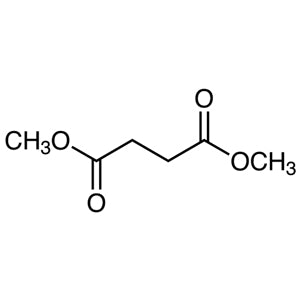
DimethylSuccinate TCI S0104
Regular price From Rp 477.750,00Regular price -
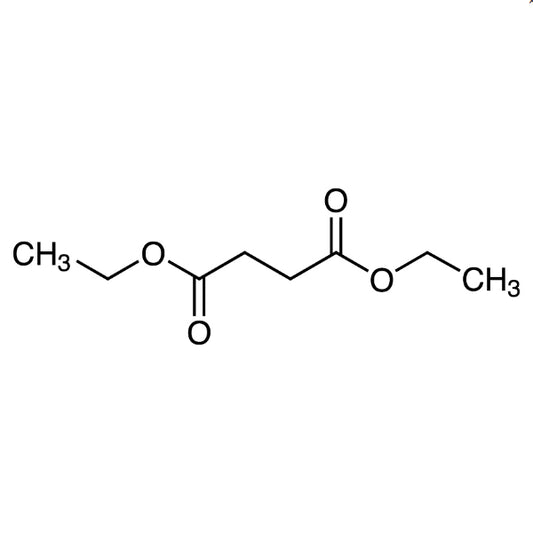
DiethylSuccinate TCI S0103
Regular price From Rp 505.050,00Regular price -
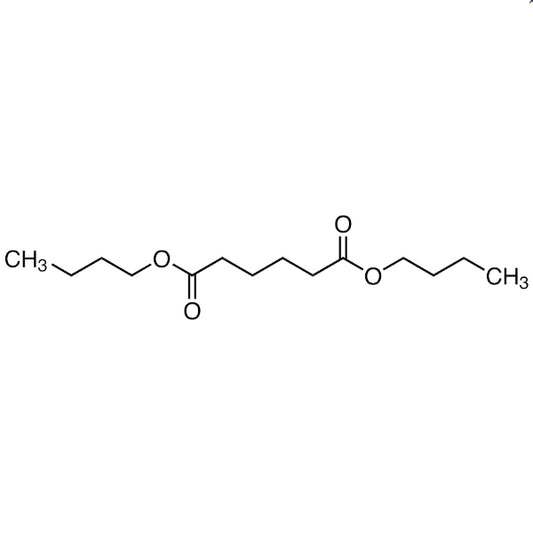
DibutylAdipate TCI A0655
Regular price From Rp 557.550,00Regular price -
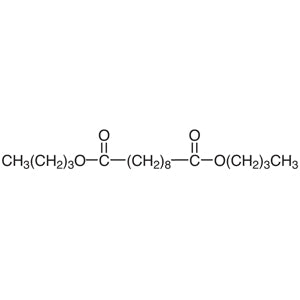
DibutylSebacate TCI S0023
Regular price From Rp 477.750,00Regular price -
DibutylPhthalate TCI P0292
Regular price From Rp 477.750,00Regular price -
DibutylMaleate TCI M0009
Regular price From Rp 477.750,00Regular price -
DibutylFumarate TCI F0116
Regular price From Rp 505.050,00Regular price -
TafenoquineSuccinate TCI T4392
Regular price Rp 8.187.900,00Regular price