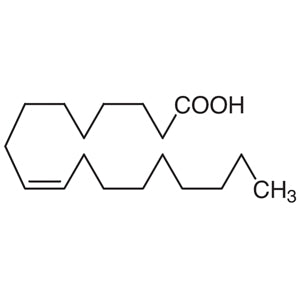
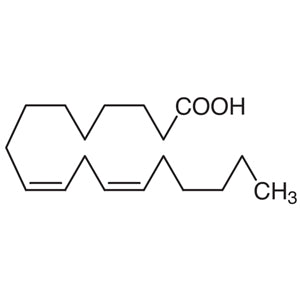
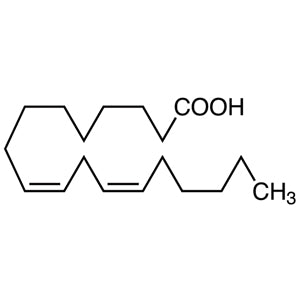
Ethyl cis-4,7,10,13,16,19-Docosahexaenoate is the ethyl ester of docosahexaenoic acid, better known as DHA, one of the very long chain omega-3 fatty acids. The molecule consists of twenty-two carbon atoms carrying six double bonds, all of which are in the cis configuration. Within the life science lipid category, this compound serves as a reference material and test substance in nutrition research, membrane biochemistry, and fatty acid profiling work. The ethyl ester form is chosen because it is more readily volatilised and analysed by gas chromatography than the free acid, while also reflecting the form commonly encountered in concentrated fish oil preparations.
The defining property that governs how this material is used is its very high degree of unsaturation. Six cis double bonds give the hydrocarbon chain a pronounced curve and a high degree of flexibility, a feature that is biologically associated with the membrane fluidity of nerve and retinal cells. The same structural characteristic, however, makes the molecule highly susceptible to oxidation by air, light, and heat, so handling demands extra care at every stage. The material presents as an oily liquid that dissolves readily in non-polar organic solvents such as hexane and chloroform, which suits it to the extraction and derivatisation routines used in lipid analysis.
In Indonesian laboratories, this ester is typically encountered in university and institutional research settings where fatty acid composition is under study, particularly in work connected to marine oils and nutritional biochemistry. It is used as a comparison standard when identifying and confirming peaks in chromatographic runs, and as a defined test substance in membrane and lipid oxidation studies. Its role is that of a well-characterised reference point against which sample-derived material can be assessed, rather than that of a bulk process chemical.
TCI brochures (PDF)
- Lipids 2025-12-17 · p. 11
- Pharmaceutical Ingredients for Research and Experimental Use 2026-03-09 · p. 23
- Reagents for Biological Research 2025-03-11 · p. 45
- Gas chromatographic fatty acid profiling, where the ethyl ester form volatilises more readily than the free acid and provides a defined reference peak for identifying DHA in complex sample mixtures.
- Nutrition research on omega-3 fatty acids, where a characterised DHA ethyl ester serves as the reference material against which dietary, supplement, and biological sample content can be compared.
- Membrane biochemistry studies, since the six cis double bonds produce a curved, flexible chain of the kind associated with the fluidity of nerve and retinal cell membranes.
- Lipid oxidation investigations, because the very high degree of unsaturation makes this molecule a sensitive and representative substrate for examining oxidative behaviour under air, light, and heat.
- Analysis of concentrated fish oil preparations, where the ethyl ester reflects the chemical form commonly present in such products and therefore matches the analyte being measured.
| Brand | TCI |
|---|---|
| CAS number | 84494-72-4 |
| Molecular formula | — |
| Purity | — |
| Category | Life Science > Biochemicals and Reagents > Lipids |
| Pack sizes | available in the pack sizes listed on this product page |
| Physical form | oily liquid, soluble in non-polar organic solvents such as hexane and chloroform |
| Storage | cool, dark conditions with protection from air, light, and heat |
- Product code: D2195
Because of its very high degree of unsaturation, this material must be protected from air, light, and heat at all times. Store it cool and in the dark, in tightly closed containers, preferably amber glass or another light-excluding container that is compatible with non-polar organic solvents. Where facilities allow, blanketing the headspace with inert gas after each withdrawal helps limit oxidative degradation. Keep the container sealed except when in use, minimise the time it stands open on the bench, and return it to storage promptly. Handle the material in a well-ventilated area or fume hood using appropriate gloves, eye protection, and a laboratory coat, and follow the supplier safety data sheet together with your institution's standard laboratory procedures for organic reagents.
—
Product Categories
- Biochemicals and ReagentsLipidsFatty Acyls
- Biochemicals and ReagentsPharmaceutical Research Reagents (for Experimental Use)Antithrombotic Ingredients (for Research and Experimental Use)
- Cell BiologyNutrition ResearchFunctional Food Research
- Pharmaceutical Development and Drug Discovery ResearchPharmaceutical Research Reagents (for Experimental Use)Antithrombotic Ingredients (for Research and Experimental Use)
Produk Terkait
-
cis-4,7,10,13,16,19-DocosahexaenoicAcid TCI D2226
Regular price Rp 6.386.100,00Regular priceRp 4.481.400,00Sale price Rp 6.386.100,00 -
ArachidonicAcid TCI A0781
Regular price From Rp 2.384.550,00Regular priceRp 1.683.150,00Sale price From Rp 2.384.550,00 -
OleicAcid TCI O0180
Regular price From Rp 1.618.050,00Regular priceRp 1.130.850,00Sale price From Rp 1.618.050,00 -
OleicAcid TCI O0011
Regular price From Rp 477.750,00Regular priceRp 333.900,00Sale price From Rp 477.750,00 -
gamma-LinolenicAcid TCI L0152
Regular price From Rp 1.988.700,00Regular priceRp 1.405.950,00Sale price From Rp 1.988.700,00 -
LinoleicAcid TCI L0124
Regular price From Rp 1.881.600,00Regular priceRp 1.331.400,00Sale price From Rp 1.881.600,00 -
MethylLinoleate TCI L0078
Regular price From Rp 1.776.600,00Regular priceRp 1.257.900,00Sale price From Rp 1.776.600,00 -
LinoleicAcid TCI L0053
Regular price From Rp 1.538.250,00Regular priceRp 1.090.950,00Sale price From Rp 1.538.250,00